In her book My San Francisco, Gertrude Atherton described a day shortly after the 1906 calamity:
One day Senator Phelan and I were strolling along Van Ness eating candy from a bag he had bought at one of the booths, and like everyone else, discussing the future of San Francisco. ‘Now who do you suppose that is?’ I exclaimed, indicating two young men some distance ahead. They were sitting on a box on the edge of the sidewalk holding a large white placard in front of them. They proved to be Paul Elder and John Howell with the name of their new firm, site and all, painted in large black letters on the white background. They grinned as we paused before them and looked as cheerful as a May morning without a fog. We shared our candy with them and talked of the new city that was to rise on the site of those ashes now being shoveled into carts.
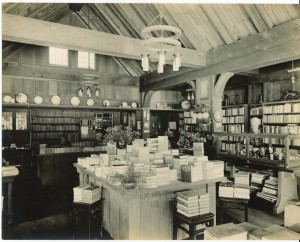
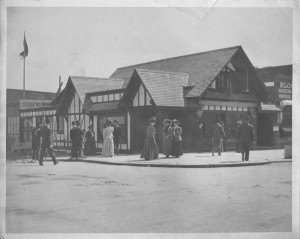
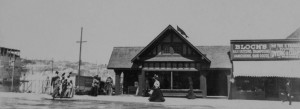
Elder and Howell clearly had what was popularly called the “Spirit of ‘06”: the positive, untroubled determination to rebuild the ruined San Francisco. The Van Ness sidewalk along which Atherton and Phelan were strolling was the temporary shopping district while San Francisco began the daunting task of cleaning up and rebuilding downtown. Elder was among the first to build on Van Ness, hiring well-known architect Bernard Maybeck to design the new store. The result was an Arts & Crafts gem reminiscent of his finer single-family bungalows across the bay in Berkeley. The familiar Maybeckian motifs were all there: wood-frame construction, simple and rustic lines, heavy exposed beams, medieval-style light fixtures with matching furniture, and no painted surfaces.
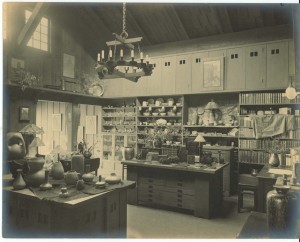
The new shop was much smaller than the Post St. shop had been: one large room primarily for books, and one small room primarily for pottery and other art objects. The store was open for business by August 1906, with John Howell—later a rare book dealer himself—as manager while Elder and Nash made their bold, but ultimately unsuccessful, pilgrimage to New York City.
In the end, the Van Ness store was open for fewer than three years. Elder moved back downtown in April 1909, and the building became a private clubroom, and later an automobile showroom.
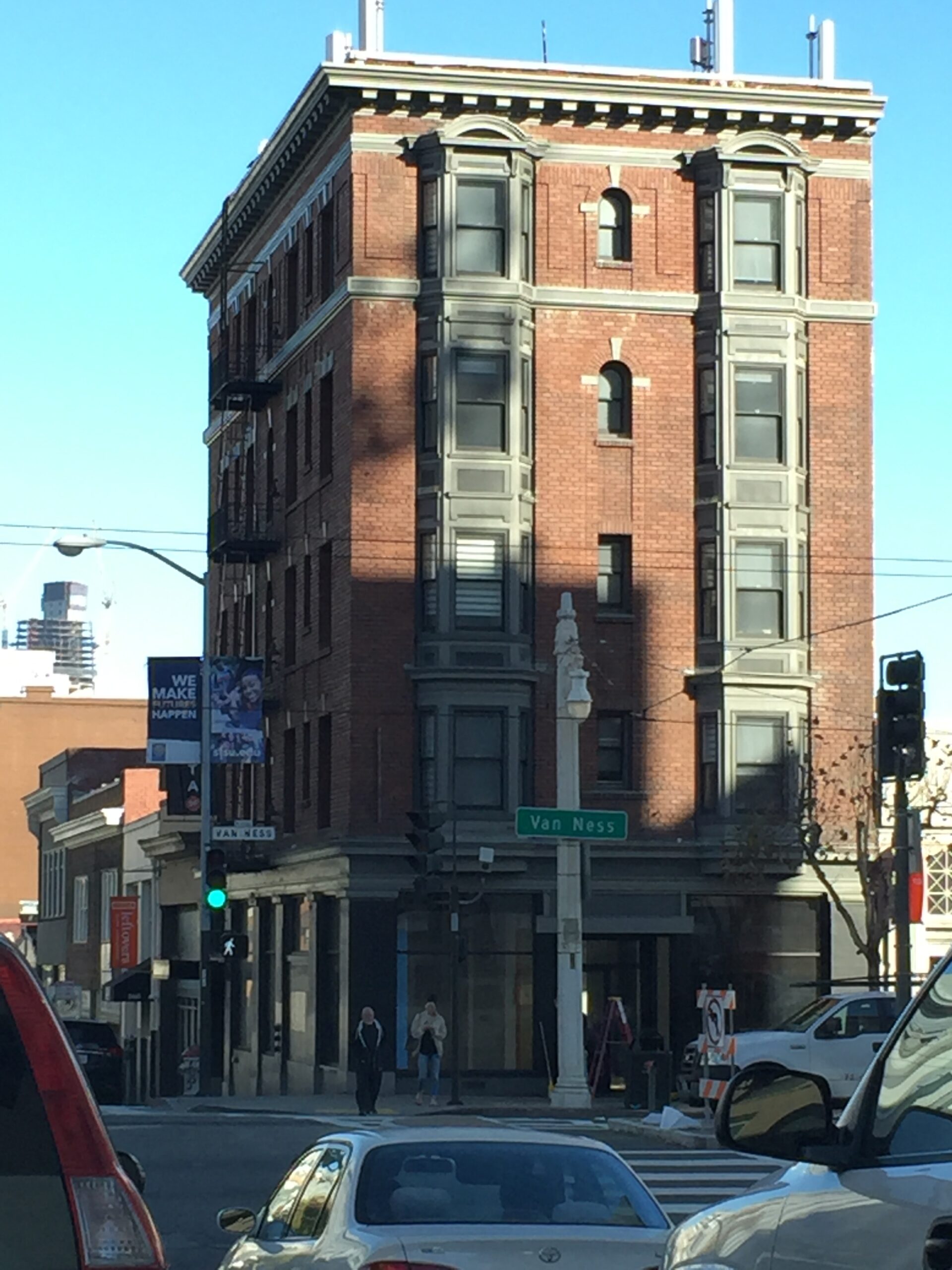
By January 1914, the beautiful Maybeck was demolished for construction of the five-story hotel that occupies the site today. In 2003, the hotel was called the Sonoma Inn, and by 2015 it was the Calista Organic Hotel. The Calista was closed in May 2025 when the building’s owners evicted the property management company operating the hotel.