When a Californian calls something “old,” it’s usually not as old as something a Bostonian would call “old.” As a native Californian, I have often been reminded of this. “Well,” says my Easterner friend, “we wouldn’t call this ‘old’ back home.”
It turns out that this scenario is at least a century old, for it occurs on the very first page of The Lure of San Francisco:
“I believe you Californians have but two dates on your calendar,” he exclaimed, “for everything I mentioned seems to have happened either ‘before the fire’ or ‘in the good old days of forty-nine!’ ‘Good old days of forty-nine,’” he repeated, amused. “In Boston we date back to the Revolution, and ‘in Colonial times’ is a common expression. We have buildings a hundred years old, but if you have a structure that has lasted a decade, it is a paragon and pointed out as built ‘before the fire.’”
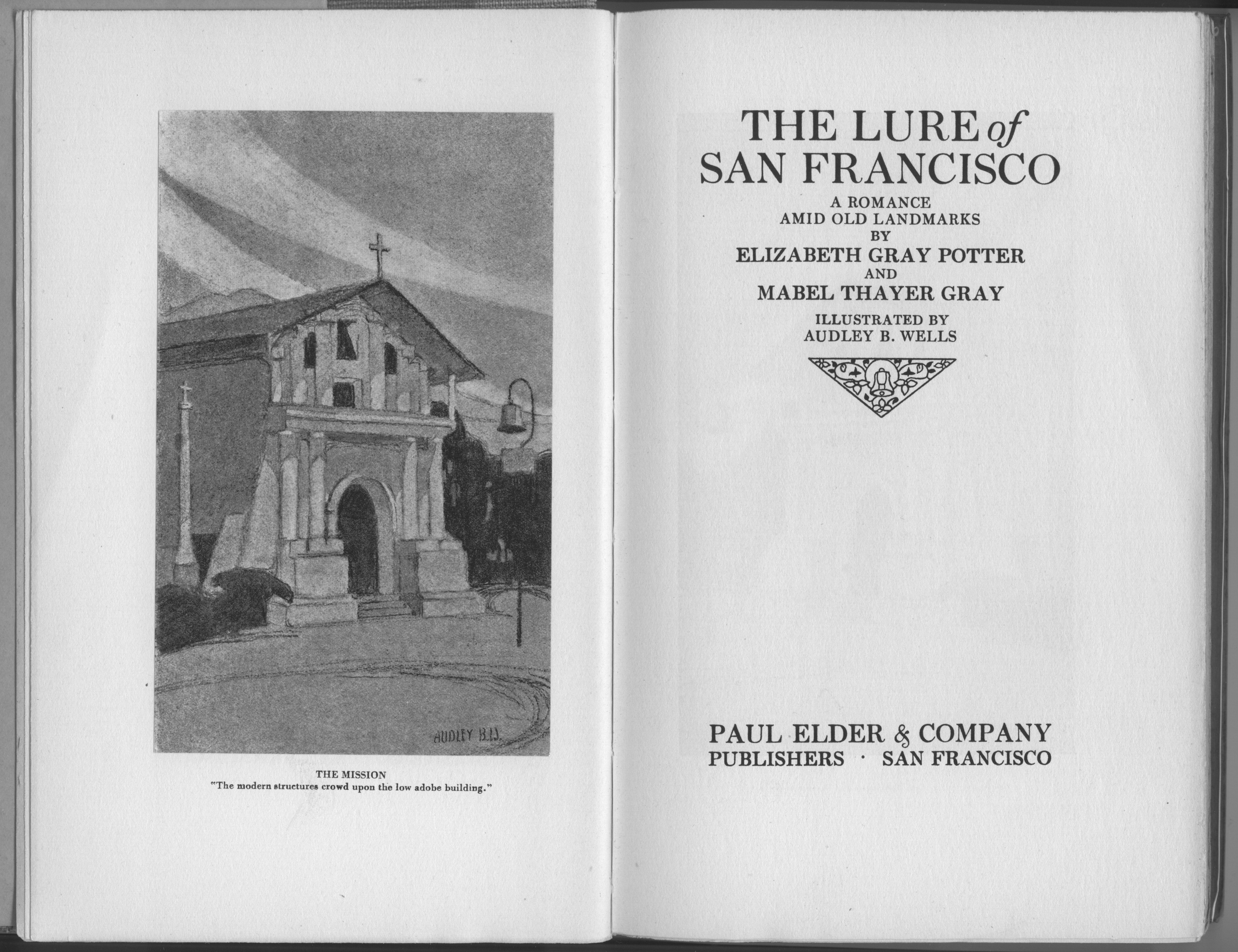
The Lure of San Francisco is written as a long conversation between the narrator, a native San Franciscan woman, and her Bostonian guest. They visit the four principal sights of pre-1906 San Francisco: Mission Dolores, the Presidio, Portsmouth Plaza, and Telegraph Hill.
Unfortunately, the casual racism common during the late 19th- and early 20th-century intrudes into Potter and Gray’s book. In the chapter “The Mission and its Romance,” Potter and Gray trot out the tired reframing of the “lazy, roving” life of the California Indians, and how the Spanish “padres were not hard taskmasters.” Elsewhere, the inhabitants of Chinatown are called “slant-eyed” and “sallow-faced.”

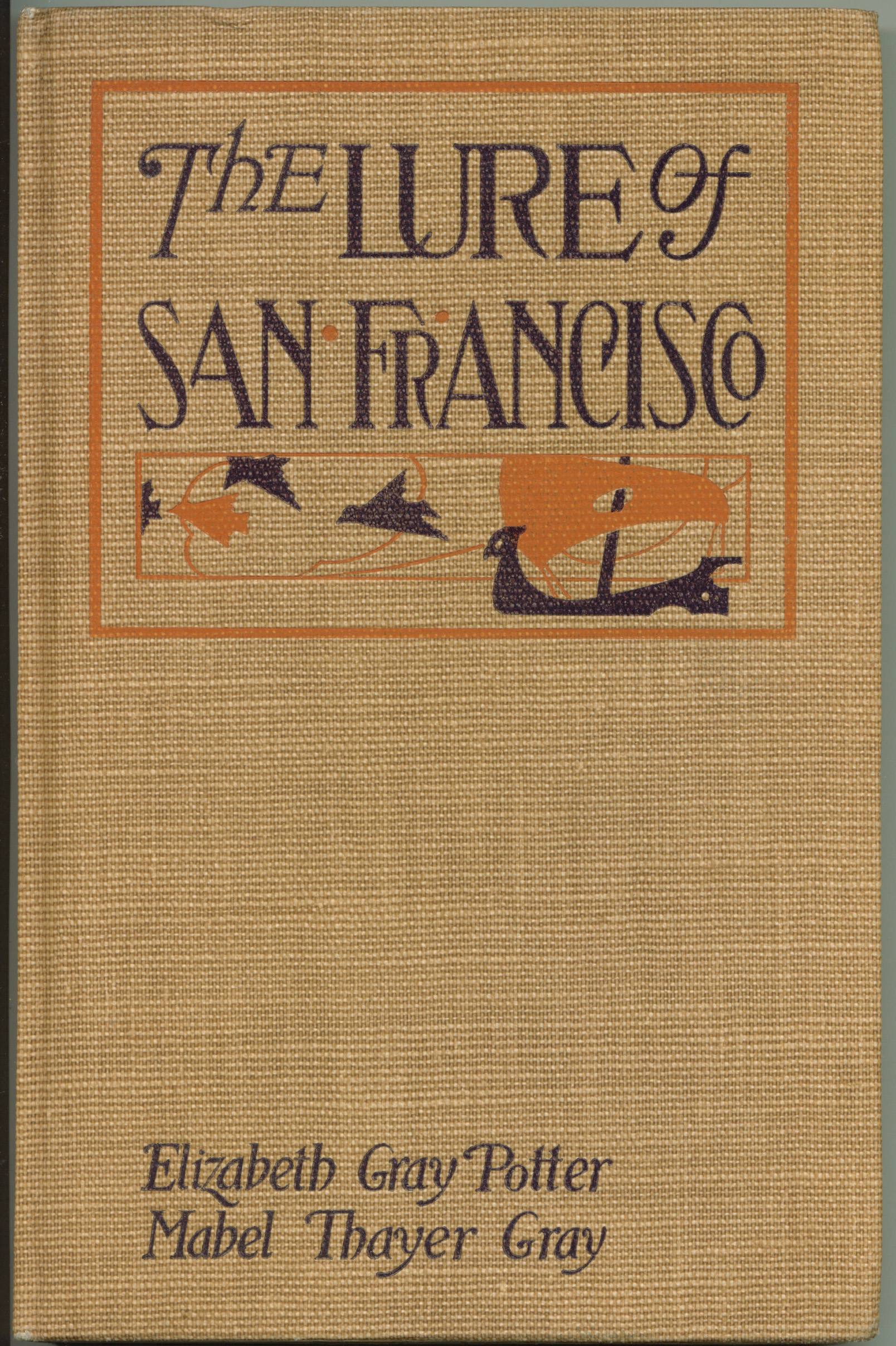
The book has a beautiful cover with a nautical motif, and is elegantly illustrated inside with eight tonalist drawings by Audley B. Wells. It was one of more than a dozen books Elder published during the Panama-Pacific International Exposition.
Elizabeth Florence Gray Potter (1874-1959) and Mabel Thayer Gray (1870-1946) were born in Oakland, California, the daughters of George Dickman Gray, a lumber dealer, and Susan Hitchborn Thayer. In both 1880 and 1900, the family lived at 754 Tenth St. in San Francisco (a spot now underneath a modern freeway interchange); they may have gotten burned out in the 1906 earthquake and fire. Elizabeth married Frederick W. Potter in February 1906; Mabel never married, and neither woman had any children. They are buried in the Gray family plot at Cypress Lawn Memorial Park in Colma.
Updated 2026-01-22