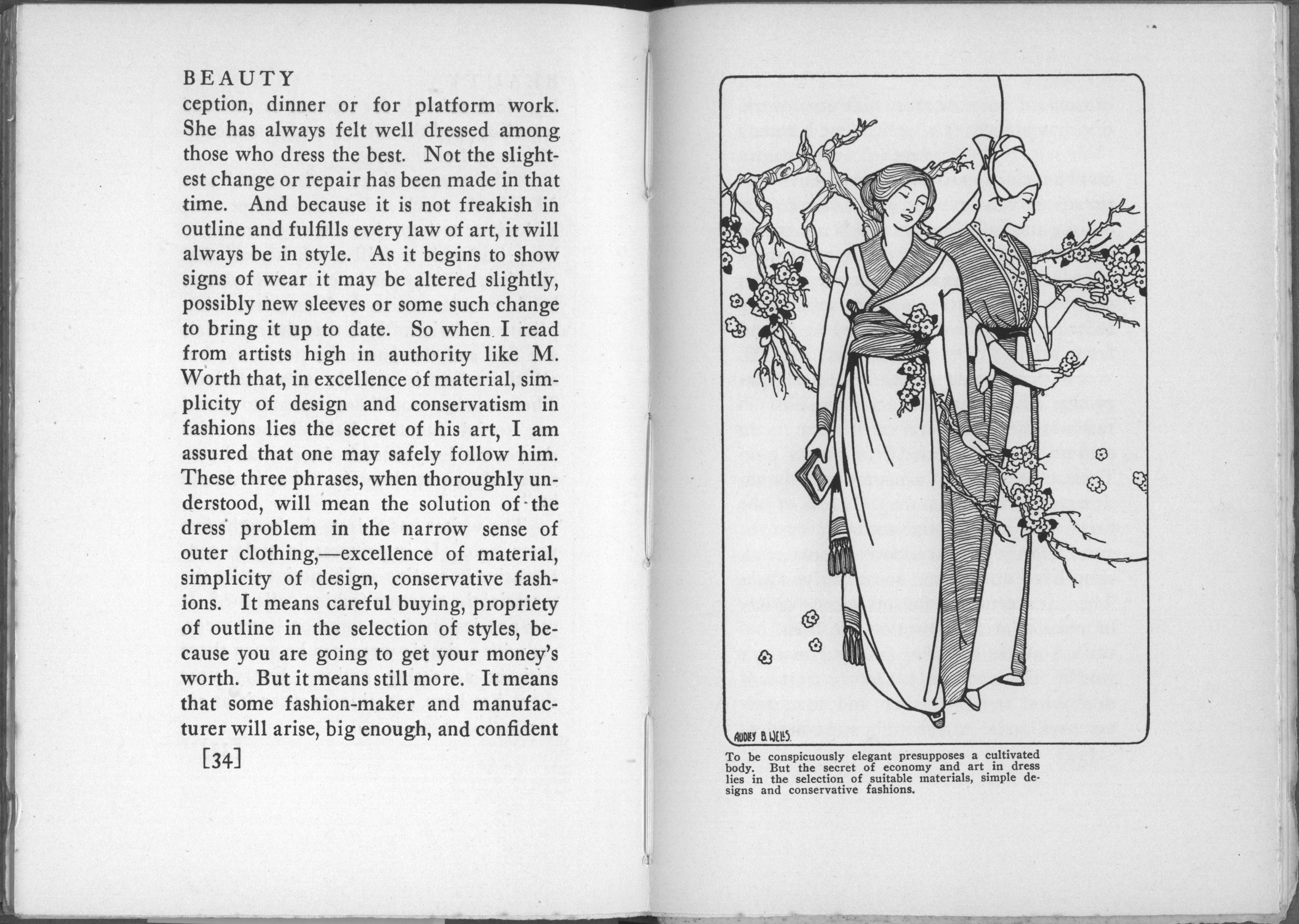
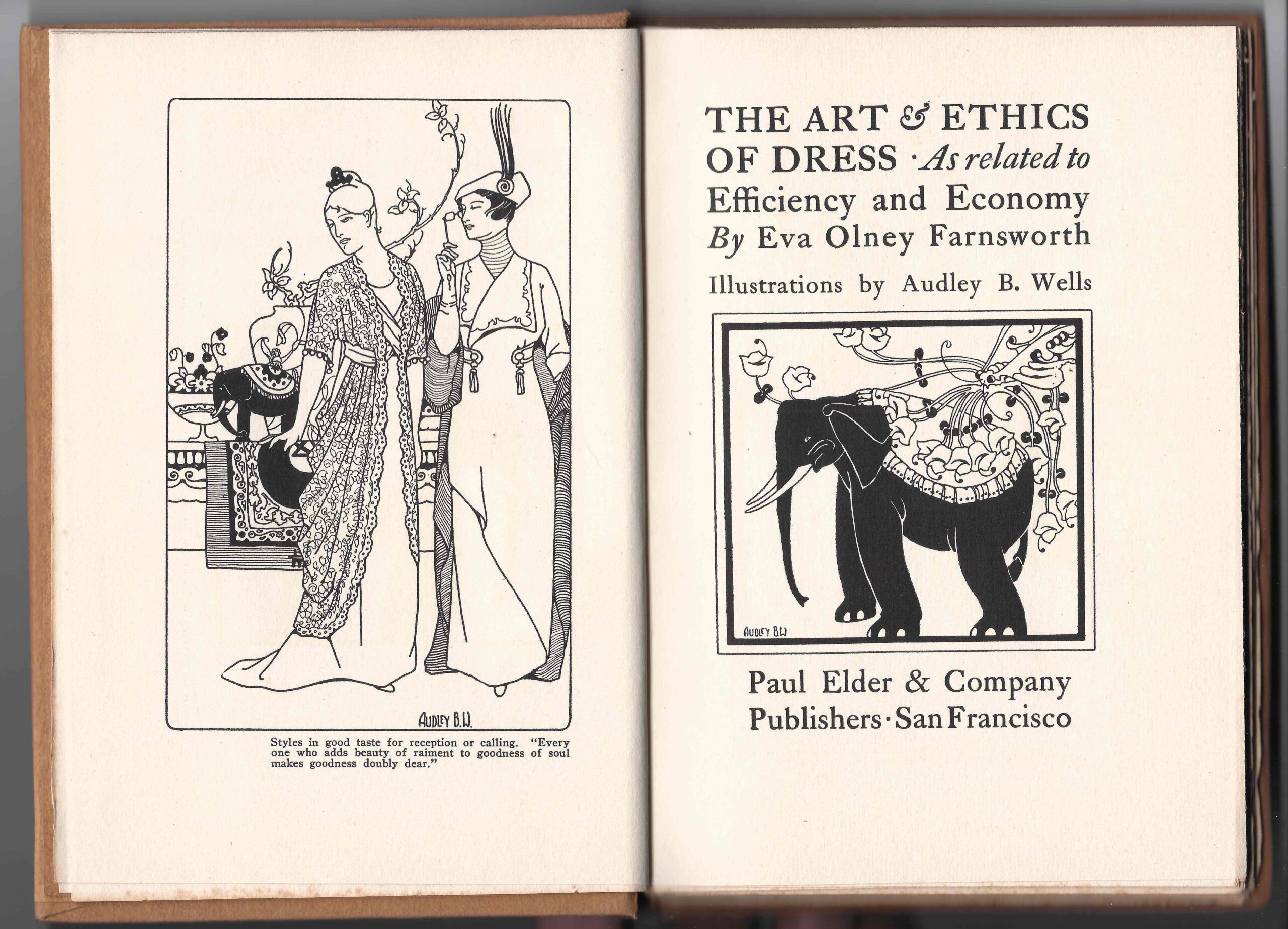
When you open Eva Olney Farnsworth’s Art & Ethics of Dress (1915), you are immediately struck by the pen-and-ink drawings of Audley B. Wells. But just as memorable are Olney’s exhortations that women can dress well and healthily, no matter what their shape or size. In many ways, this book was ahead of its time: Olney rails against corsets and other restrictive underclothes, the fashion industry which is only in search of novelty, and high-heeled shoes and their ravages upon women’s feet (ninety-five years later and we are still fighting that battle).
In other chapters, Olney tries to have it both ways. If a woman has “a waist circumference that is altogether clumsy and awkward,” Olney describes how she can dress to accentuate her other features. However, the author also admonishes that “she must consistently endeavor to induce all the symmetry of figure she can achieve through every means open to her in the gymnasium.” In a telling comment about the economy of the times, Olney writes:
Even an employee who is earning the most modest income may have in her wardrobe all that her business or social duties call form, and its items will be once individual and fitting the occasion. One year she may add to her store a simple evening gown and a tailor-made dress; the next she will find occasion to buy one afternoon gown and perhaps a big cloak suitable for steamer or railroad traveling, and the third she may make additions to her lingerie.

How fortunate we are to be living in an age where we need not restrict the purchase of undergarments to once every three years!
In the appendix, Olney introduces an undergarment of her own design, the “Patricia Garment,” patented on 15 December 1914. Corsets were going out of fashion, a trend that would accelerate a few years later, when metal supplies, such as that used for corset stays, were diverted towards America’s entry into World War I. Designed for adolescent women, the Patricia Garment was “a corset substitute, and will meet the needs of all who enjoy physical freedom. It is a four-in-one garment which combines the necessary support for the bust and clothing with room for growth and development of the torso.”
Updated 2026-01-24