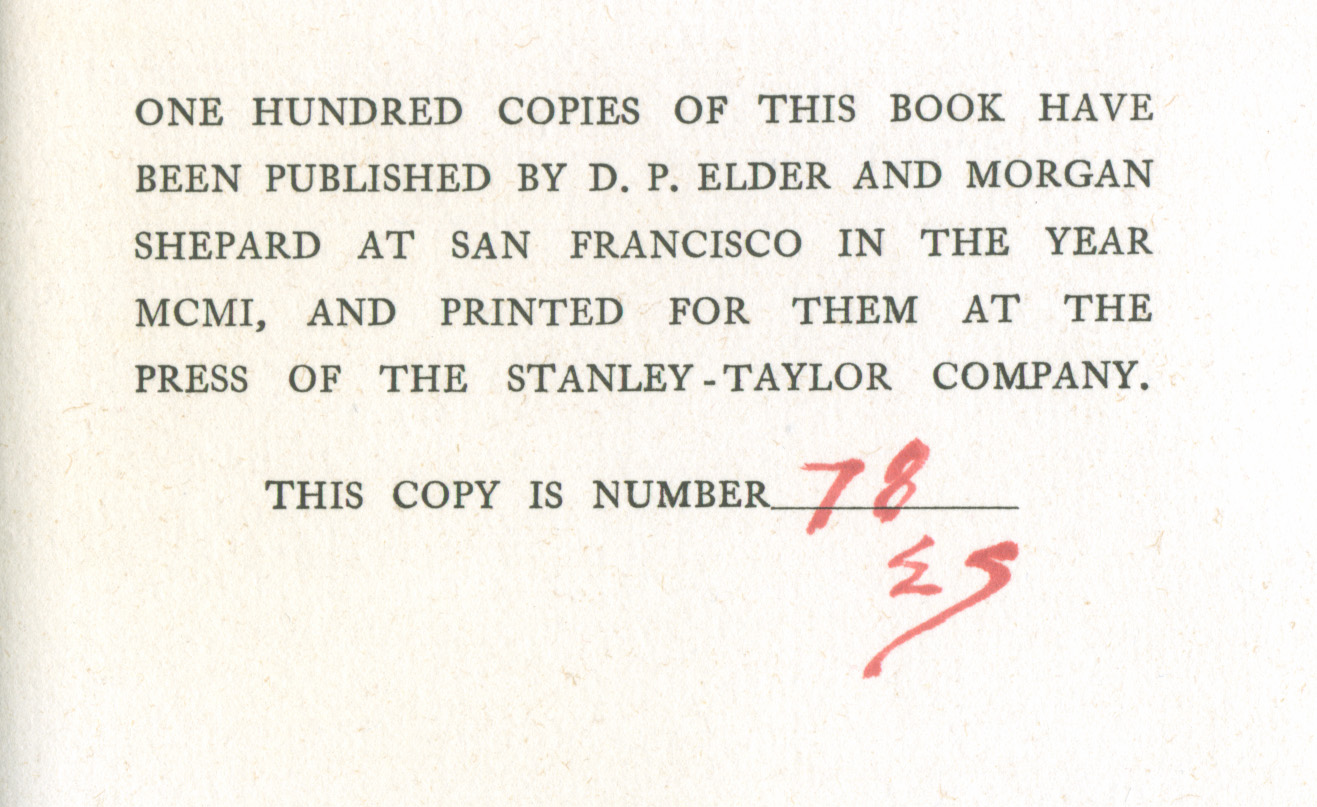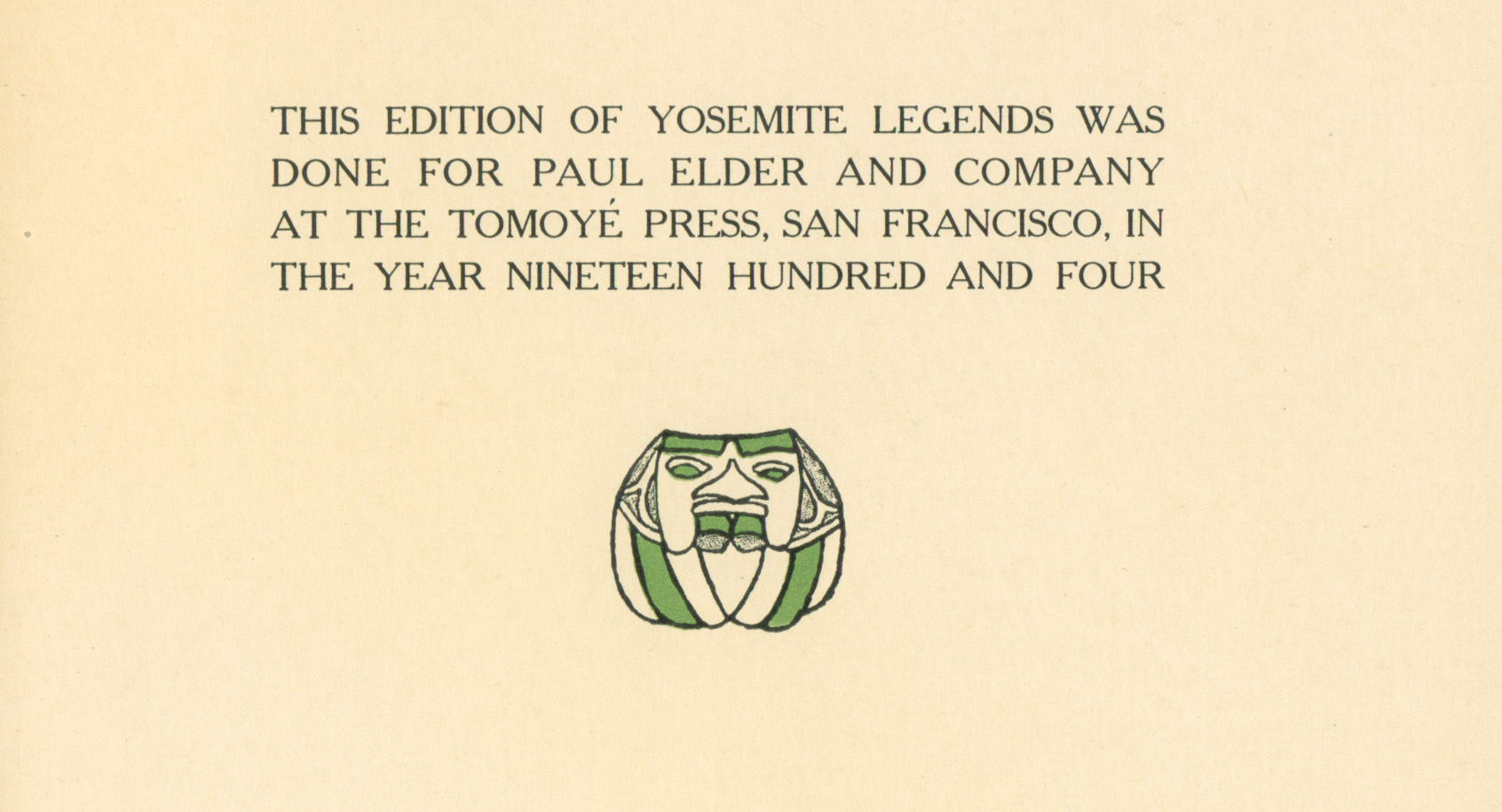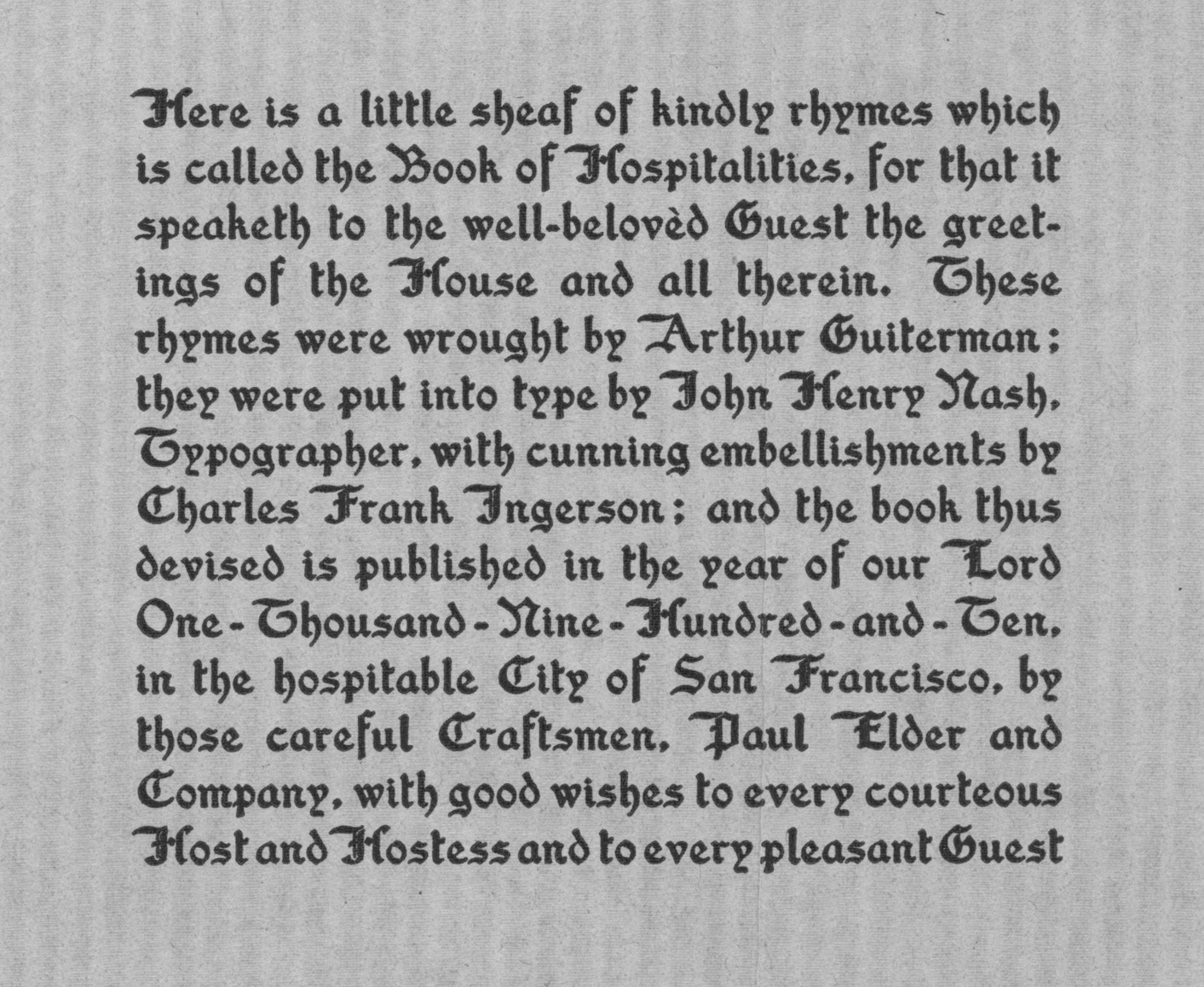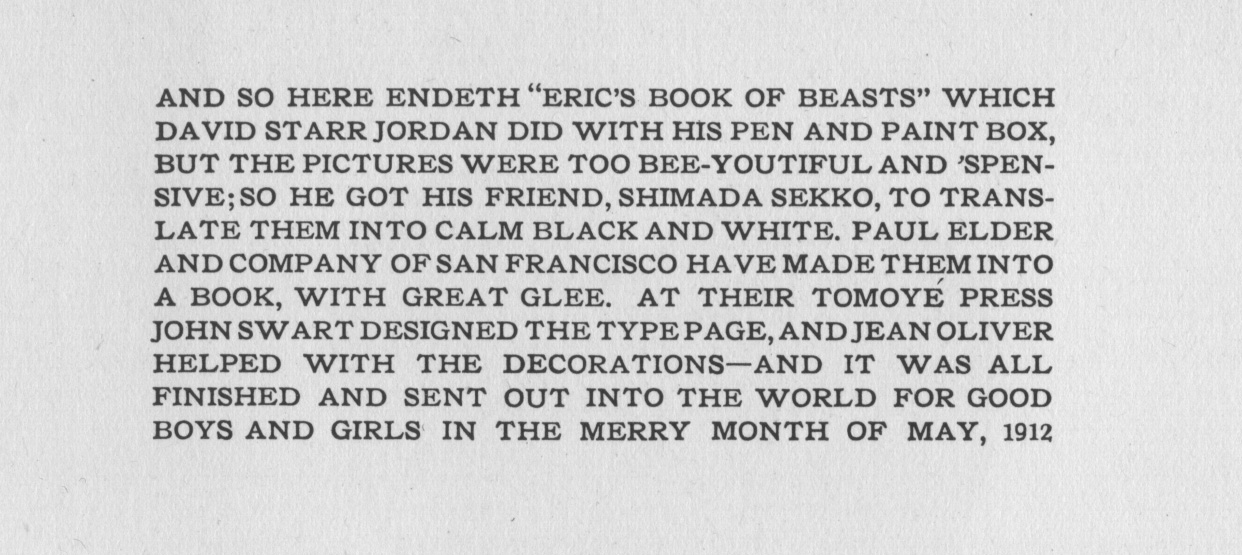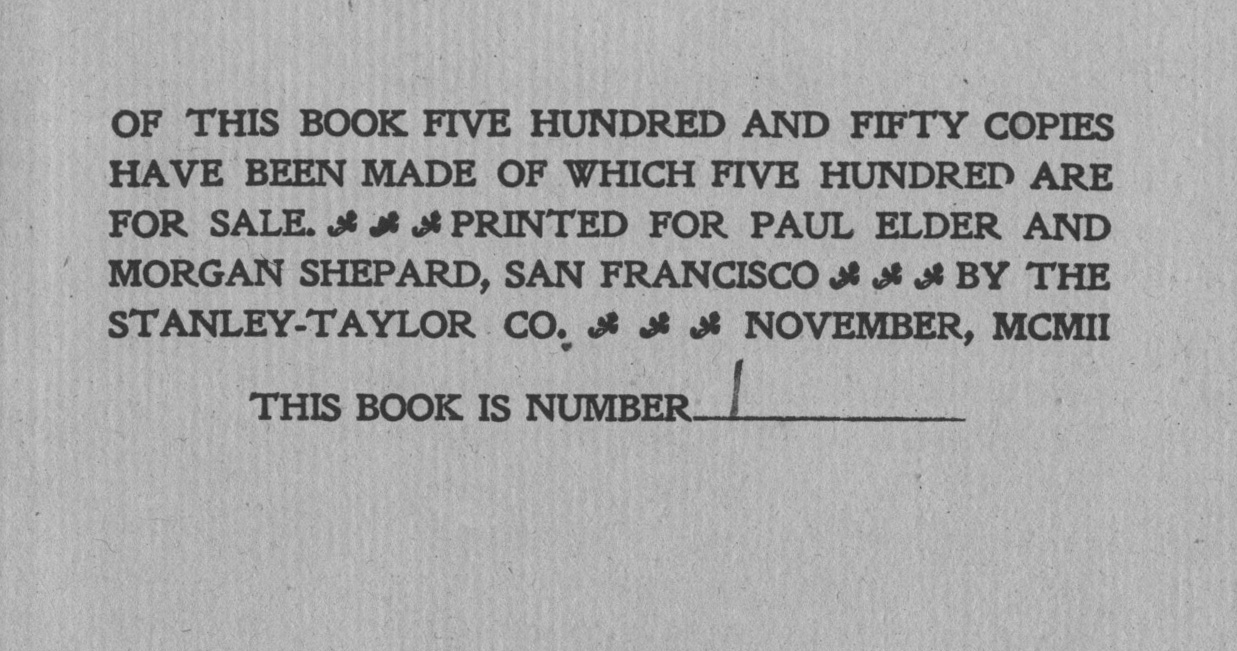
In publishing, a colophon is a brief description of a book’s production or publication details. The Latin word colophon comes from the Greek κολοφων meaning “summit,” or “finishing.” The term originally applied to inscriptions appended to the end of ancient Near East texts written on clay tablets. The colophon would contain such facts as the scribe, the owner, the literary contents and occasionally the reason for writing. For example, the Masoretic text of the Hebrew Bible contains colophons at the end of every book, noting, among other things, how many verses the book contains.
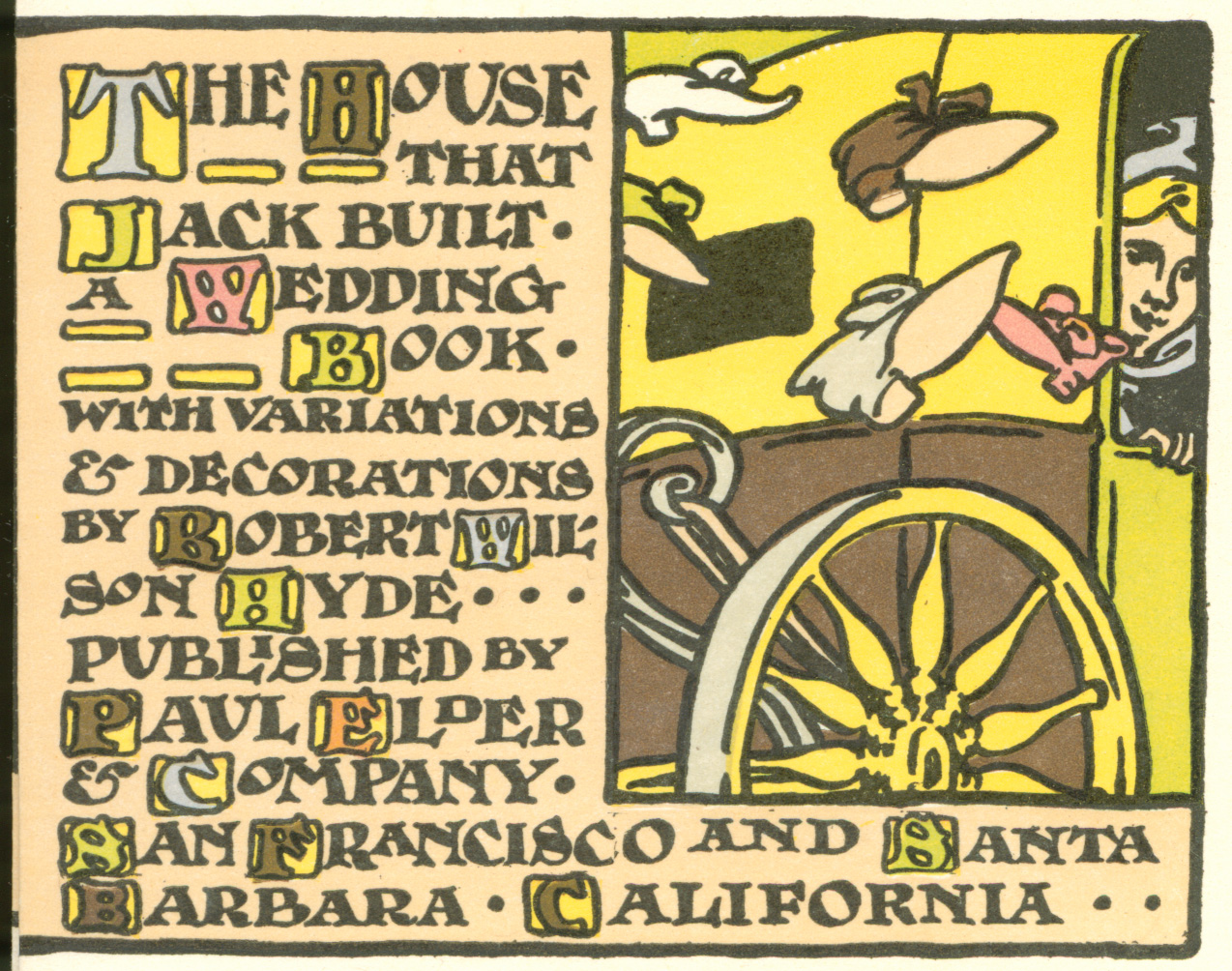
Most Paul Elder publications after 1902 contain a colophon. By about 1906, the usual formula was: title, author, printer, month and date of publication. Most colophons were written out in full sentences, stylistically matching the tone and content of the book. From a research standpoint, the colophons are useful in pinning down when Elder’s printers (Nash, Swart, Funke, and Orozco) joined, then later left, the Tomoye Press. Colophons will also sometimes mention artists not otherwise mentioned on the title page.
As the purpose of the colophons was to impress the adults, Elder’s children’s books do not have them. Colophons are also typically missing from books which have significant end-matter, such as indexes or appendices.
Elder’s style, which mimicked that of other fine press books of the time, was to put the copyright information on the title page verso, and the colophon on its own page following the last page of text. In modern American books, the colophon has been subsumed into the copyright details, typically placed on the title page verso. European books often place the copyright/colophon at the end of the book.
Updated 2026-02-06