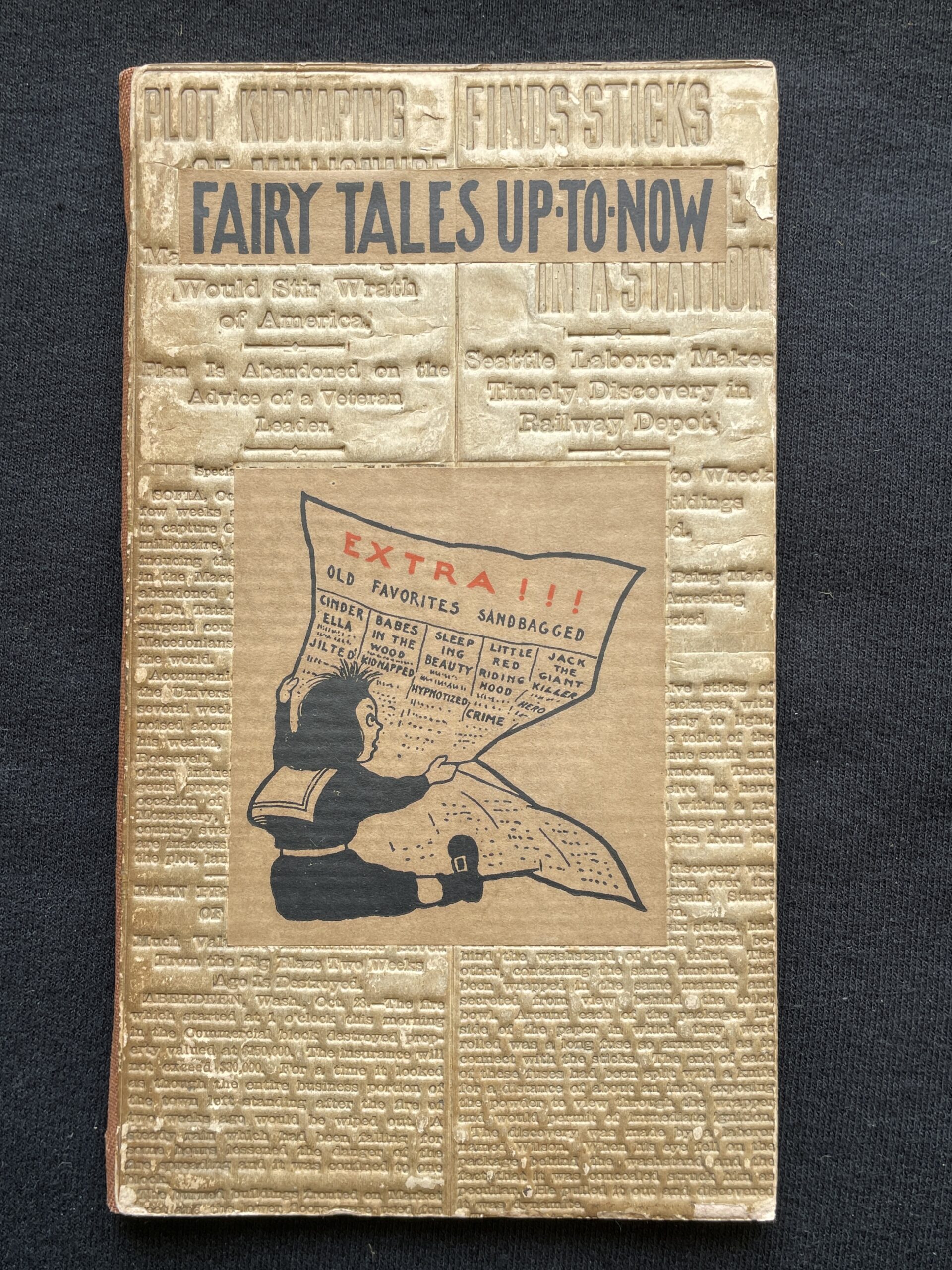
Extra, extra, read all about it! Wallace Irwin rewrites old fairy tales!
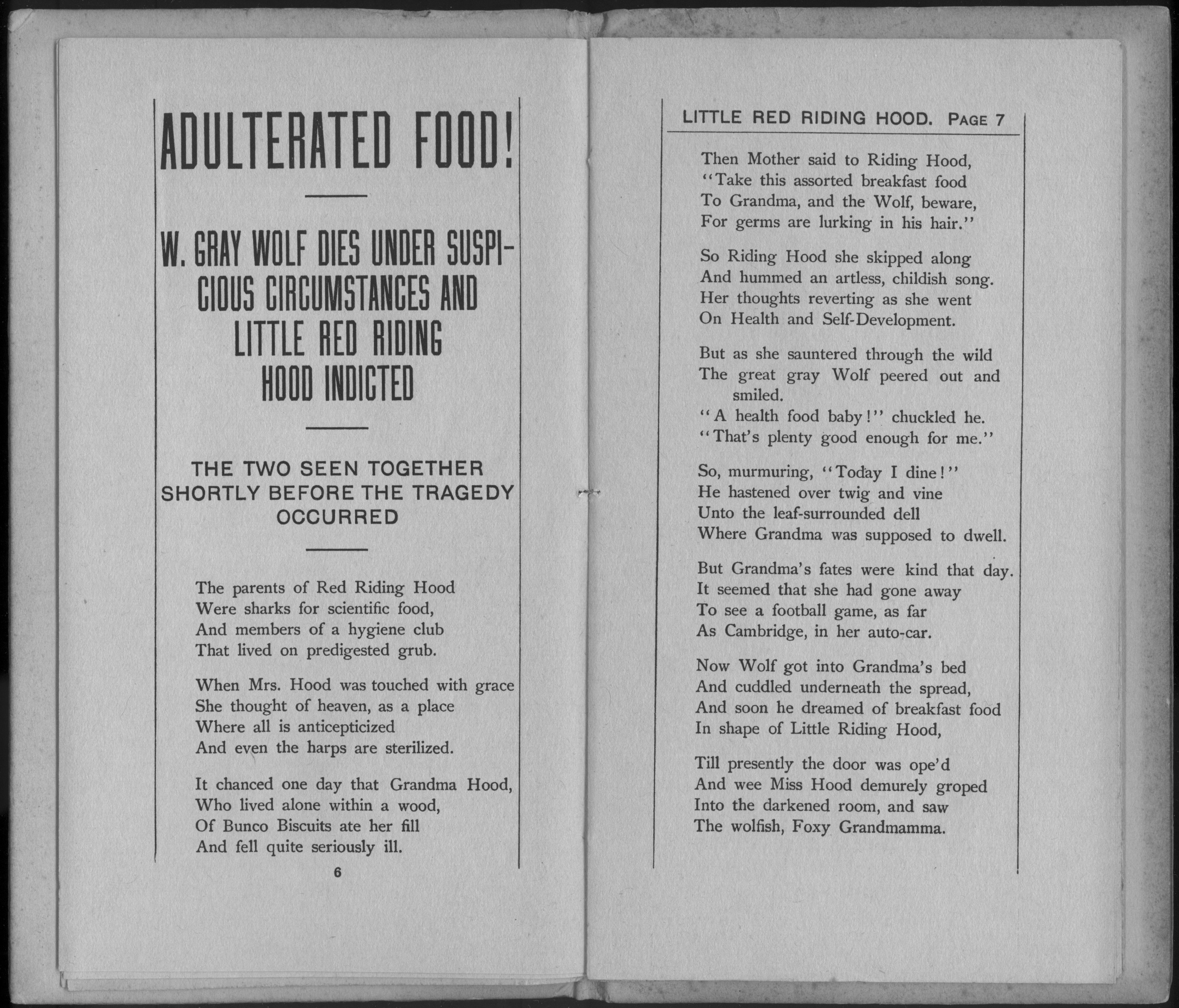
In contrast to Irwin’s Love Sonnets of a Hoodlum, whose humor is obscure to modern readers, his 1904 Fairy Tales Up-to-Now is fairly accessible. The book contains five poetical satires of five classic children’s stories titled with tabloid newspaper headlines. Cinderella, a stenographer working for 50¢ a day, goes to the ball in a rented gown, but when the Prince discovers that her diamond slippers are just paste, he rejects her because he’s broke and needs a bride who’s wealthy. Cinderella, though, becomes a millionaire by selling faux-diamond slippers. Jack, of Beanstalk fame, rides off to slay the Standard Oil Giant, but is given a job instead, rises to the rank of treasurer and becomes a Giant himself, but then returns home to endow a library, gas-works and church.
A charming feature of the book are the front and back covers, which are flongs, temporary paper molds used for printing newspapers. Stereotype metal was poured over the flong, then the stereotype was wrapped around the press’s cylinder for printing. After a few thousand copies, the stereotype metal would begin to wear out: at this point it would be melted down, then poured again over the same flong to make a new sharp copy for printing. Once the day’s press run was finished, the flongs were normally discarded, but here they were sent to Elder to be chopped up into covers. Each individual copy of Fairy Tales Up-to-Now is therefore unique.
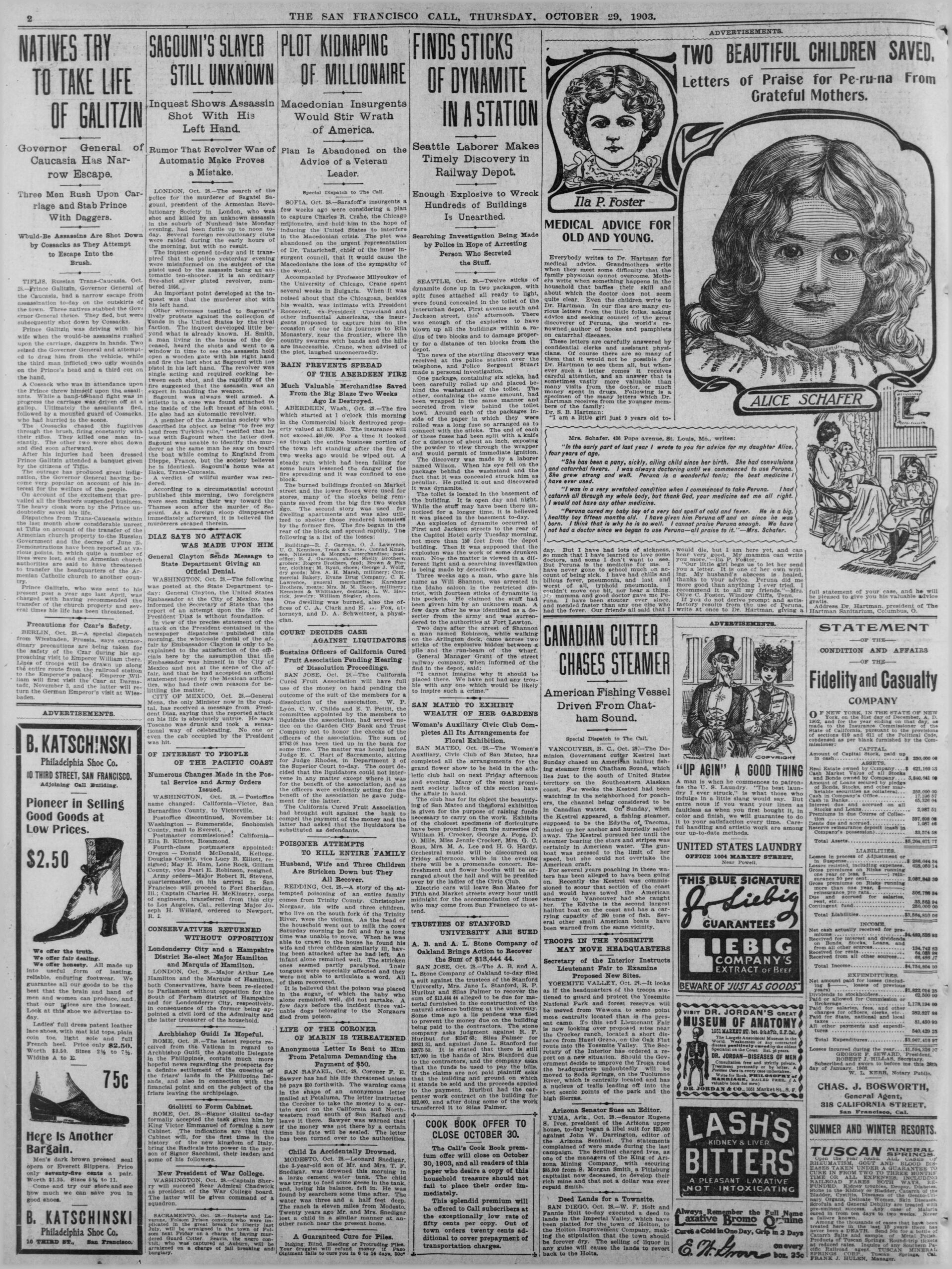
With a newspaper index service, it is possible to find the exact page a given flong was used to print. The example on this page is from the San Francisco Call of 29 October 1903, page 2. The flong would originally have been the size of the entire newspaper page, but just the tops of columns 3 and 4 are used as the book cover. Presumably, other copies of Fairy Tales Up-to-Now exist somewhere bound with other sections of this page 2 flong.
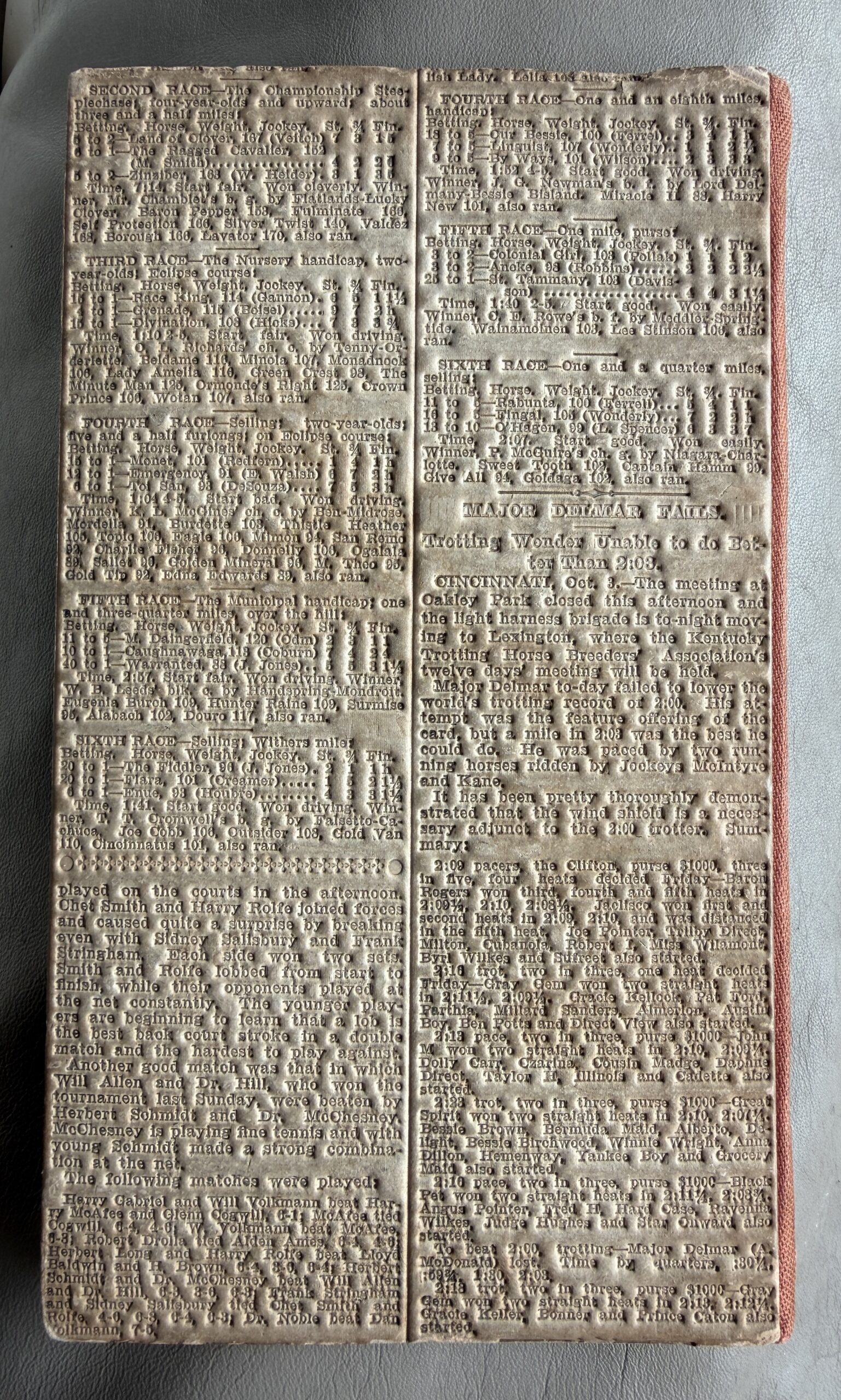
The rear cover of Fairy Tales Up-to-Now is also a flong, but there was no attempt to match up flongs from the same page or date. Our example copy’s back cover is from 4 October 1903, molded three weeks before the flong used on the front cover.
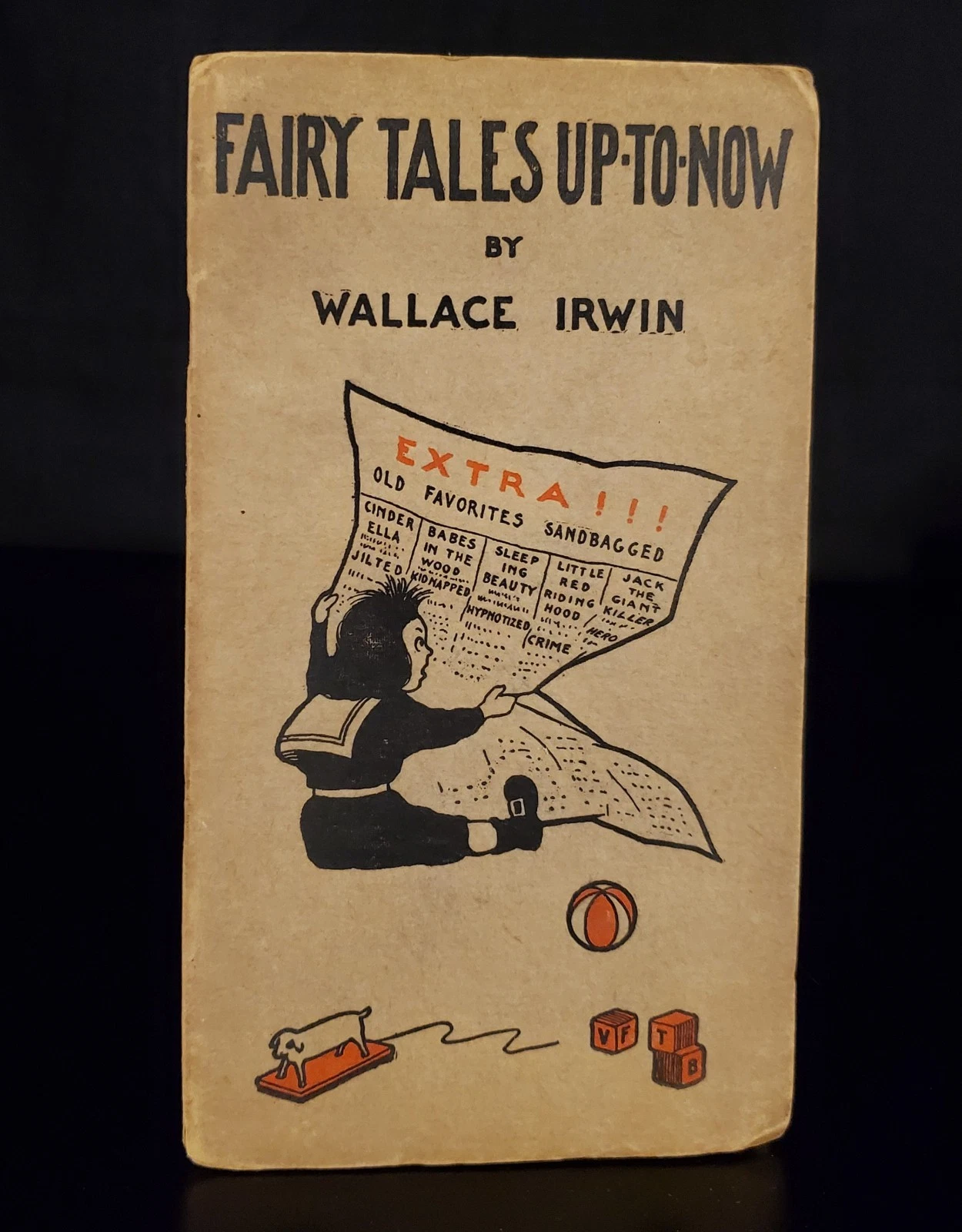
Fairy Tales Up-to-Now was also issued in paper wraps instead of flongs (see photo below), presumably cheaper but far less whimsical.
As of the date below, I have examined twelve copies of the flong-binding version of Fairy Tales Up-to-Now, and have been able to identify the specific newspaper page printed by all of them. Nine flongs are from the San Francisco Call in late 1903: most from mid-October, plus one from December 27th. A second group of three flongs are from the San Francisco Examiner in early April 1904. To me, this implies a second printing in March 1904, or perhaps even a third printing if we assign the December 27 flong to a second printing. It would also indicate that Fairy Tales Up-to-Now was a big seller for Paul Elder.
Do you own a copy of Fairy Tales Up-to-Now? If you would send me photographs of the front and back cover, I would be grateful. I am surveying images so that I can get a better idea of when the printings occurred. You can reach me at paulelder@pobox.com. Thank you very much in advance!
Thanks to Molly Schwartzburg and Andre Chaves for information about flongs.
Updated 2026-07-27


I do not believe that there are multiple “states” of this book, in the way you are using the term (to refer to the difference in content on the embossed covers). Each embossed cover is inherently unique, so there would be as many “states” as there were copies bound in this material. The embossed covers are unique because they were not produced for the book, but were, I believe, actual “flong,” leftovers from the production of actual newspaper pages.