A young heiress! A suave French pilot! Intrigue! Romance! Plot twists! But wait, didn’t you say that title of this book was How To Fly? Yes I did, and I hope you’ll find this one of the most exciting stories on this website.
How To Fly (1917), by Captain D. Gordon E. Re Vley, is an introductory treatise on how to fly an airplane, written in those heady early days of powered flight, just fourteen years after the Wright Brothers’ inaugural flight at Kitty Hawk. In 1917, World War I was still raging in Europe, and famous fighter aces such as Eddie Rickenbacker and “Red Baron” Manfred von Richthofen engaged in dogfights over Belgium and France. Pilots in the early days of flight had much the same acclaim and allure as astronauts did in the early days of the Space Age.
How To Fly is a small book with flexible covers, fitting easily into a shirt pocket. Re Vley surely did not intend for his book to be a pilot’s sole source of instruction; perhaps he thought publishing the book would gain him a clientele of wealthy students? Early aviation manuals such as this are in demand by collectors, and so a copy of How To Fly can be hard to find.

Enough about the book! What about the intrigue and the young heiress?! In September 1917, two months after publishing his book, Captain Re Vley met 22-year-old Adele Dorothy Callaghan. On her mother’s side, Adele was part of an important Italian-American family in San Francisco. Her aunt Adelina was married to Egisto Palmieri, the first Italian-American state senator in California. Another aunt, Erminia, was married to Ettore Patrizi, publisher of L’Italia, the largest Italian-language newspaper in the western United States. And her grandmother, Annie Cuneo, was the first woman in the United States to serve on the Board of Directors of a major bank.
Re Vley also had an interesting background. Born in France but raised in England, he became a pilot and rose to the rank of Captain in the British Aviation Corps. He went to California on furlough, and was engaged in experimental aviation work for the US Government. Between his investments and his service pay he was quite well off, and had recently started an airplane manufacturing company.

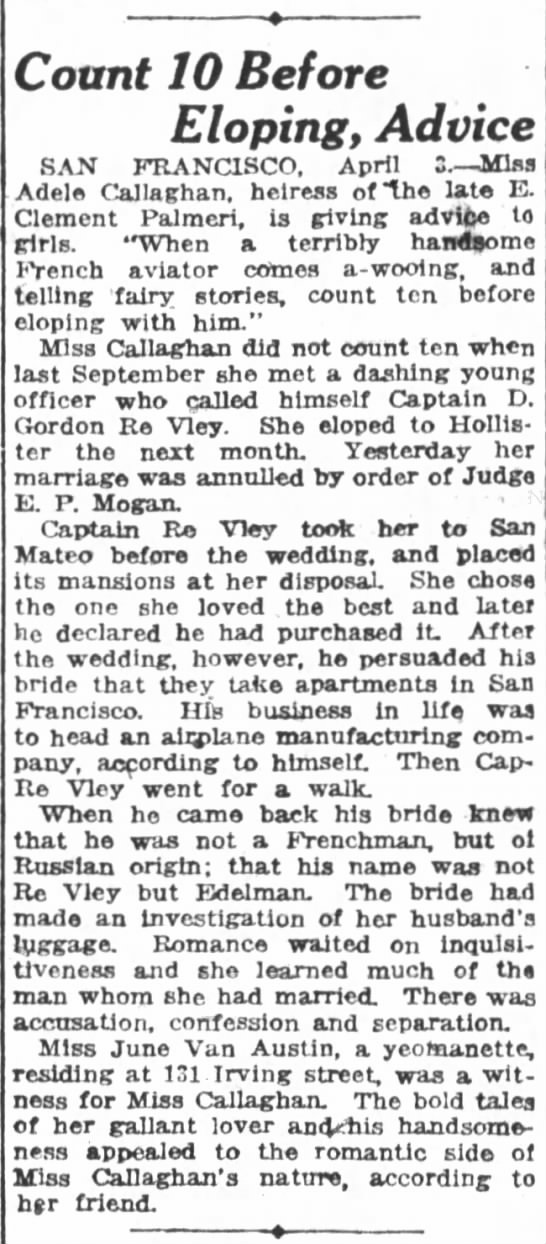
On 10 October 1917, Re Vley and Callaghan eloped, and were married in Hollister, California. After the wedding, they toured several grand houses in San Mateo, and after Adele indicated the one she liked best, Re Vley purchased it. In the meantime, they secured a flat in the Marble Crest Apartments at 845 Bush St. in San Francisco.
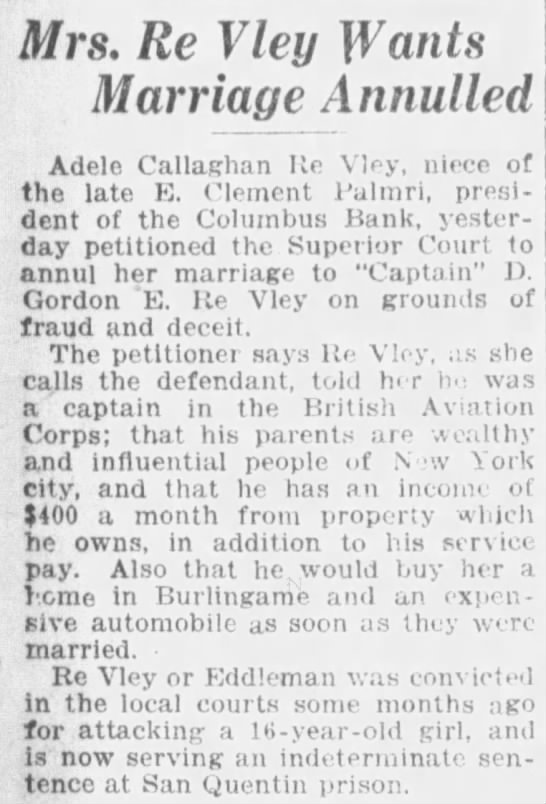
And then one fateful day, probably in November 1917, Re Vley went out for a walk. While he was out, Adele “thought it would be perfectly lovely,” as she later explained to a judge, “to examine her husband’s luggage and have a peek at some of the strange things that men carry about with them.”1Oakland Tribune, 3 April 1919, p9 What she found in his suitcase shocked her to the core: her husband was not French, nor even English, he was Russian. His name was not Re Vley, it was Edelman. No, he wasn’t a member of the British Aviation Corps, he wasn’t rich, he didn’t own an airplane manufacturing business, and he hadn’t bought her that mansion in San Mateo. And worst of all, in August 1917, just six weeks before they were married, her husband had been arrested for luring a sixteen-year-old girl to his apartment and assaulting her. He was free on bail and awaiting trial, even as Adele sat there. Everything he had told her was a lie.

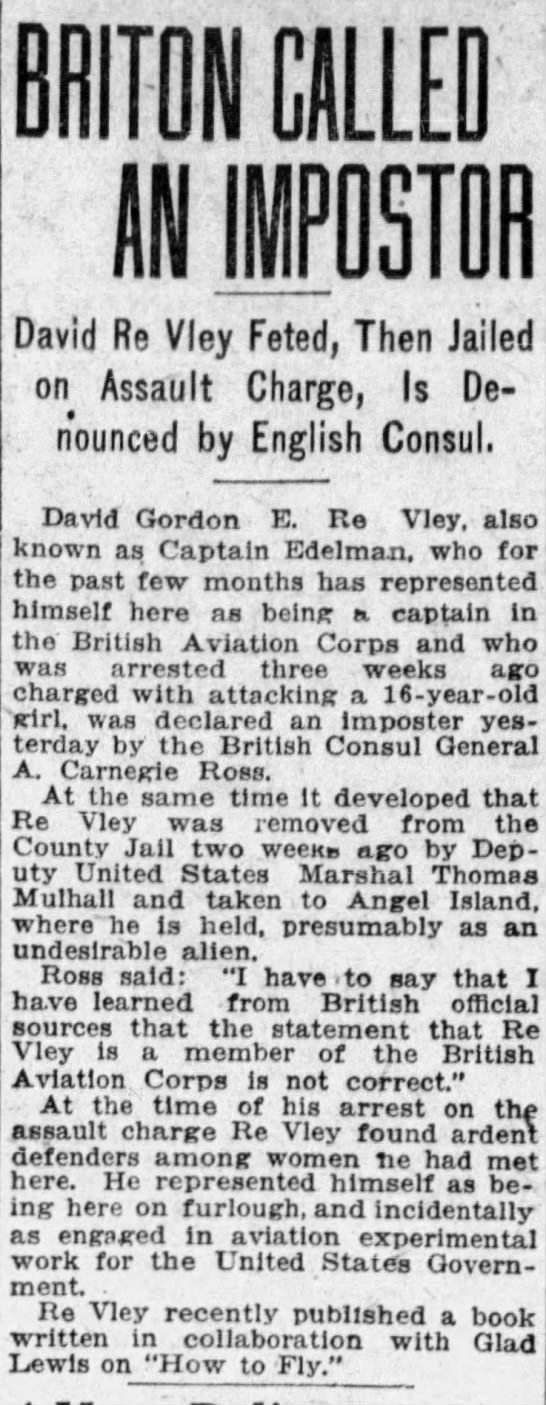
One can only imagine the scene when “Captain” Re Vley/Edelman returned from his stroll. When the shouting was over, Adele packed her bags and walked out. Re Vley’s trial began on 30 November, and he was found guilty the following day. As reported by the San Francisco Call on 8 December, Superior Court Judge George Cabaniss sentenced Re Vley an indeterminate imprisonment of not less than one year. Adele was present at the sentencing, and was led weeping from the room.2San Francisco Call, 8 December 1917, p2 Re Vley arrived at San Quentin on the 20th, and Adele sued for annulment on January 10th, which was eventually granted on 2 April 1919. As you can see in the images below, the local papers delighted in reporting the saga. The day following the annulment, the Oakland Tribune quoted Adele as saying “When a terribly handsome French aviator comes a-wooing, and telling fairy stories, count ten before eloping with him.” What a shame that Adele hadn’t read the San Francisco Examiner article on 20 September 1917—three weeks before they were married—when Re Vley (“also known as Captain Edelman”) had been outed as an impostor by the British Consul General and arrested for assault.
By January 1920, eight months later, Adele Callaghan had married Arthur Cornelius Crowley (1895-1941), and this marriage worked. Adele outlived her second husband by forty-eight years, passing away in June 1989 at the age of 93. Adele and Arthur are buried in the Palmieri family crypt at the Italian Cemetery in Colma.3https://www.findagrave.com/memorial/44388766, accessed 14 Feb 2026
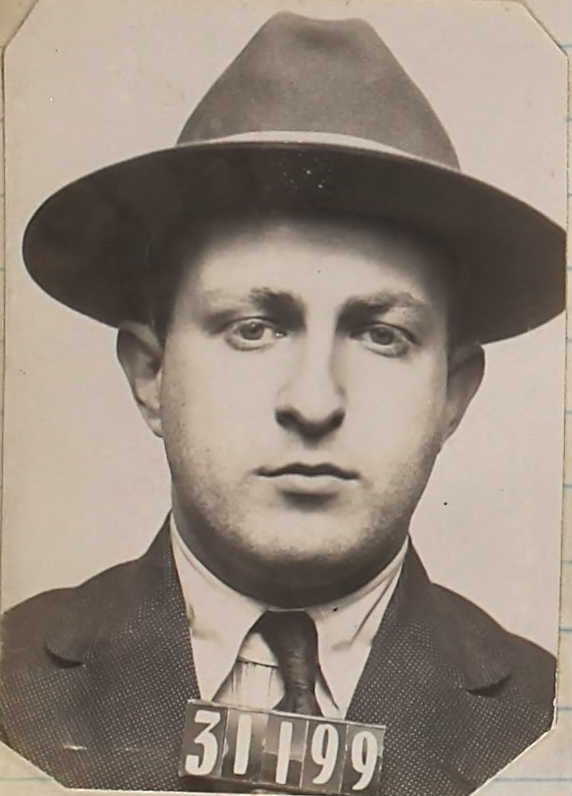
After much searching online, I now know enough of Re Vley’s whereabouts to paint what I believe is a reasonably good portrait. He was born David Edelman in New York City on 26 July 1895, the sixth child and fifth son of Abraham Edelman and Clara Zelekoff (several variant spellings of her maiden name are recorded), Jewish immigrants from Czarist Russia. The family had immigrated in 1891, and David was the only child of the six to be born in America. His father, a leather goods salesman, died when he was just a few years old. His older siblings worked in well-known New York manufacturing trades: cigar making, dress making, jewelry.
By the 1915 New York state census, David Edelman is now 19 years old, occupation “aviator.” Where did he learn to fly airplanes? The logical conclusion is in the military, and in his 1917 U.S. military registration card, he claims that he spent one year in the English Army. While to some degree this may be a falsehood (on 20 September 1917, British Consul General A. Carnegie Ross said “I have learned from British official sources that the statement that Re Vley is a member of the British Aviation Corps is not correct.”), Re Vley must have learned how to fly somewhere.
I had previously assumed that Edelman used the name “D. Gordon E. Re Vley” as an alias for fraudulent purposes, but it seems to have been more nuanced than that. Almost the entire Edelman family—mother Clara, and children Nathan, Joseph, Olga, and David—adopted the Re Vley surname, perhaps in an attempt to avoid anti-Semitism. Only the two oldest sons, Peter and Alexander, appear to have kept the name Edelman. This name change happened in 1916 or 1917, as the military registration cards for both David and his brother Joseph list a surname “Re Vley” with notes that they were also known as Edelman. (For most of the family, in later years, the name “Re Vley” lost the space and became “Revley” or “Reveley” in many documents.)
In any case, in late August 1917, just a few weeks after David Edelman alias D. Gordon E. Re Vley filed his military registration card, and just two months after Elder published How to Fly, Re Vley was arrested for statutory rape. He was duly tried, convicted, and served one year in San Quentin before being being paroled on 20 December 1918. In 1920, he is living alone in San Francisco.
Re Vley next surfaces in March 1921, when he marries Ivy Gertrude Ferner Heath in San Francisco. In October of that year, several newspapers reported the formation of a new aircraft manufacturing company with Re Vley in charge. The Re Vleys moved to Southern California where he was also listed as a stockbroker and a “well-known promoter.” However, Re Vley’s deceptions now, once again, caught up with him.
In January 1923, the California Corporations Commissioner’s office issued warrants for Re Vley and two other officers of the new aircraft company. They were charged with defrauding investors by selling stock without a sales permit—stock which, as it turned out, had no actual company capitalization behind it.4San Francisco Call, 25 January 1922, p1 The case against Re Vley was eventually dismissed, but the aircraft company went out of business.
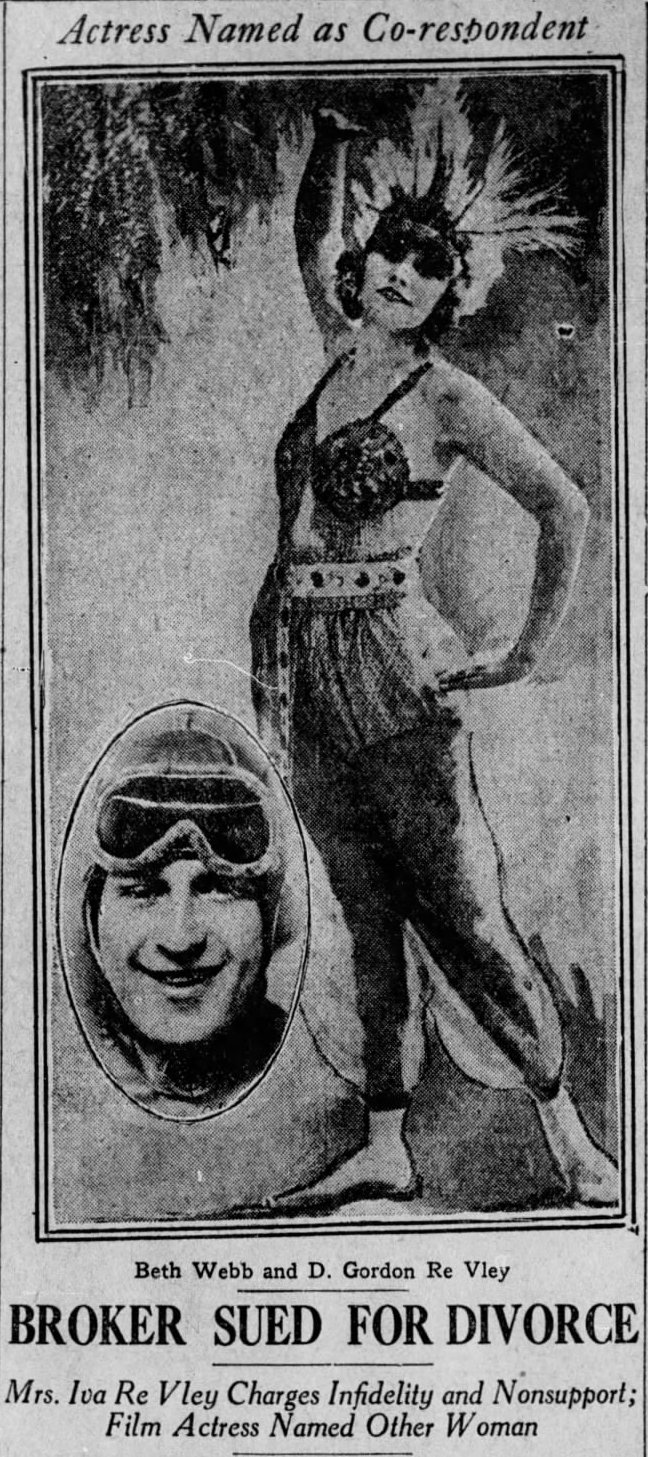
Then, in August 1923, Ivy Re Vley discovered that her husband had a mistress: Beth Webb, a minor film actress and sister of film director Millard Webb. Re Vley was paying for Beth’s “swell apartment and other luxuries.” Ivy filed for divorce, charging non-support, infidelity, and mental cruelty.5Los Angeles Times, 15 August 1923, p18 The annulment was granted in January 1924. “He was a liability rather than an asset,” said Ivy afterwards.
Just one month after his divorce from Ivy, Re Vley arrived at San Quentin for a second time, having been convicted of “offering money on false pretenses.” This conviction may have been connected with yet another fraudulent stock deal.6Los Angeles Evening Express, 15 December 1923, p3 Re Vley was transferred to Folsom Prison, where he spent the next 3½ years. He was paroled in October 1927, and within ten months married his third wife, Alverda McKee Giltner. This marriage lasted until his death on 19 December 1932, at the age of 37.
Updated 2026-02-17