The Soul of an Artist was published in Milan in 1895 under the title Anima Sola, meaning “lonely soul.” It’s an apt title for Neera, whose melancholy childhood set the tone for much of her writings.
Neera was the pseudonym of Anna Zuccari Radius (1846-1918). She lived her entire life in Milan, Italy. Anna’s mother died when she was ten, whereupon she was sent to live with her father’s two unmarried sisters, strict and unsmiling. In 1871 Neera married Milanese banker Emilio Radius; they had two children.
Neera’s output was prodigious: twenty-two novels, eight volumes of short stories, ten volumes of moralistic essays and two of poetry. According to Catherine Ramsey-Portolano, of the American University of Rome
Neera’s protagonists are women struggling to fulfill the traditional roles of wife, mother and daughter in fin de siècle Italian society… The polemical and engaged nature of these writings, in which Neera defends maternity as woman’s highest mission in life, is evident from the titles chosen for two of the volumes, Battaglie per un’idea (1898) and Le idee di una donna (1904). Although Neera defined herself an antifeminist in her essays and was not supportive of the feminist cause, feminists of the period, such as Ersilia Majno and Sibilla Aleramo, recognized the importance of her role as woman writer and the feminist nature of her narrative work.
Title page of “The Soul of an Artist”Neera (1846-1918)
Generally speaking, Paul Elder preferred to publish original works (notwithstanding the occasional series of classic literature, such as Impression Classics, Panel Books or Abbey Classics). Thus a book like his 1905 publication of The Soul of an Artist, as a previously published work, is uncommon in the canon.
The authorized translator was Miss Elizabeth Livingstone Murison of San Francisco, whose work was called out by an article in the San Francisco Call of 18 February 1906.
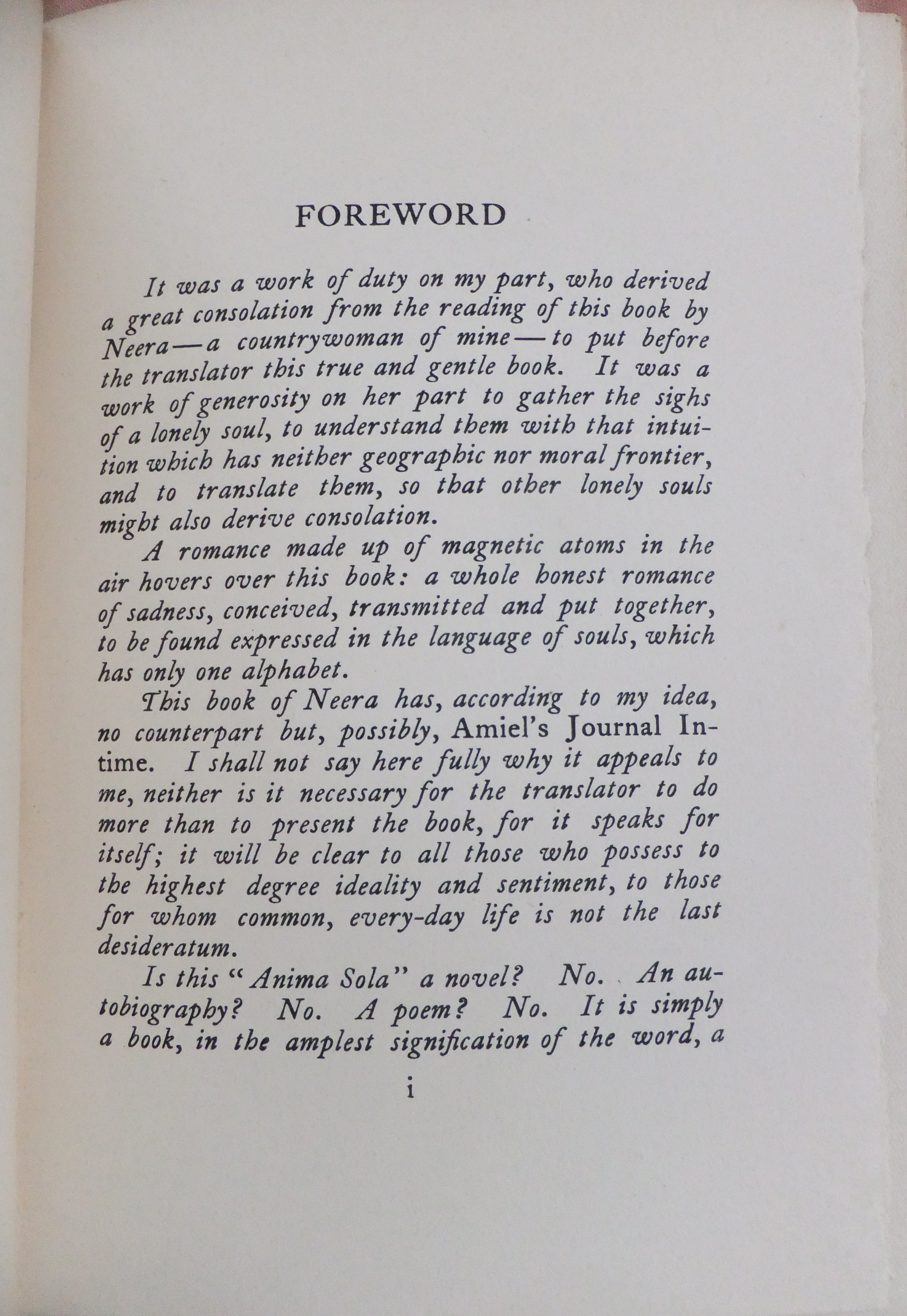
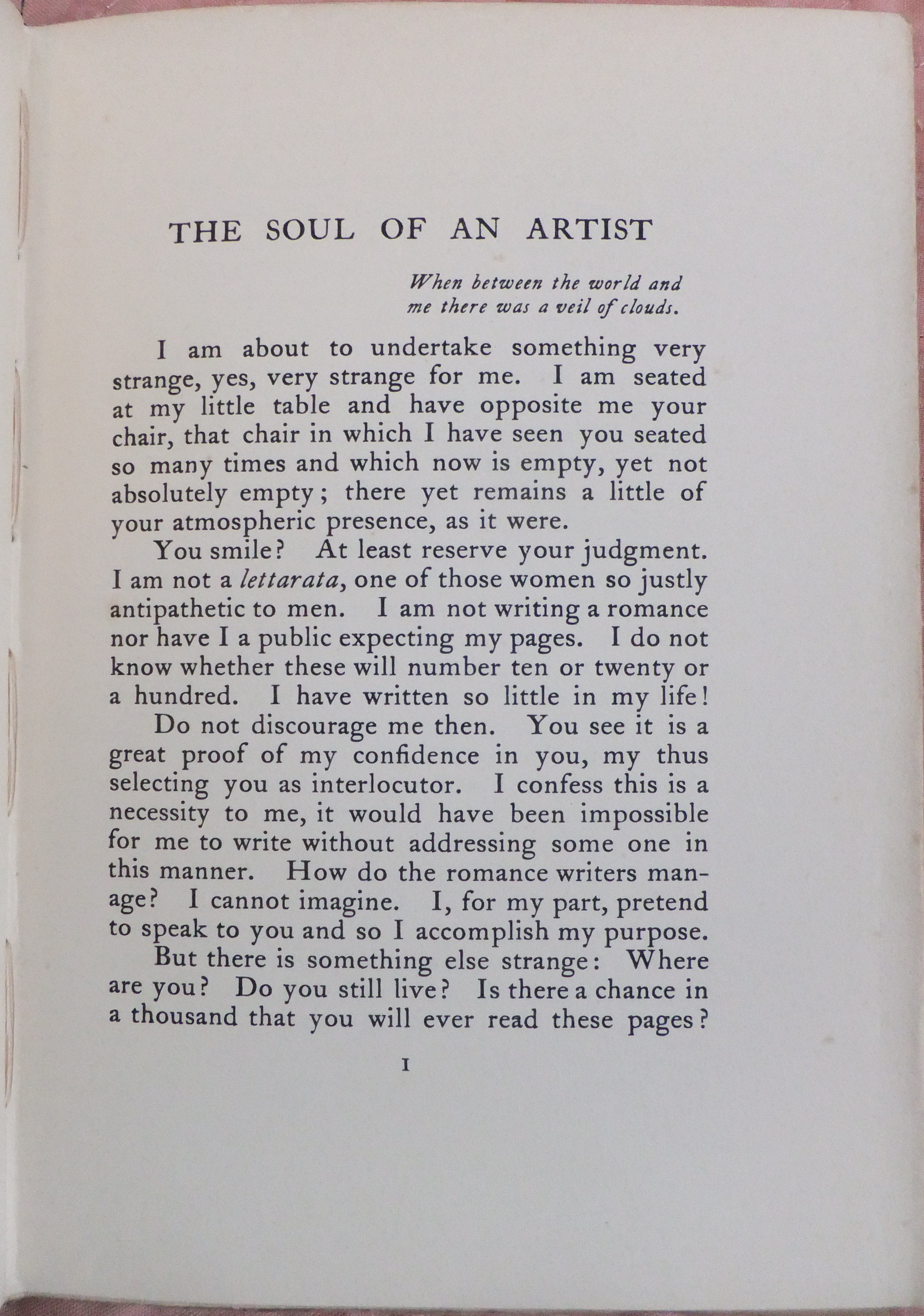
Foreword of “The Soul of an Artist”Translator’s Preface of “The Soul of an Artist”Page 1 of “The Soul of an Artist”Page 117 of “The Soul of an Artist”
References:
1. http://www.lib.uchicago.edu/efts/IWW/BIOS/A0034.html
2. “San Francisco Woman in Translator’s Role“, San Francisco Call, vol 99 no 80, 18 February 1906.
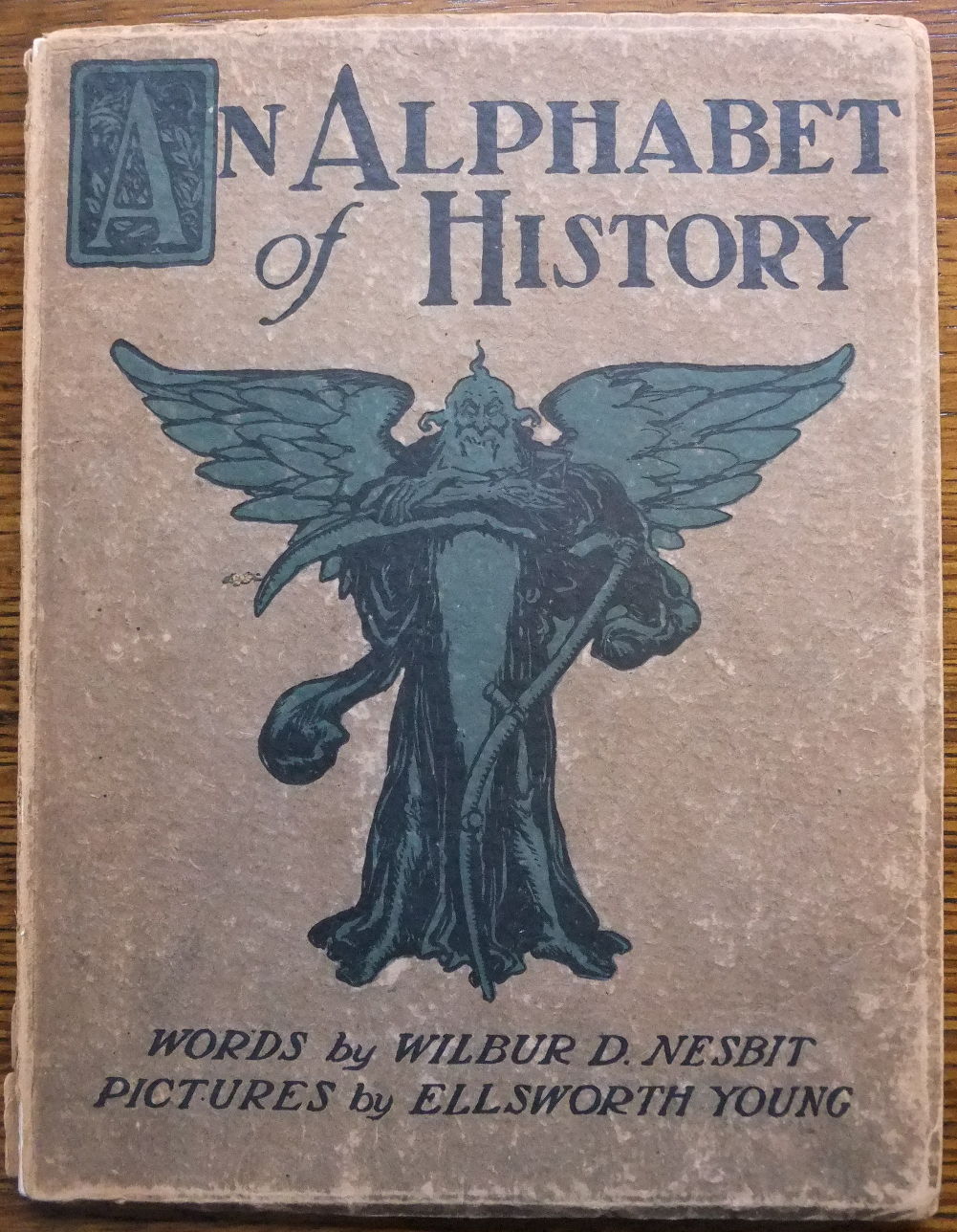
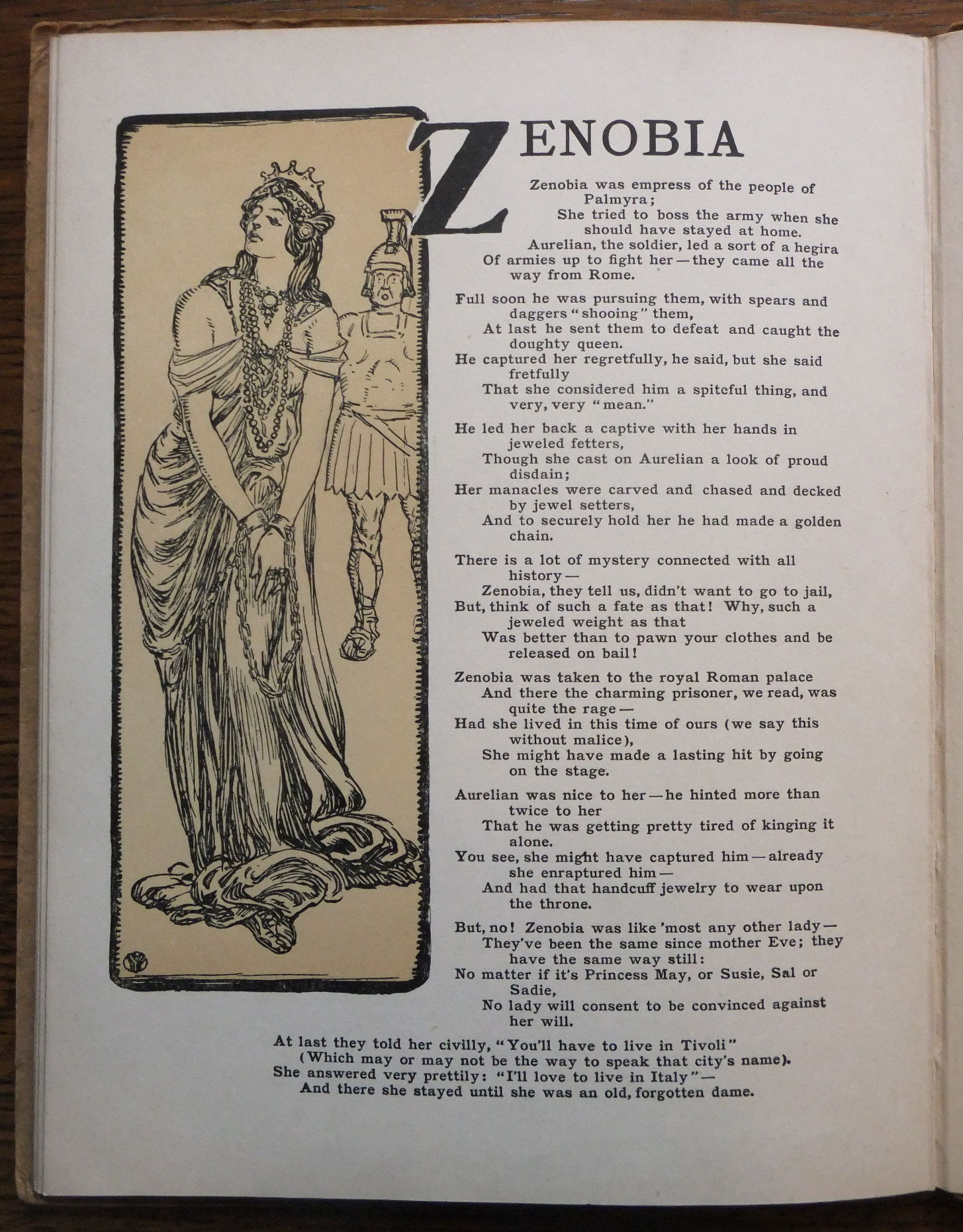
In 1905, Paul Elder published Wilbur Nesbit’s An Alphabet of History, a large-format volume of verse for adults. In contrast to some other humorous verse issued by Elder, Nesbit’s poetry has survived the last century in fine shape to be appreciated by the modern reader.
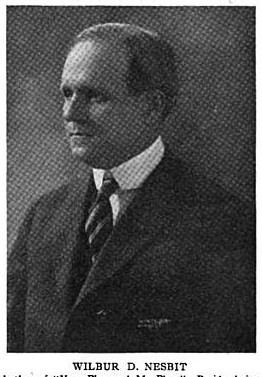
Wilbur D. Nesbit was born in Xenia, Ohio in 1871. He started as a printer before becoming a reporter for his hometown newspaper, the Cedarville Herald. Nesbit spent the rest of his career in journalism, writing for newspapers in Muncie, Indianapolis, and Baltimore before moving to Chicago. He wrote a column for the Chicago Tribune called “A Line o’ Type or Two,” and was later on the staff of the Chicago Evening Post. Along the way he began composing poetry. Nesbit was also in demand as a toastmaster, and was a long-time member of the “Forty Club,” a Chicago version of San Francisco’s Bohemian Club. Nesbit wrote a history of the Forty Club in 1912.
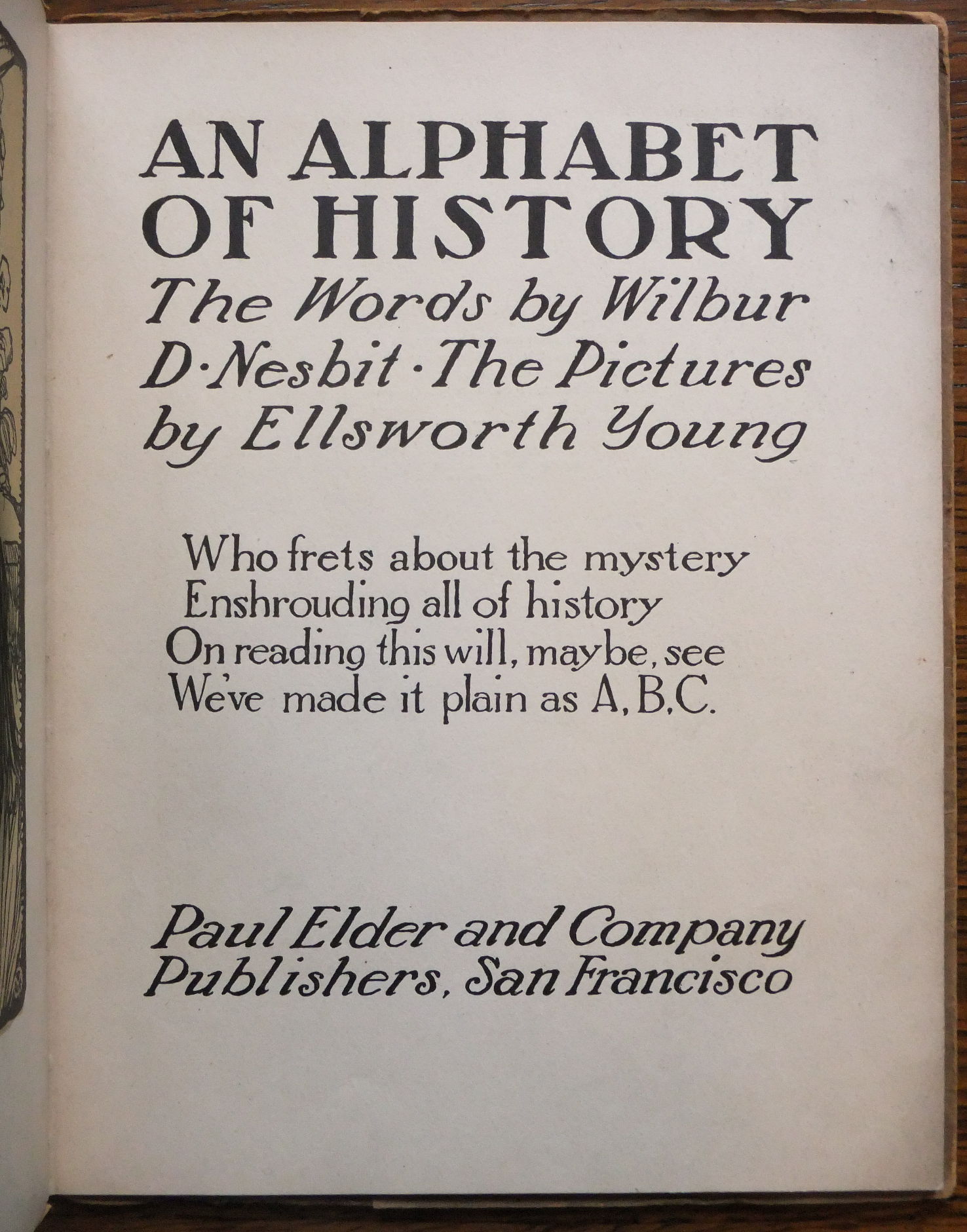
Title page of “An Alphabet of History”
Nesbit’s best known work was a short patriotic poem “Your Flag and My Flag,” first published in the Baltimore American in 1902. It was described as having “a ring of national sentiment that rivals the ‘Star Spangled Banner’ itself.”1The National Magazine, Boston, May 1917, p304-5.. The poem was frequently recited in schoolrooms, and also at political conventions and Congressional sessions.
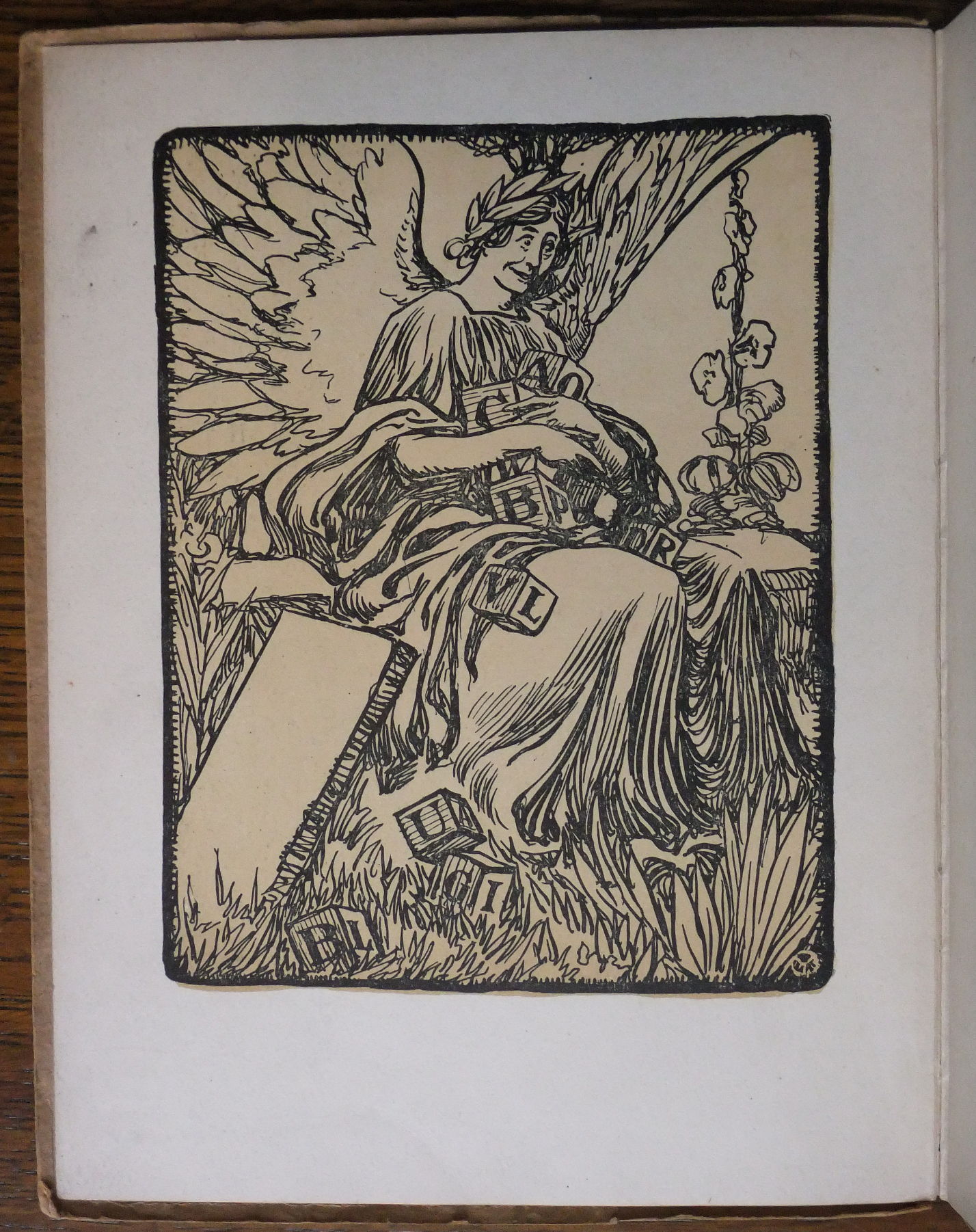
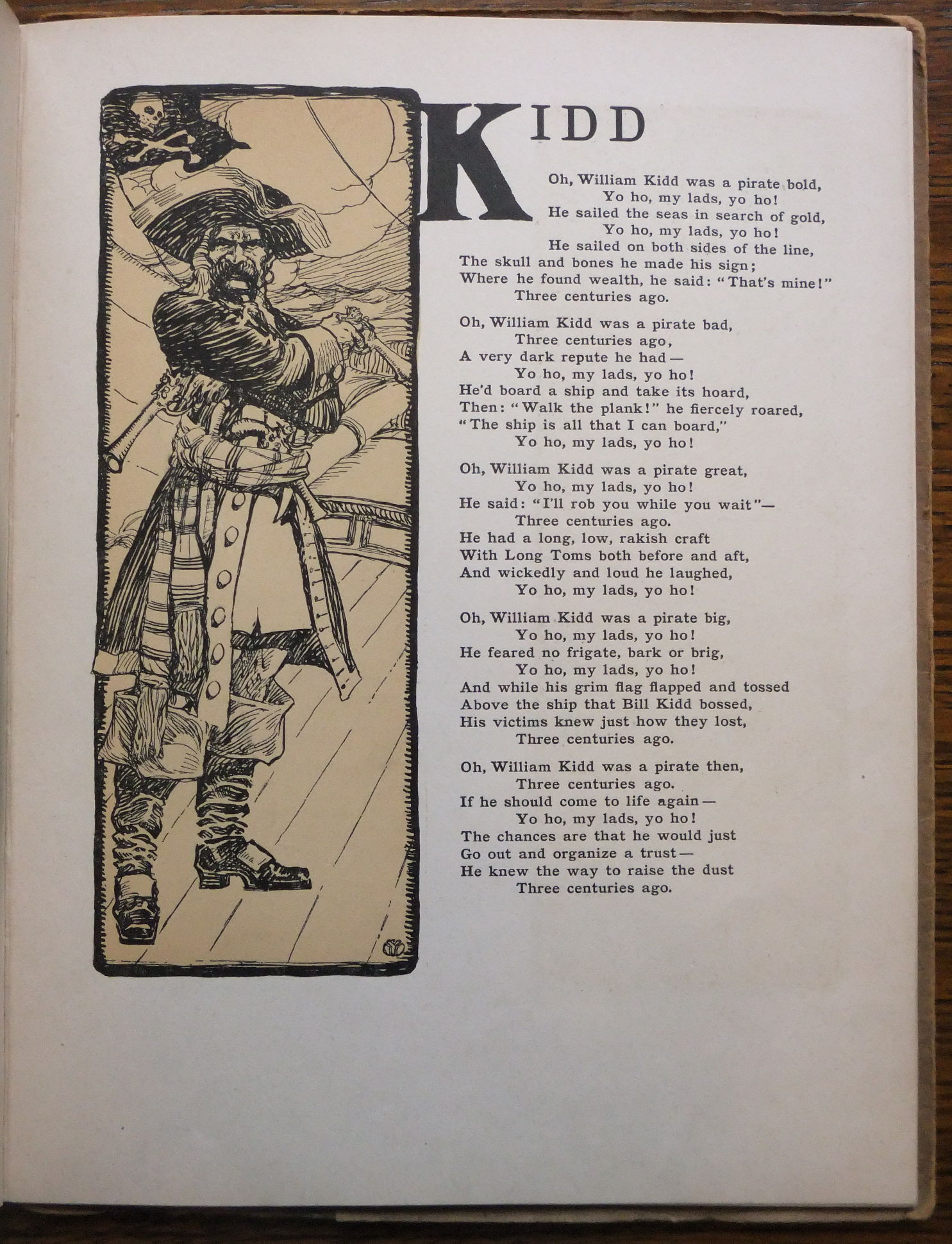
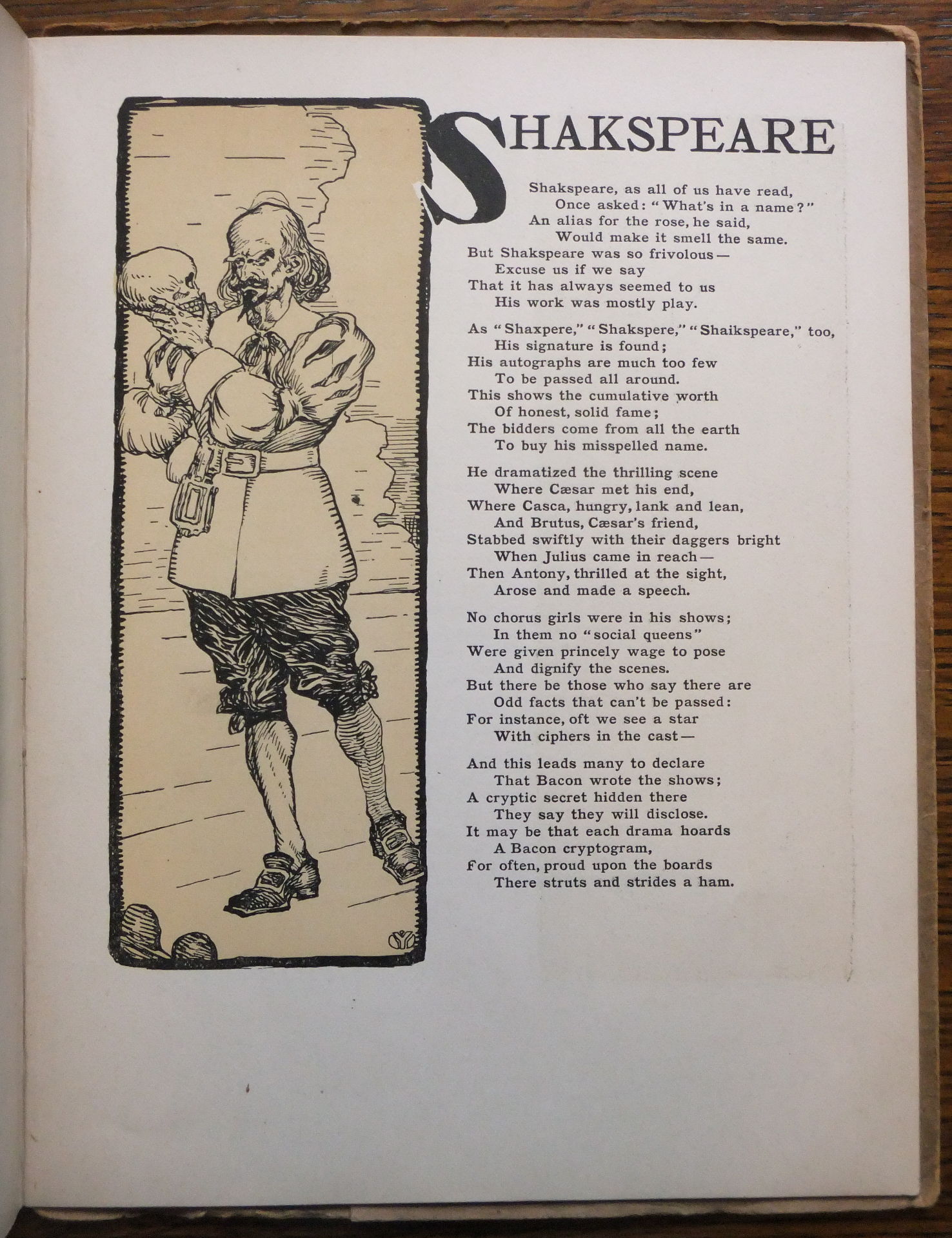
The delightful drawings are by the artist Ellsworth Young (1866-1952), who in addition to book and magazine illustrations, was a noted landscape painter and poster artist. He studied at the Art Institute of Chicago and later worked for the Works Progress Adminitration (WPA) during the Depression.
Updated 2025-12-20
Frontispiece of “An Alphabet of History”“An Alphabet of History,” letter K“An Alphabet of History,” letter S“An Alphabet of History,” letter Z
Paul Elder & Company is not generally known for “fine press,” but the 1907 series TheWestern Classics certainly qualifies. In my opinion, these are the highest-quality books that Paul Elder ever published. The set consists of four novels printed on fine Fabriano paper, bound in heavy beveled boards and vellum spines, with handsome slipcases, each in a limited edition of 1000. The format is the consistent, but each book has its own design and is set in a different typeface: Caslon 471, Bookman, Cheltenham Wide, and Scotch Roman.
The books could be had individually in a matching dust jacket and slipcase for $1.75, or individually “in a hinged case of heavy lacquered Japanese fibre stock” for the same price, or the set of four in a cabinet box of the same Japanese fibre stock for $6. The Western Classics remain one of the most collectible of Elder’s publications.
The Sea Fogs
Title page of “The Sea Fogs”
Robert Louis Stevenson’s Sea Fogs is an excerpted chapter from his larger work, The Silverado Squatters, published in 1883 in Edinburgh, Scotland by Chatto and Windus. The “sea fogs” of the title refers to the morning fog bank visible from Stevenson’s cabin in the hills above Calistoga, in California’s Napa Valley:
The sun was still concealed below the opposite hilltops, though it was shining already, not twenty feet above my head, on our own mountain slope. But the scene, beyond a few near features, was entirely changed. Napa valley was gone; gone were all the lower slopes and woody foothills of the range; and in their place, not a thousand feet below me, rolled a great level ocean. It was as though I had gone to bed the night before, safe in a nook of inland mountains, and had awakened in a bay upon the coast. I had seen these inundations from below; at Calistoga I had risen and gone abroad in the early morning, coughing and sneezing, under fathoms on fathoms of gray sea vapour, like a cloudy sky—a dull sight for the artist, and a painful experience for the invalid. But to sit aloft one’s self in the pure air and under the unclouded dome of heaven, and thus look down on the submergence of the valley, was strangely different and even delightful to the eyes. Far away were hilltops like little islands. Nearer, a smoky surf beat about the foot of precipices and poured into all the coves of these rough mountains. The colour of that fog ocean was a thing never to be forgotten. For an instant, among the Hebrides and just about sundown, I have seen something like it on the sea itself. But the white was not so opaline; nor was there, what surprisingly increased the effect, that breathless, crystal stillness over all. Even in its gentlest moods the salt sea travails, moaning among the weeds or lisping on the sand; but that vast fog ocean lay in a trance of silence, nor did the sweet air of the morning tremble with a sound.
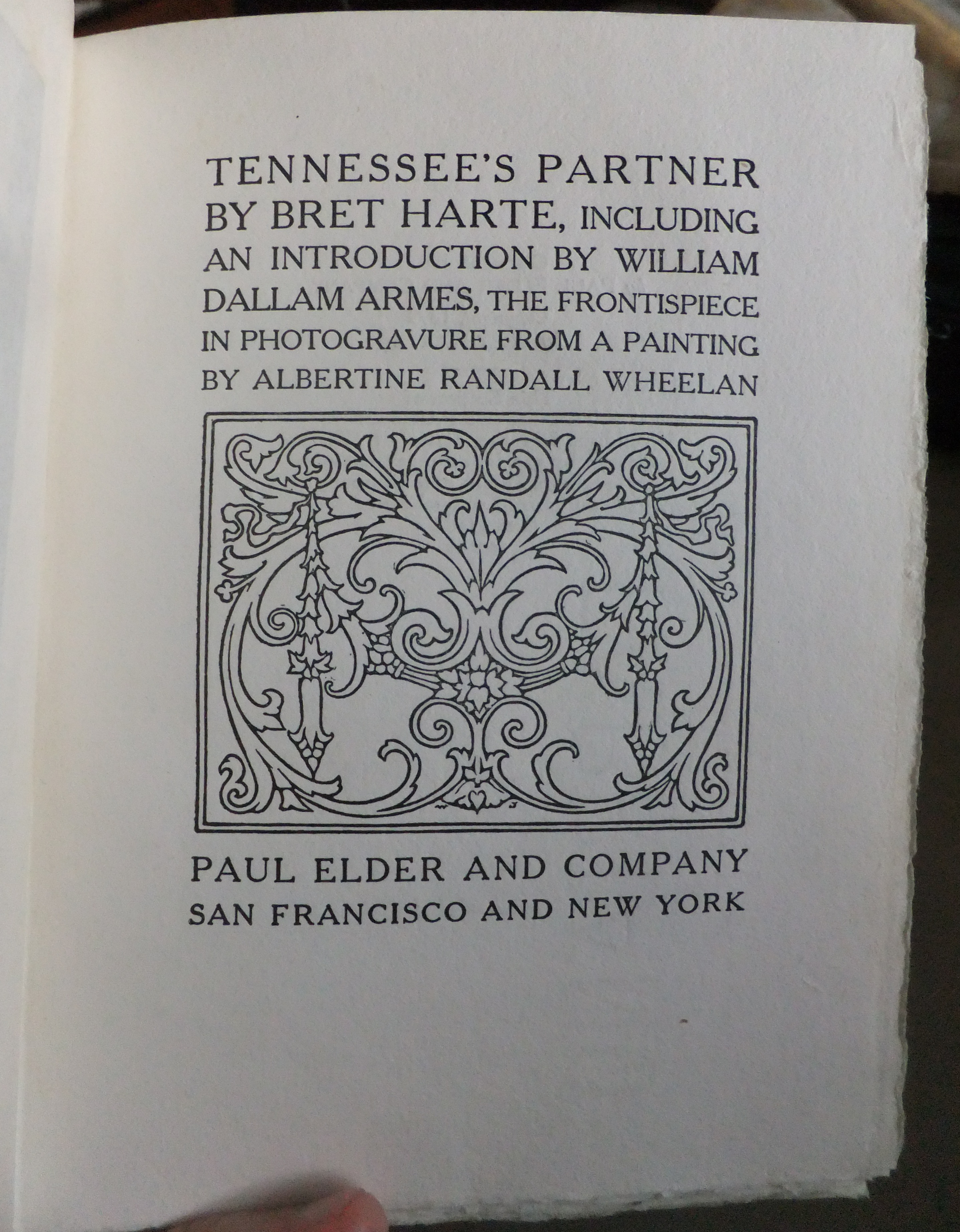
Title page of “Tennessee’s Partner”
Tennessee’s Partner
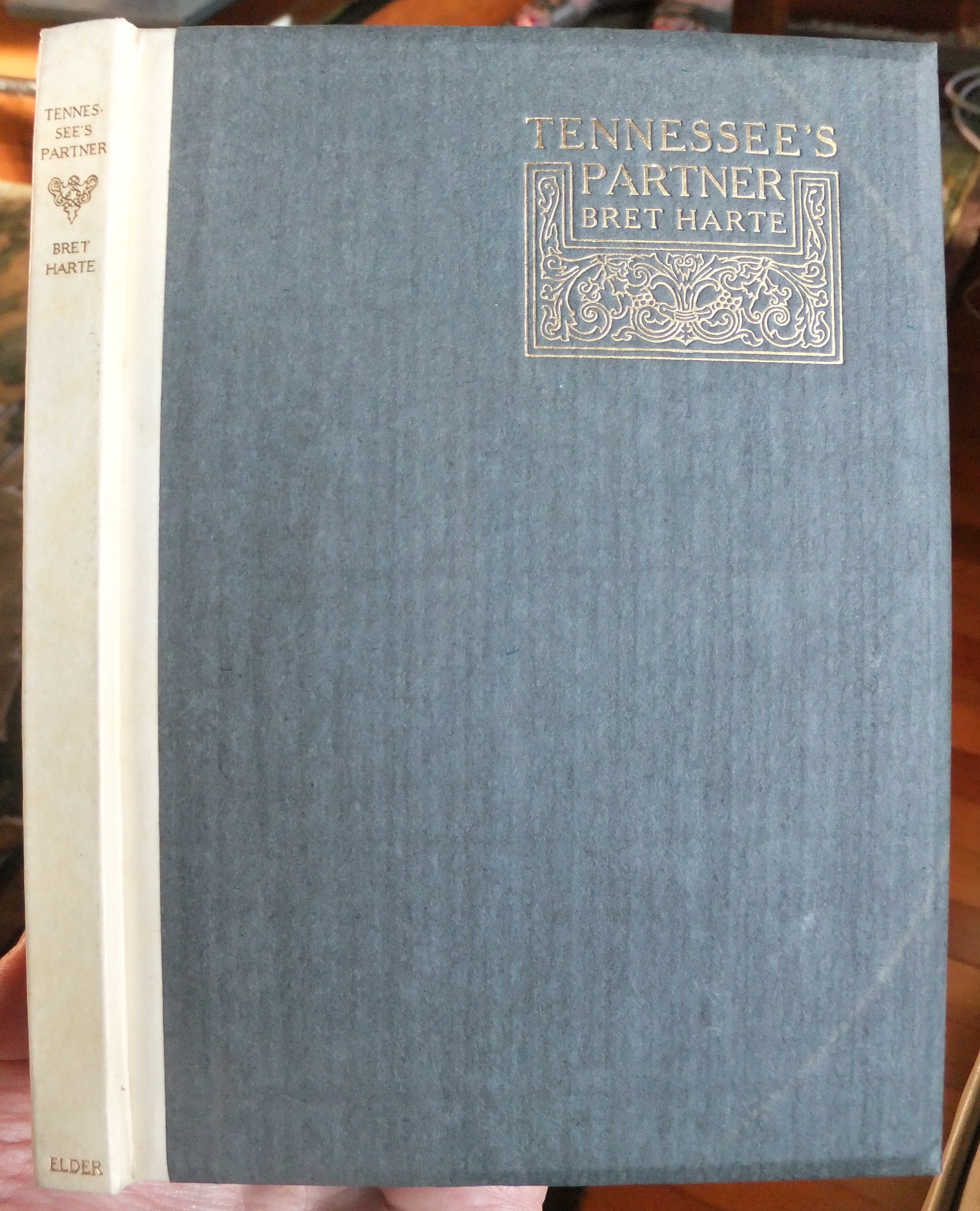
The popularity of Bret Harte (1836-1902) rests on his stories of the Gold Rush in California. Tennesee’s Partner first appeared in the October 1869 issue of the Overland Monthly, a magazine which Harte himself edited and published. One writer called it “one of the earliest ‘buddy’ stories in American fiction.”1Martin Scofield, The Cambridge Introduction to The American Short Story, Cambridge University Press, 2006, p55. There is some evidence that the story is based on Jason Chamberlain and John Chaffee, two miners who lived together for over fifty years. In 1925, the San Francisco Bulletin ran a story connecting Harte’s story with Chamberlain and Chaffee, based on the account of a man who was a mining partner with them in 1865.
Tennesee’s Partner also inspired a number of Hollywood movies, including three silent films. In 1955, RKO released Tennessee’s Partner, starring John Payne, Rhonda Fleming, and future California governor and US President Ronald Reagan. The movie took substantial liberties with Bret Harte’s story line.
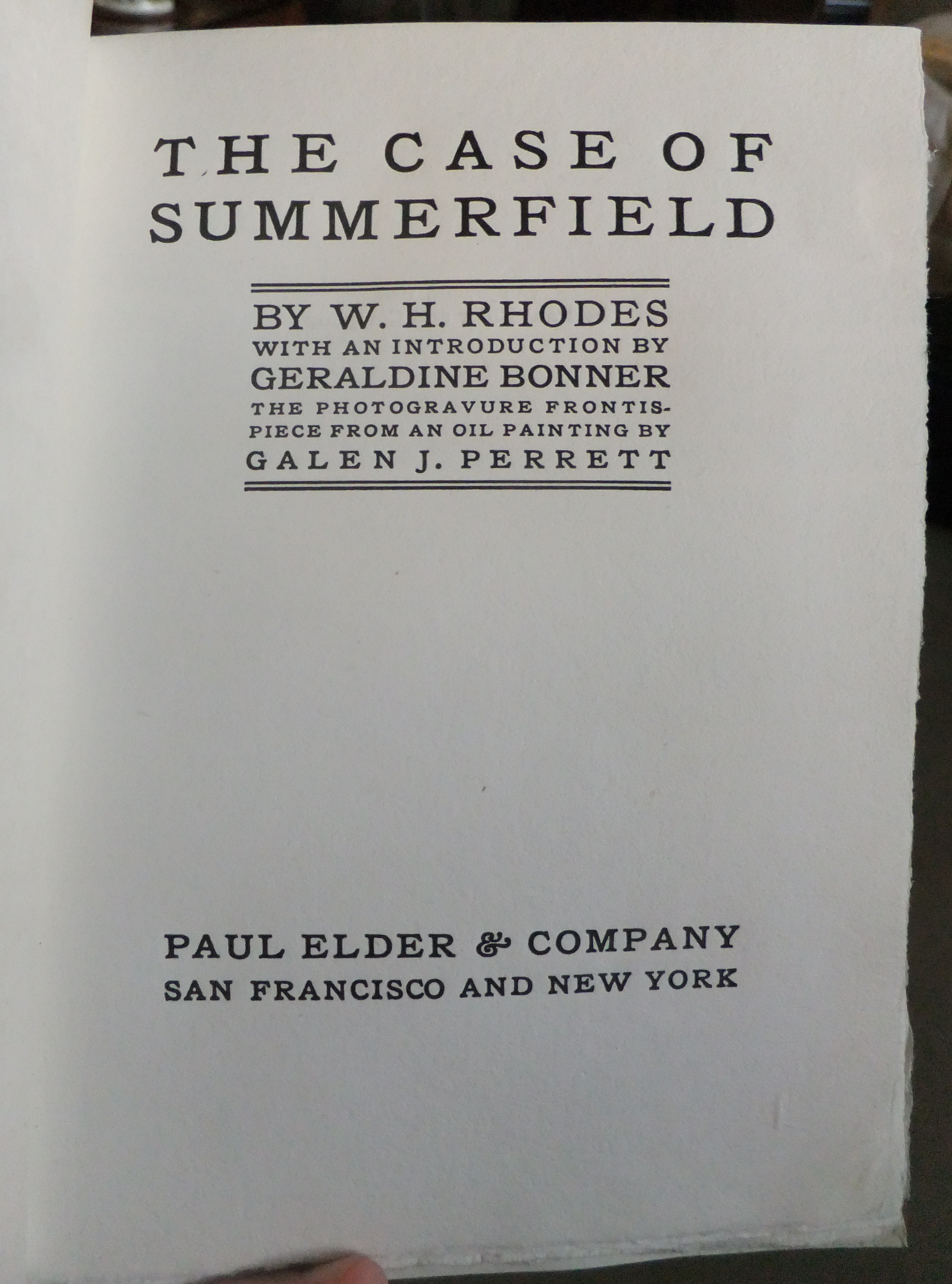
Title page of “The Case of Summerfield”
The Case of Summerfield
William Henry Rhodes (1822–1876) is known today primarily for this one story, published in two installments in the Sacramento Union newspaper 1871 under the initials “W.H.R.” The story concerns a man who invents a way to make water catch fire, and thus conceivably destroy all life on earth. Elder’s 1907 edition is the first time that the two halves of the story appeared as one unit. In 1950, The Case of Summerfield appeared in the Summer edition of Fantasy & Science Fiction, with editor Anthony Boucher calling Rhodes “one of the great pioneers of modern science fiction.”
Notably, the story also includes a character whose nickname is “Black Bart,” an alias adopted later by the “gentleman bandit,” stagecoach robber, and doggerel poet Charles Bolles. Alexander Robertson, whose bookstore on Stockton St. was right around the corner from Paul Elder’s, claimed that Boles/Black Bart had been a customer of his in the early 1880s.
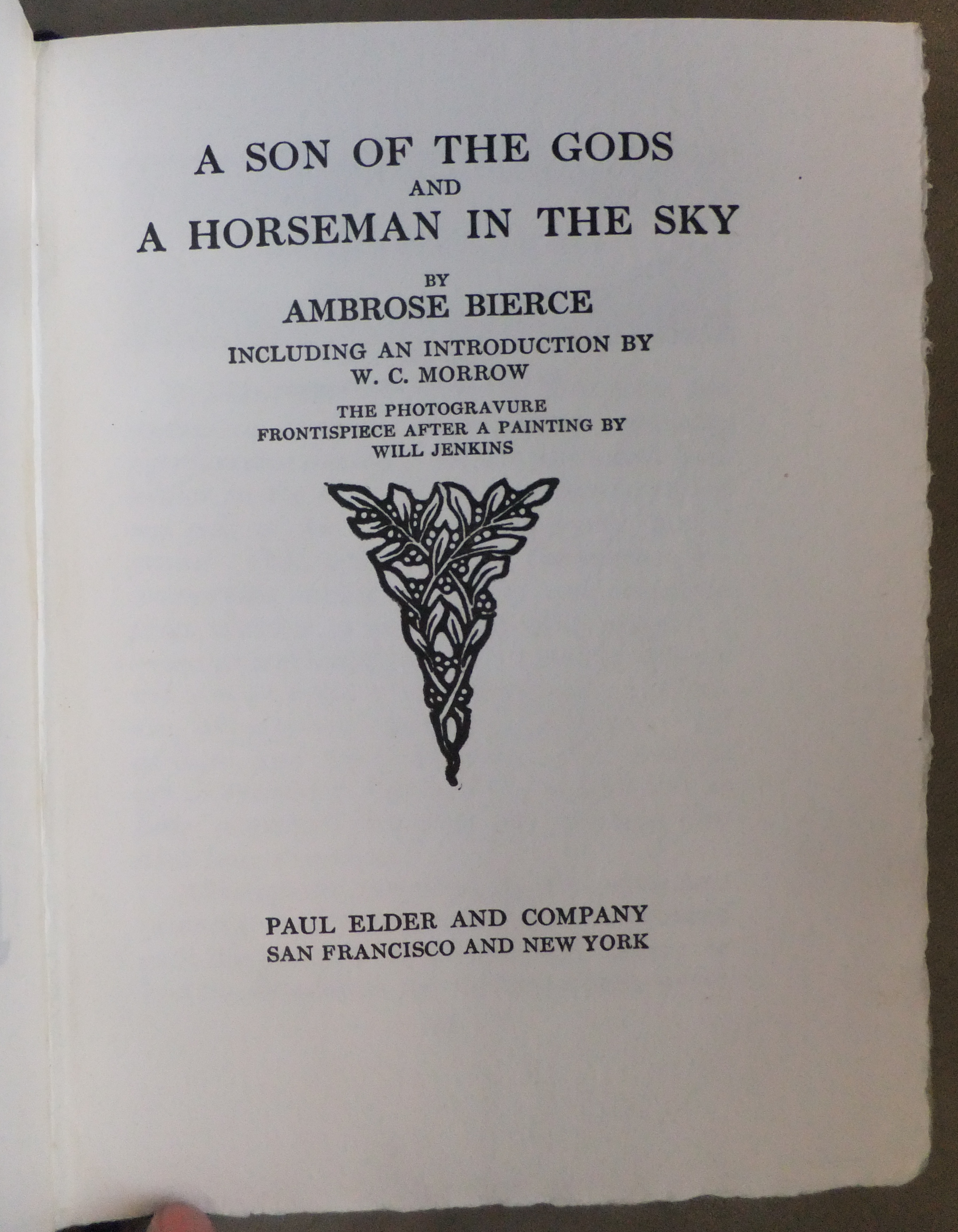
Title page of “A Son Of the Gods and A Horseman In the Sky”
A Son Of the Gods and A Horseman In the Sky
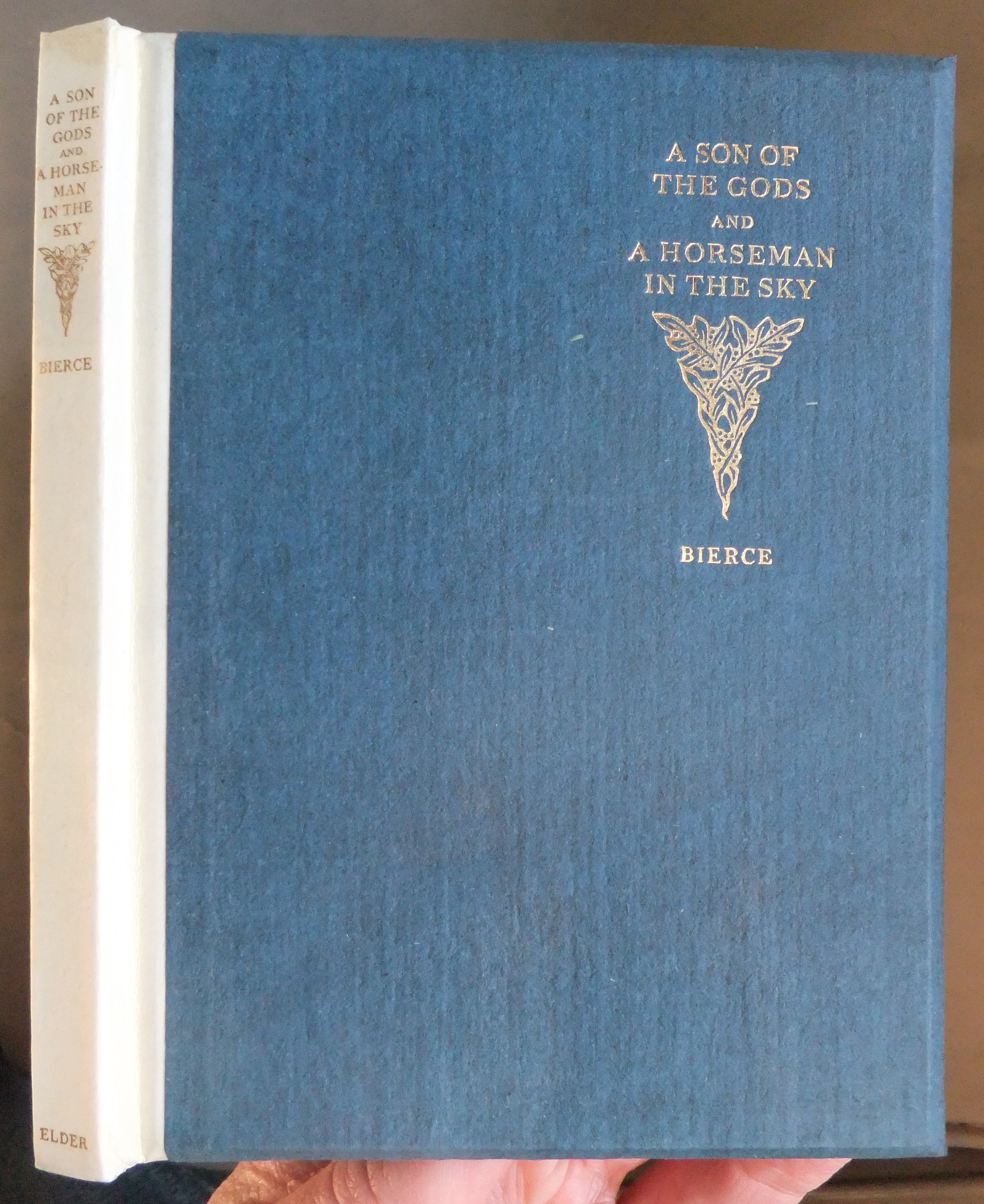
The scene of these two short stories by Ambrose Bierce (1842-1913?) is the American Civil War. This was a subject he knew all too well: Bierce joined the 9th Indiana Infantry Regiment when he was just nineteen years old, and fought in the 1861 Western Virginia campaign. Bierce was a horrified participant at Shiloh the following year, an experience that would serve as the basis for many of his later short stories. Both stories first appeared in the San Francisco Examiner newspaper (29 July 1888 and 14 April 1889, respectively). “A Horseman in the Sky” in particular has been widely anthologized and is one of Bierce’s best-known stories.
Updated 2025-12-22
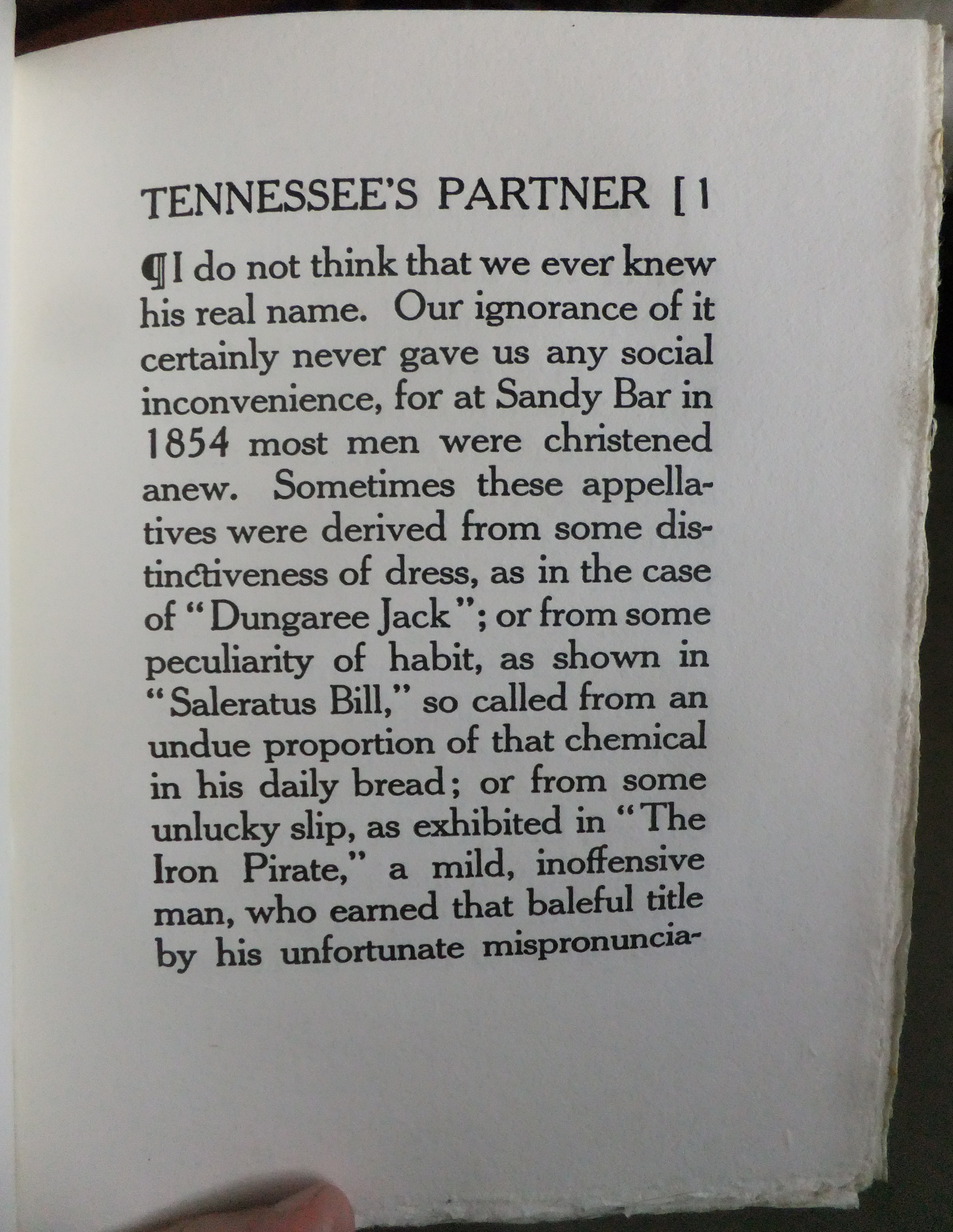
Page 1 of “The Sea Fogs,” set in Caslon 471. Note the mitred rules characteristic of Nash’s work.Colophon of “The Sea Fogs”Cover of “Tennessee’s Partner”, Western Classics #3Page 1 of “Tennessee’s Partner,” set in Cheltenham Wide.Cover of “The Case of Summerfield”, Western Classics #3Page 1 of “The Case of Summerfield,” set in Bookman.Cover of “A Son of the Gods”, Western Classics #4Page 1 of “A Son of the Gods,” set in Scotch Roman.
1
Martin Scofield, The Cambridge Introduction to The American Short Story, Cambridge University Press, 2006, p55.
Cover of “Mr Pickwick Is Sued For Breach Of Promise”
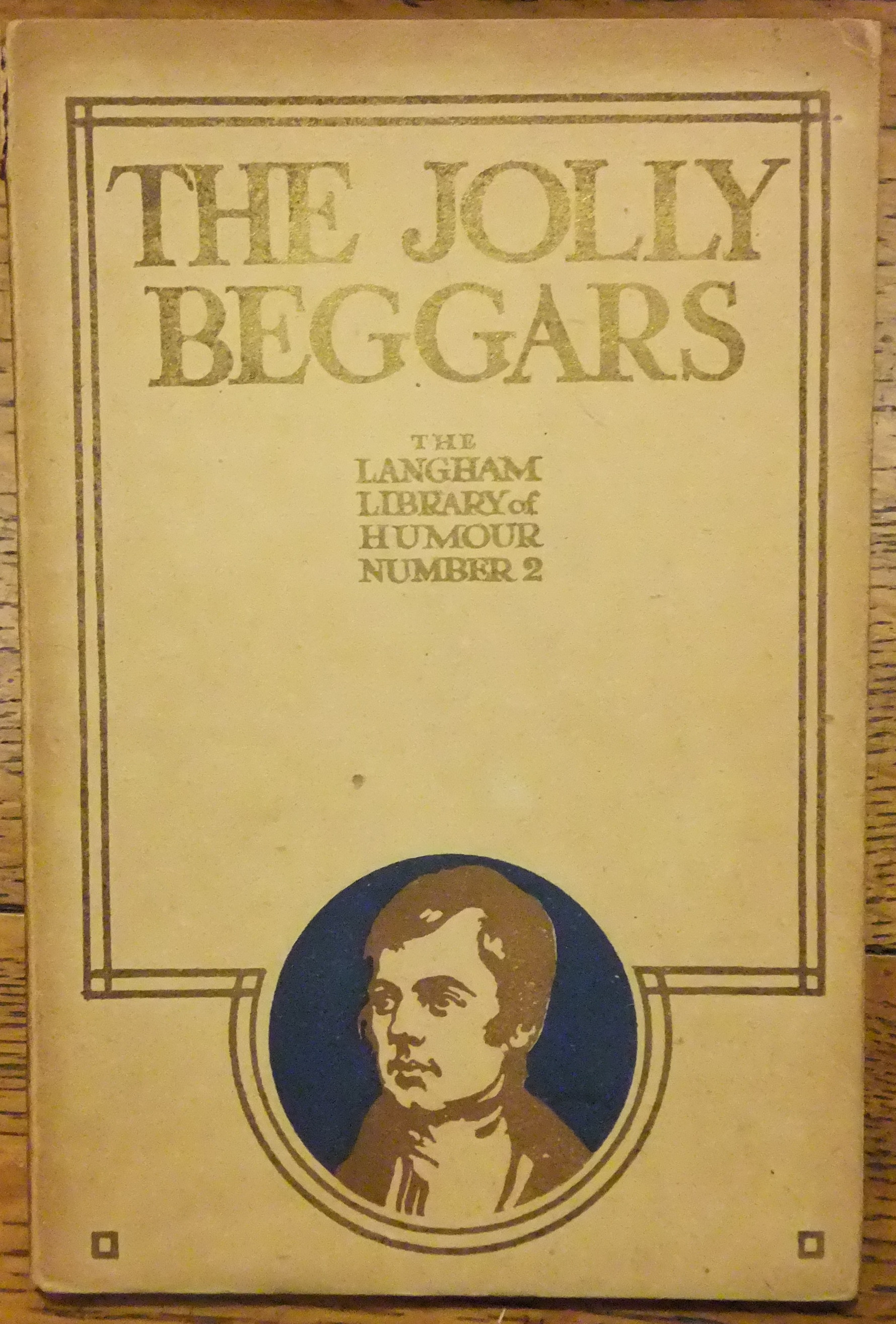
When I first began work on Paul Elder & Company, I would stumble upon previously-unknown titles every few months. Twenty years later it’s rare to find a new addition to the list, but this week I received two unusual books in a series called The Langham Library of Humour: Charles Dickens’s Mr Pickwick Is Sued For Breach of Promise (number 1) and Robert Burns’s The Jolly Beggars (number 2). They are slender, fragile items, with attractive covers and color frontispieces. They are marked “San Francisco and New York,” which dates them to the 1906-09 period following the 1906 earthquake and fire that destroyed Elder’s bookstore and printing shop.
The books bear no resemblance whatsoever to the typical Tomoye press output: heavy floral dingbats and block-letter typography, unusual page size, lack of a colophon and not a tomoye in sight. Clearly these were printed in another shop for sale by Elder. Several years earlier, Elder had published other series with similar outside provenance: the Panel Books, Impression Classics and the Abbey Classics.
Cover of “The Jolly Beggars”
These two books appear to have been first published in 1907 by Siegle, Hill & Company at 2 Langham Place in London, which would explain the “Langham Library” moniker. The “G. Ross Roy Collection of Robert Burns” lists The Jolly Beggars as issued “in cream-colored boards, stamped in gold and blind.”
In North America, at least one other publisher issued these same titles with the same cover art: the Musson Book Company Ltd., Toronto. It seems likely that the books were printed in London by Siegle Hill & Co., but issued simultaneously by all three publishers.
The Langham Library of Humour apparently started and ended with these two titles: I have been unable to find mention of any others.
Frontispiece and title page of “Mr Pickwick”Frontispiece and title page of “Jolly Beggars”“Mr Pickwick,” page 7“Jolly Beggars,” page 9
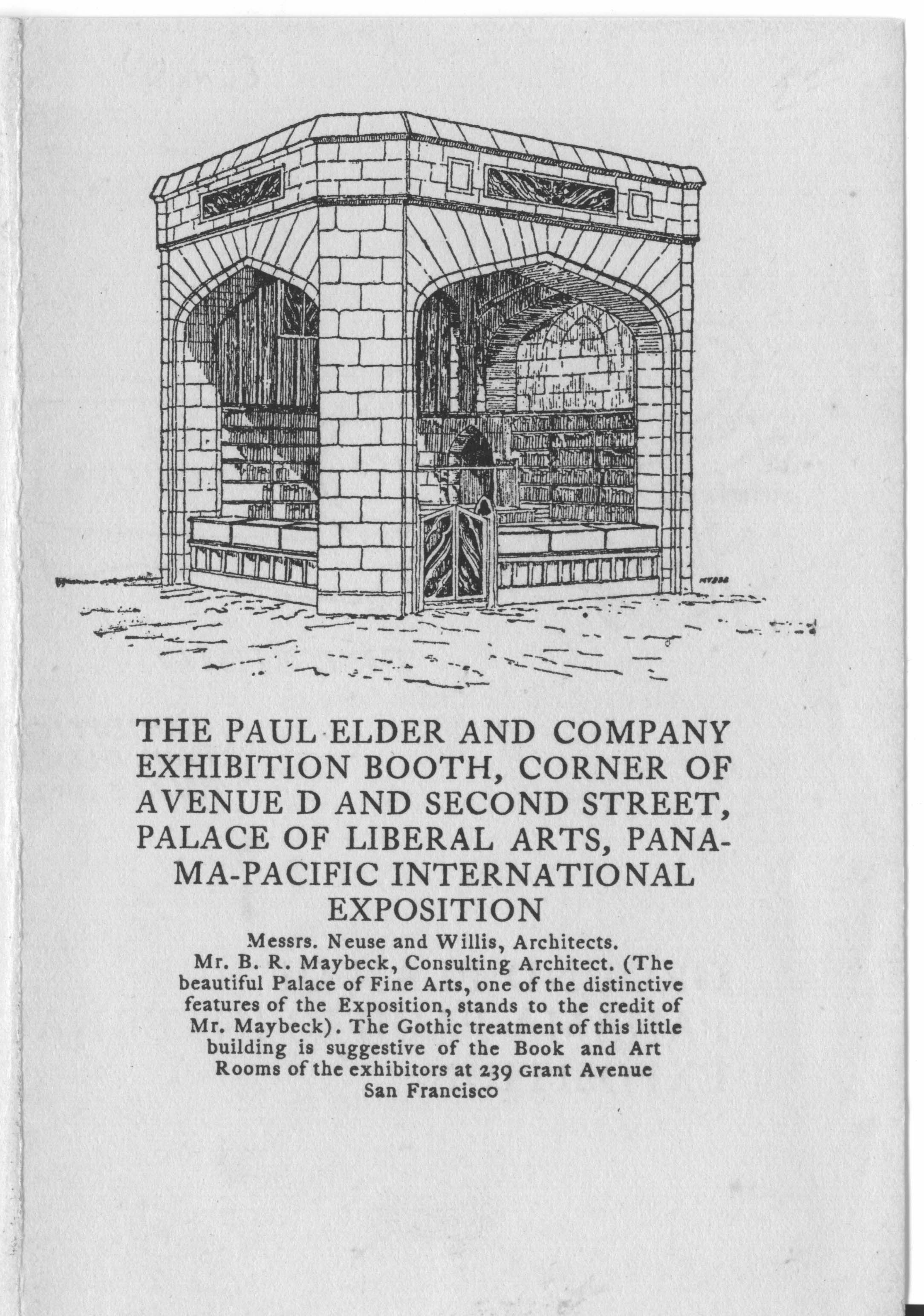
The Panama-Pacific International Exposition was a big deal for Paul Elder & Company. He published eleven books on or about the fair, and he also had a handsome bookstore booth inside the Palace of Liberal Arts. Please follow the above link for photographs and other details!