Menehunes are popular characters in Hawaiian mythology; they are said to be a race of small people that live in the deep forest, far from the prying eyes of humans. The Menehunes arrived in Hawaii before the Polynesians, and were excellent craftspeople who built heiau (temples), roads, and fishing ponds.
In fact, a famous fishing lake called the Menehune Fishpond is located just south of Lihue, Kauaʻi. Officially called the ʻAlekoko Fishpond, it is believed to have been constructed in the 15th-century. Described as “the most significant fishpond on Kauaʻi, both in Hawaiian legends and folklore and in the eyes [of] Kauaʻi’s people today,” the fishpond was placed on the National Register of Historic Places in 1973.1https://npgallery.nps.gov/NRHP/GetAsset/NRHP/73000677_text
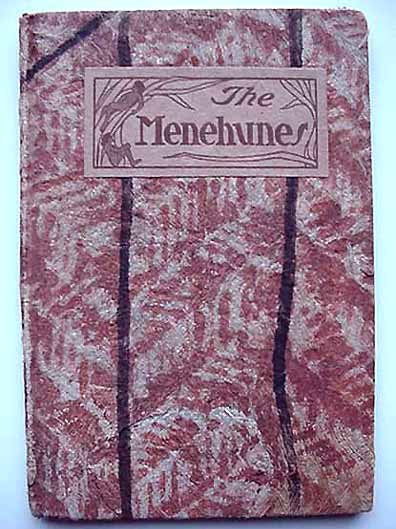
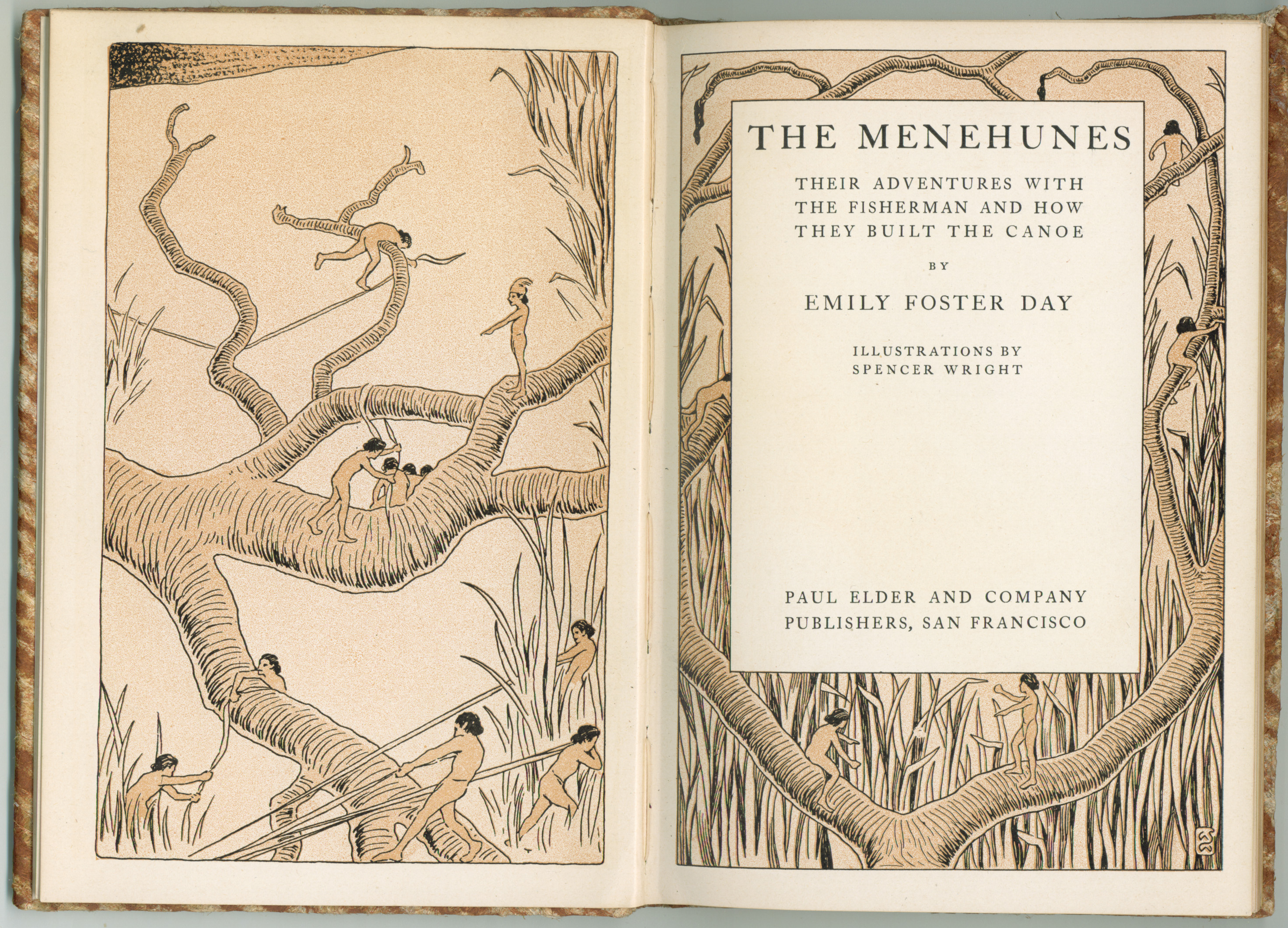
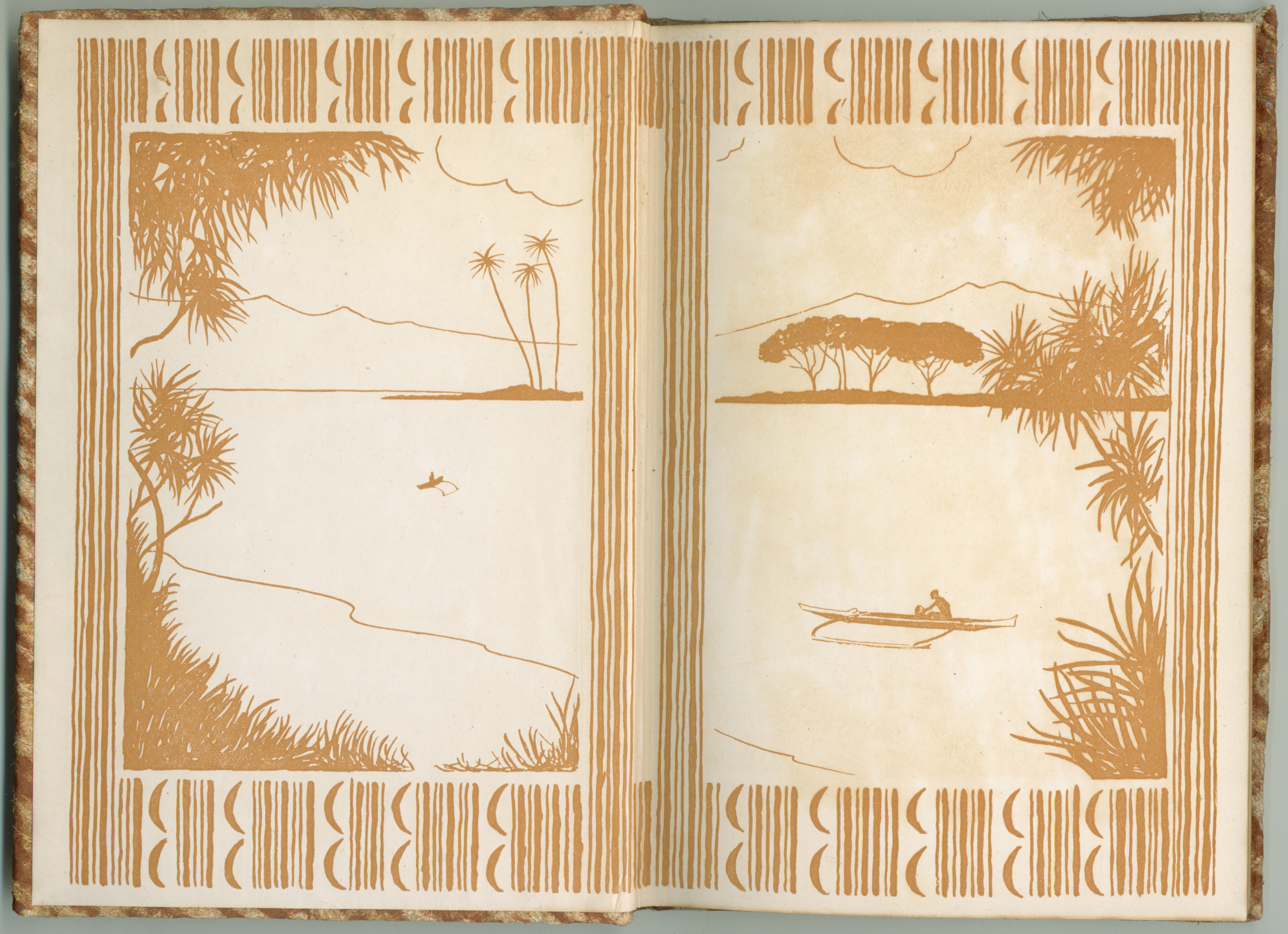
The Menehunes, subtitled Their Adventures With the Fisherman and How They Built the Canoe (1905), by Emily Foster Day, was one of Paul Elder’s many charming children’s books. This small volume was bound in Hawaiian kapa fabric, with delightful illustrations by Spencer Wright.
In 1906, Emily wrote another book of Hawaiiana for Paul Elder, The Princess of Manoa.
Emily Foster was born in Onondaga, Ontario on 24 October 1860, the fourth of five children, and only daughter, of Charles Lucas Foster, a carpenter, and Elspeth Gauld. Emily’s grandparents were immigrants to Ontario from England and Aberdeenshire, Scotland, respectively. In 1885, Emily married Francis Root Day (1859-1906), a prominent doctor. In 1887, they moved from Chicago to Honolulu, where they spent the rest of their lives. Emily outlived Francis by nineteen years; they are buried at O’ahu Cemetery in Honolulu.
Updated 2026-01-25

- 1https://npgallery.nps.gov/NRHP/GetAsset/NRHP/73000677_text