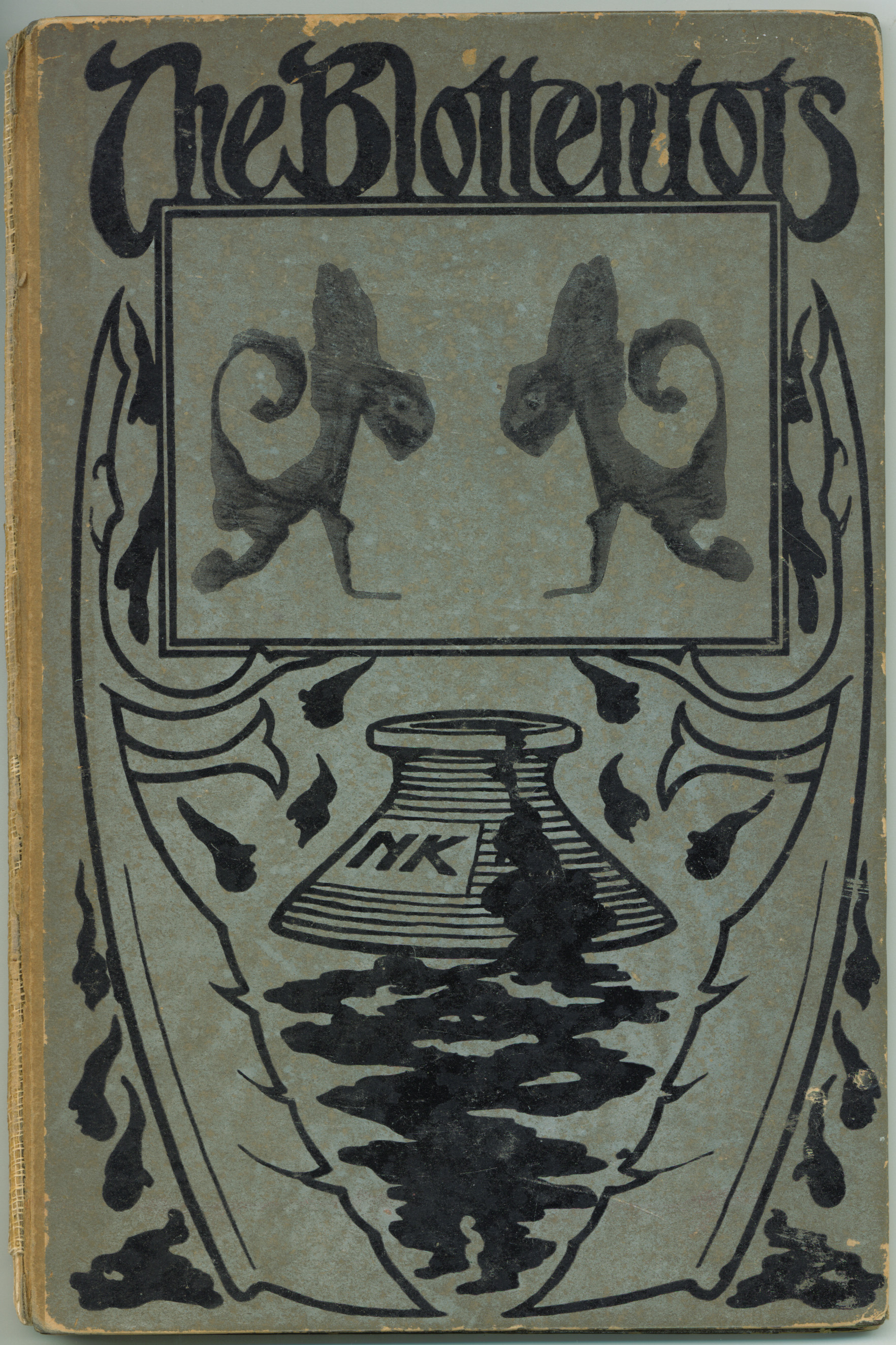
Blottentots

Cover of "Blottentots"
Cover of Paul Elder & Co’s “Blottentots”

The craft of making art from inkblots is called klecksography (from klecks, the German word for “stain” or “blotch”). To a modern reader, inkblots will immediately call to mind the Rorschach Test, but as we shall see, the art of blots and blobs has a much longer history. Leonardo da Vinci wrote about how easy it was for any given splotch on a wall to turn into something else:

I will not refrain from setting among these precepts a new device for consideration which, although it may appear trivial and almost ludicrous, is nevertheless of great utility in arousing the mind to various inventions. And this is, that if you look at any walls spotted with various stains, or with a mixture of different kinds of stones, if you are about to invent some scene you will be able to see in it a resemblance to various different landscapes adorned with mountains, rivers, rocks, trees, plains, wide valleys, and various groups of hills. You will also be able to see divers combats and figures in quick movement, and strange expression of faces, and outlandish costumes, and an infinite number of things which you can then reduce into separate and well-conceived forms. With such walls and blends of different stones it comes about as it does with the sound of bells, in whose clanging you may discover every name and word you can imagine.1The Notebooks of Leonardo da Vinci, II, 250-51.

Page 7 of
Page 7 of Justinius Kerner’s “Klecksographien” (public domain)

The first person to publish a book using inkblots was Justinus Kerner (1786-1862), a German poet and medical writer, who was the first person to write a detailed description of botulism. Due to failing eyesight, Kerner would often accidentally drip ink onto his paper. Rather than throw away the resulting inkblots he decided to keep them as artwork, and wrote poems to accompany them. He finished the book Klecksographien in 1857 but it wasn’t published until 1890, twenty-eight years after his death.

In 1896, Albert Bigelow Paine (1861-1937) and Ruth McEnery Stuart (1849-1917) published “Gobolinks,” (a play on the words “goblin” and “ink”). Paine and Stuart envisioned Gobolinks as a game, where the players have five minutes to create an inkblot and then a poem to accompany it. Judges are chosen amongst the group, and they choose the best submissions;  players whose works are chosen then become judges for the next round, and the previous judges become players. After the proscribed number of rounds, the final judging is conducted.
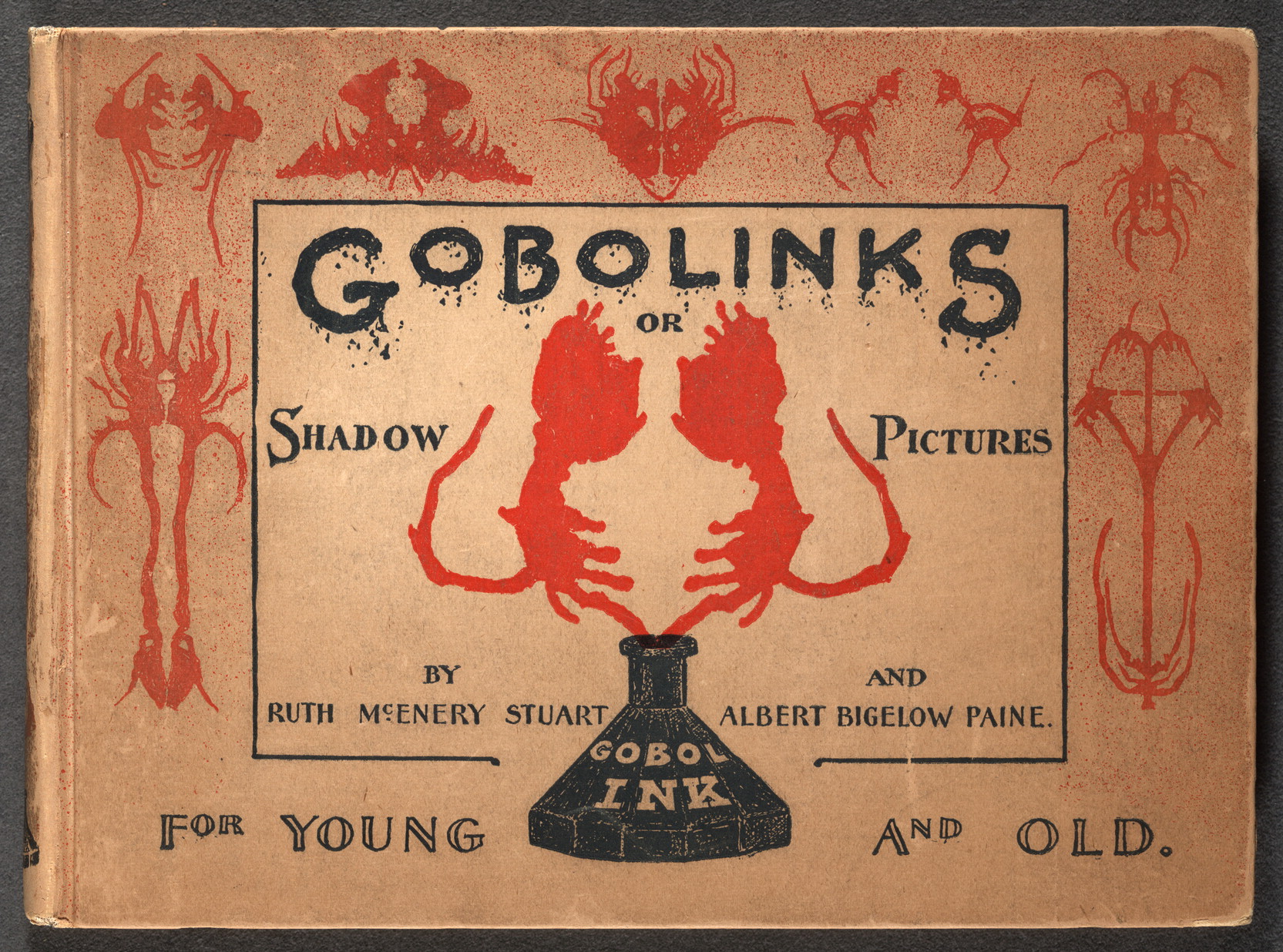
Cover of Stuart and Paine’s “Gobolinks”

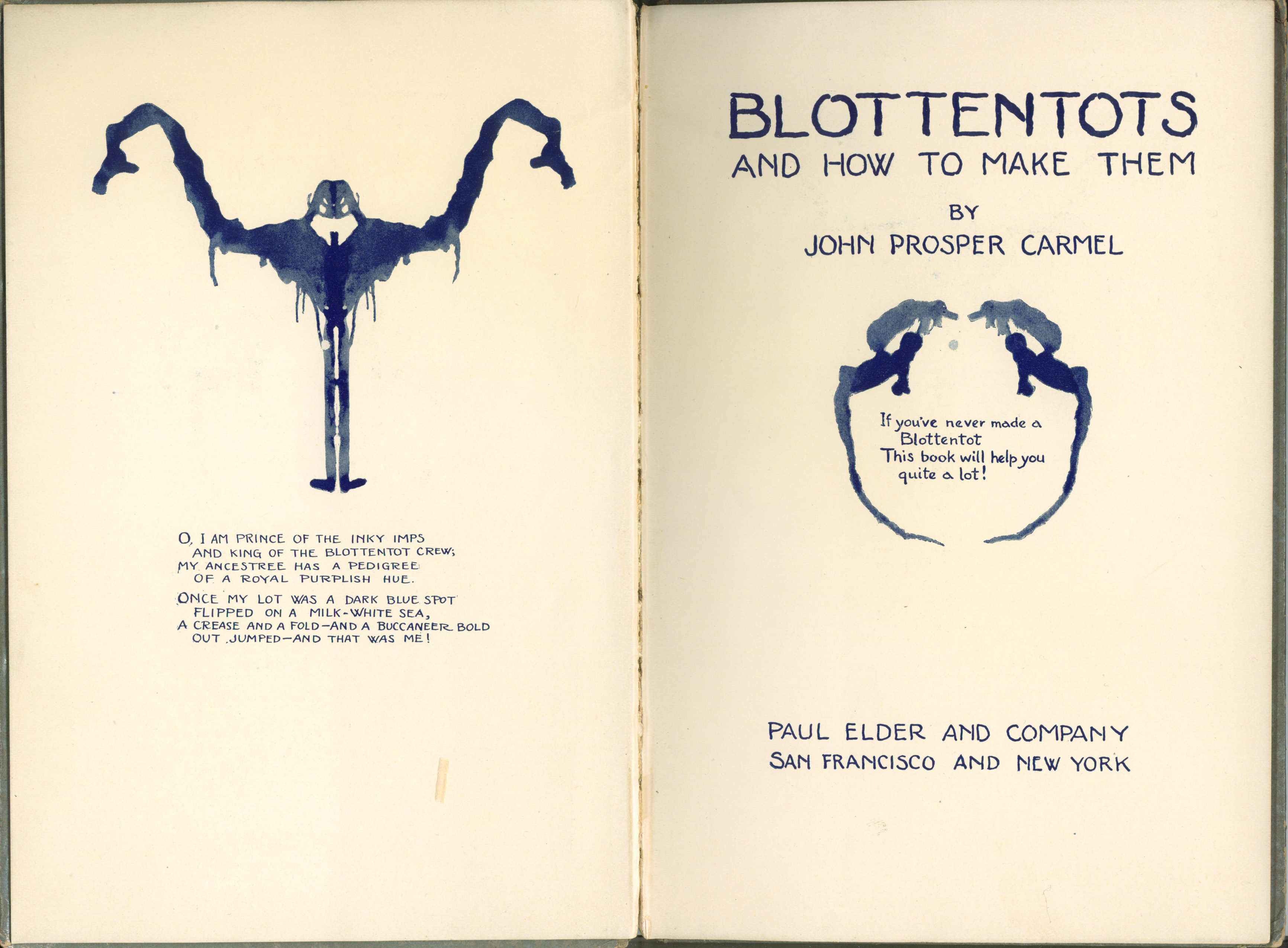
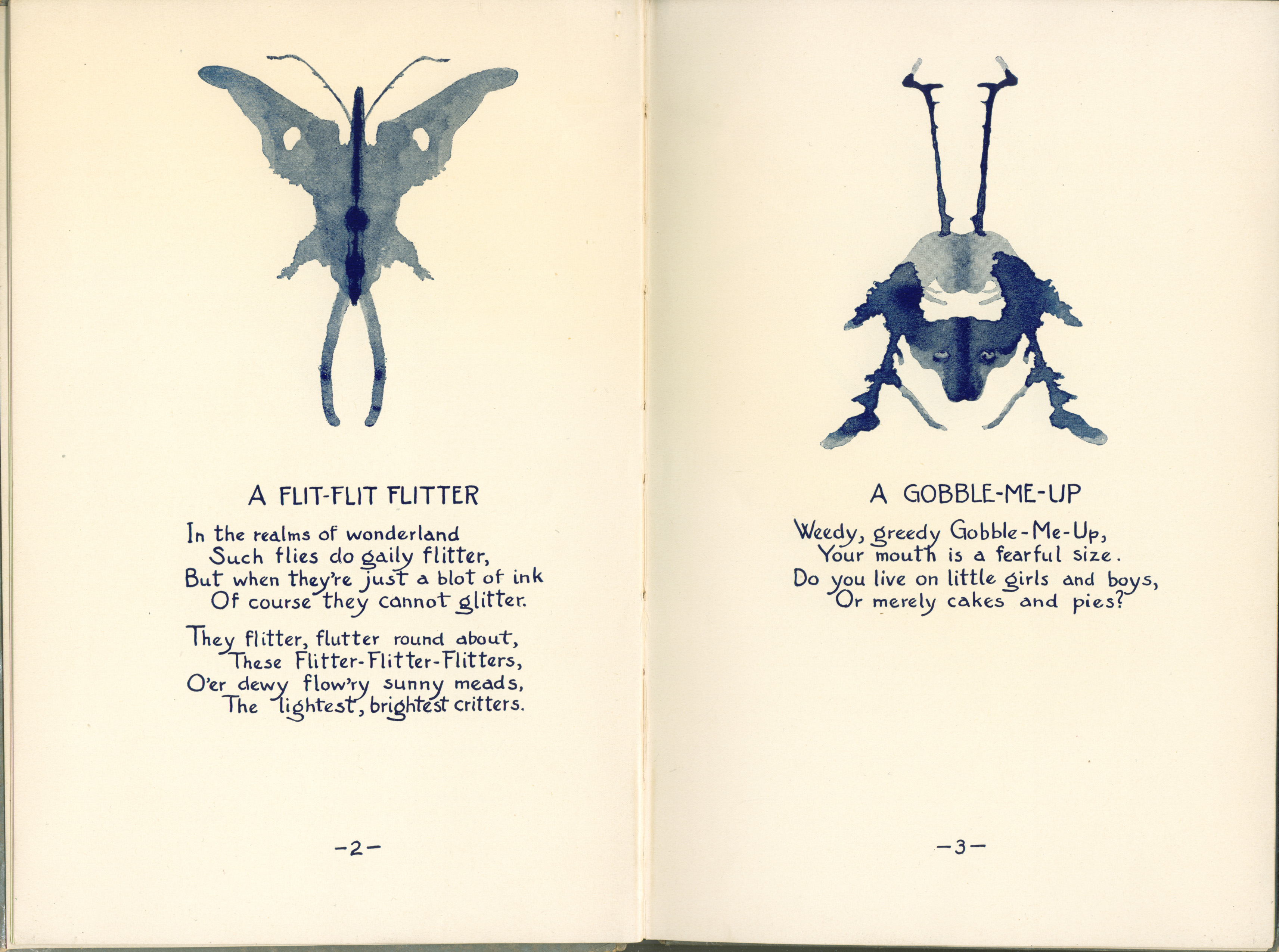
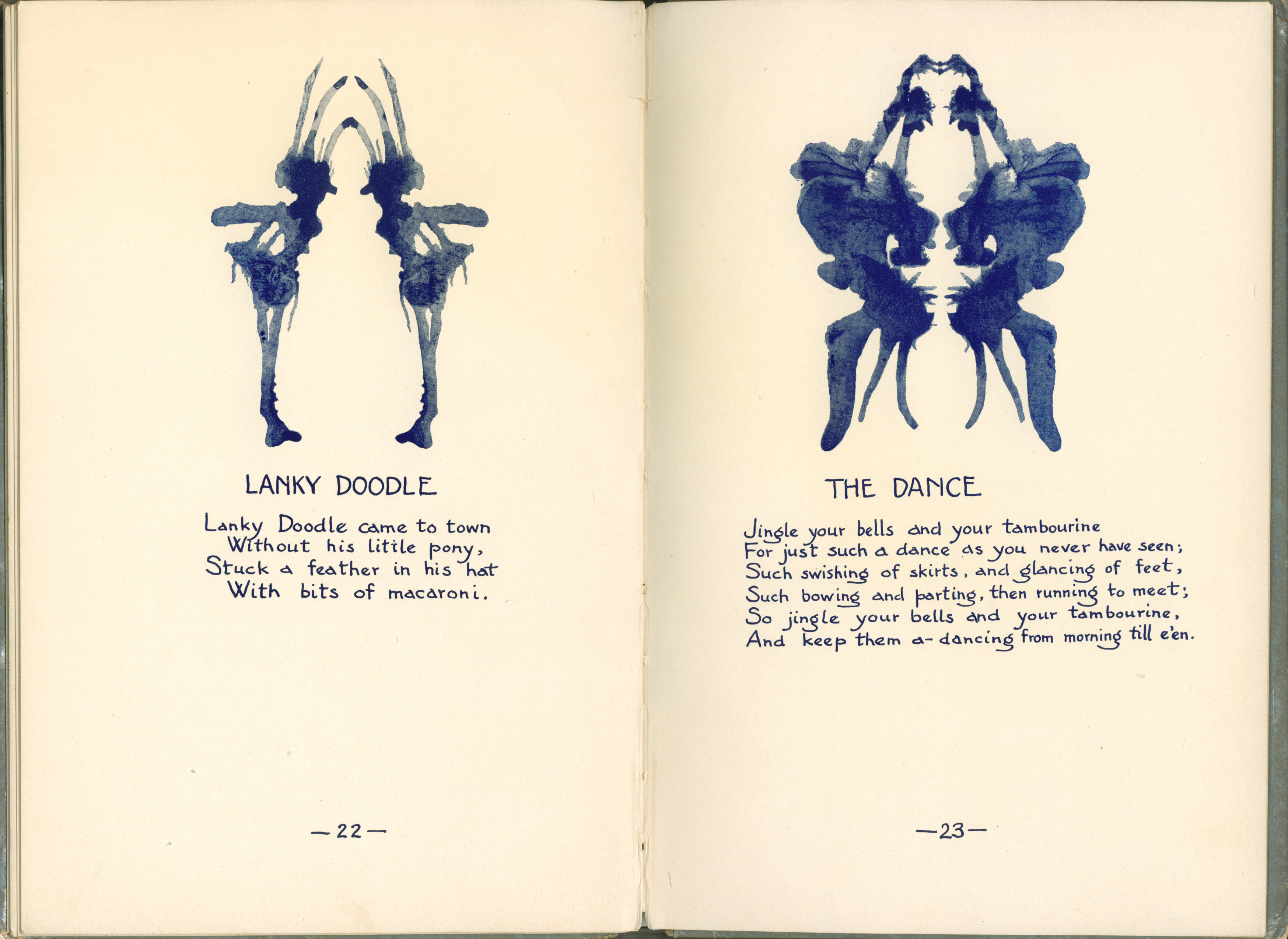
Enter Paul Elder & Company in 1907, with Blottentots, and How To Make Them. The book is certainly derivative, but the inkblots are creative and the verses delightful for youngsters’ ears. The author is John Prosper Carmel with calligraphy by Raymond Carter, but the former is believed to be a pseudonym of the latter. I have been unable to find any information about Mr. Carter.

In 1921, fifteen years after the publication of Blottentots, Hermann Rorschach (1884-1922) wrote his book Psychodiagnostik, which was to form the basis of the test which bears his name. Some have suggested that Rorschach (who was nicknamed “Klecks” in his youth because of his fondness for inkblots) based his work on Kerner’s, but there appears to be no conclusive evidence of this.

Updated 2025-12-22

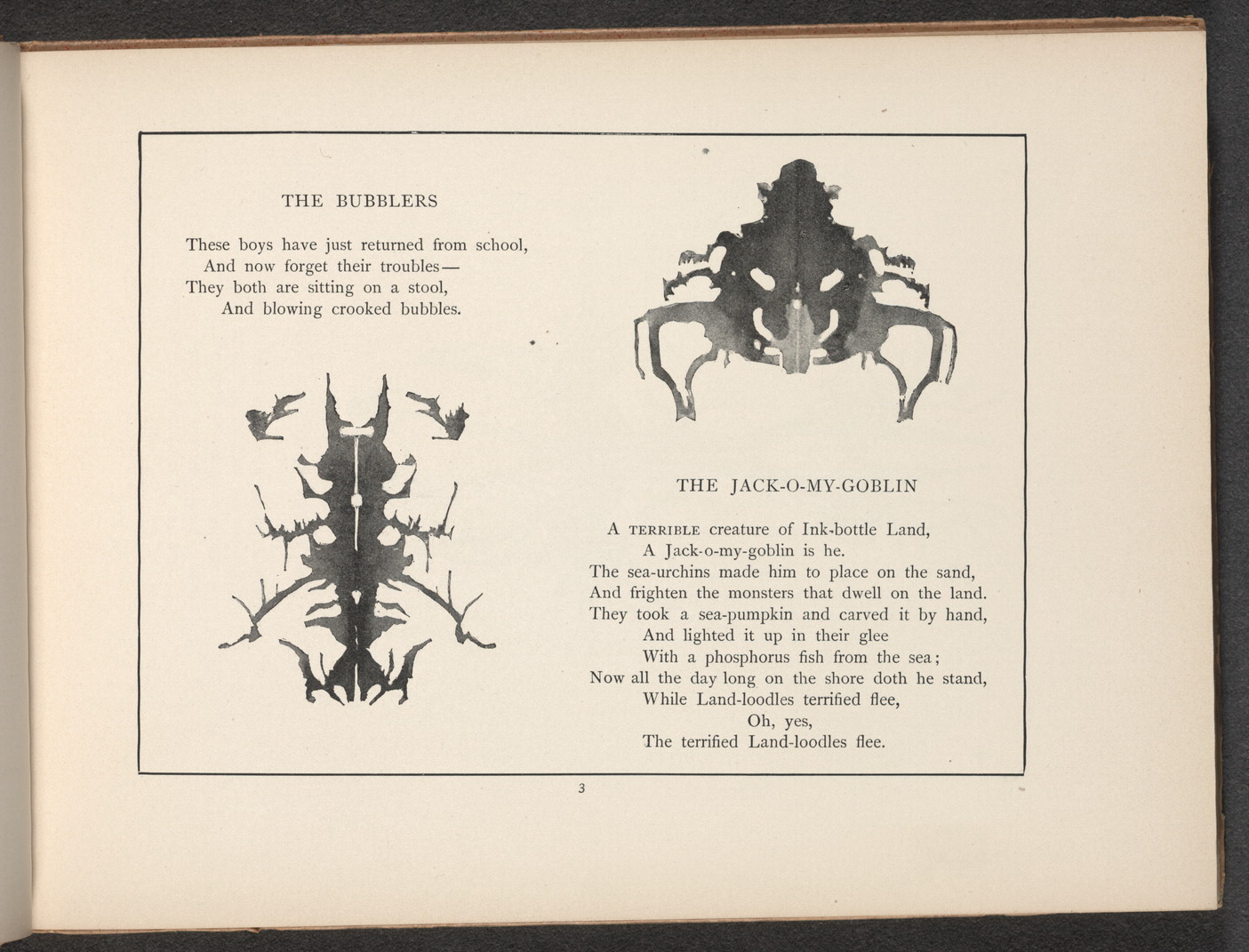
The rules of Gobolinks
Page 3 of Gobolinks
Page 3 of Gobolinks
Frontispiece and title page of "Blottentots"
Frontispiece and title page of “Blottentots”
Pages 2-3 of "Blottentots"
Pages 2-3 of “Blottentots”
Pages 22-23 of "Blottentots"
Pages 22-23 of “Blottentots”
The first of the ten cards in the Rorschach test


  • 1
    The Notebooks of Leonardo da Vinci, II, 250-51. ↩︎

The Soul of an Artist

Cover of "The Soul of an Artist"
Cover of “The Soul of an Artist”

The Soul of an Artist was published in Milan in 1895 under the title Anima Sola, meaning “lonely soul.” It’s an apt title for Neera, whose melancholy childhood set the tone for much of her writings.

Neera was the pseudonym of Anna Zuccari Radius (1846-1918). She lived her entire life in Milan, Italy. Anna’s mother died when she was ten, whereupon she was sent to live with her father’s two unmarried sisters, strict and unsmiling. In 1871 Neera married Milanese banker Emilio Radius; they had two children.

Neera’s output was prodigious: twenty-two novels, eight volumes of short stories, ten volumes of moralistic essays and two of poetry. According to Catherine Ramsey-Portolano, of the American University of Rome

Neera’s protagonists are women struggling to fulfill the traditional roles of wife, mother and daughter in fin de siècle Italian society… The polemical and engaged nature of these writings, in which Neera defends maternity as woman’s highest mission in life, is evident from the titles chosen for two of the volumes, Battaglie per un’idea (1898) and Le idee di una donna (1904). Although Neera defined herself an antifeminist in her essays and was not supportive of the feminist cause, feminists of the period, such as Ersilia Majno and Sibilla Aleramo, recognized the importance of her role as woman writer and the feminist nature of her narrative work.

DSCF7066
Title page of “The Soul of an Artist”
Neera
Neera (1846-1918)

Generally speaking, Paul Elder preferred to publish original works (notwithstanding the occasional series of classic literature, such as Impression Classics, Panel Books or Abbey Classics). Thus a book like his 1905 publication of The Soul of an Artist, as a previously published work, is uncommon in the canon.

The authorized translator was Miss Elizabeth Livingstone Murison of San Francisco, whose work was called out by an article in the San Francisco Call of 18 February 1906.

DSCF7067
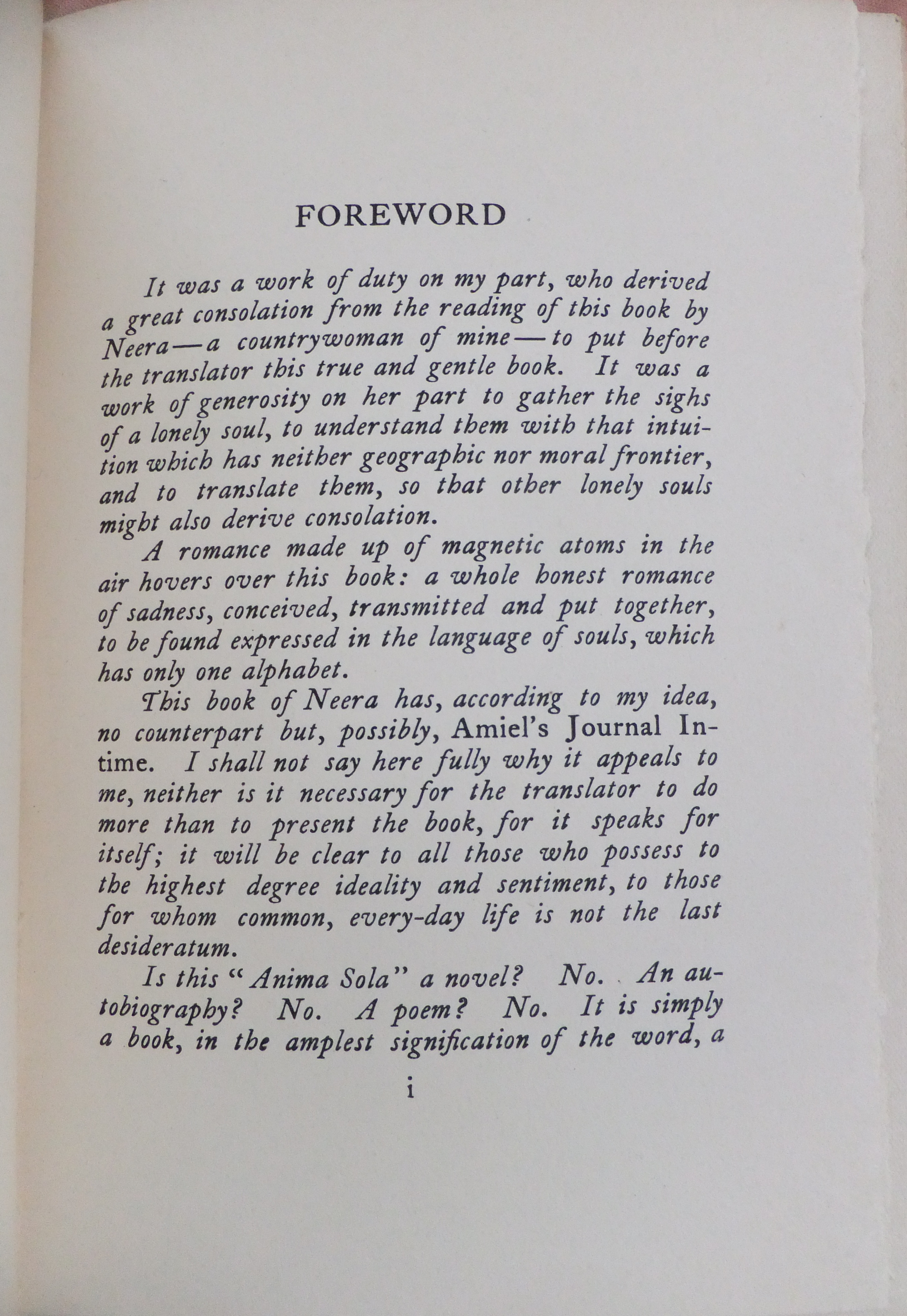
Foreword of “The Soul of an Artist”
DSCF7068
Translator’s Preface of “The Soul of an Artist”
DSCF7069
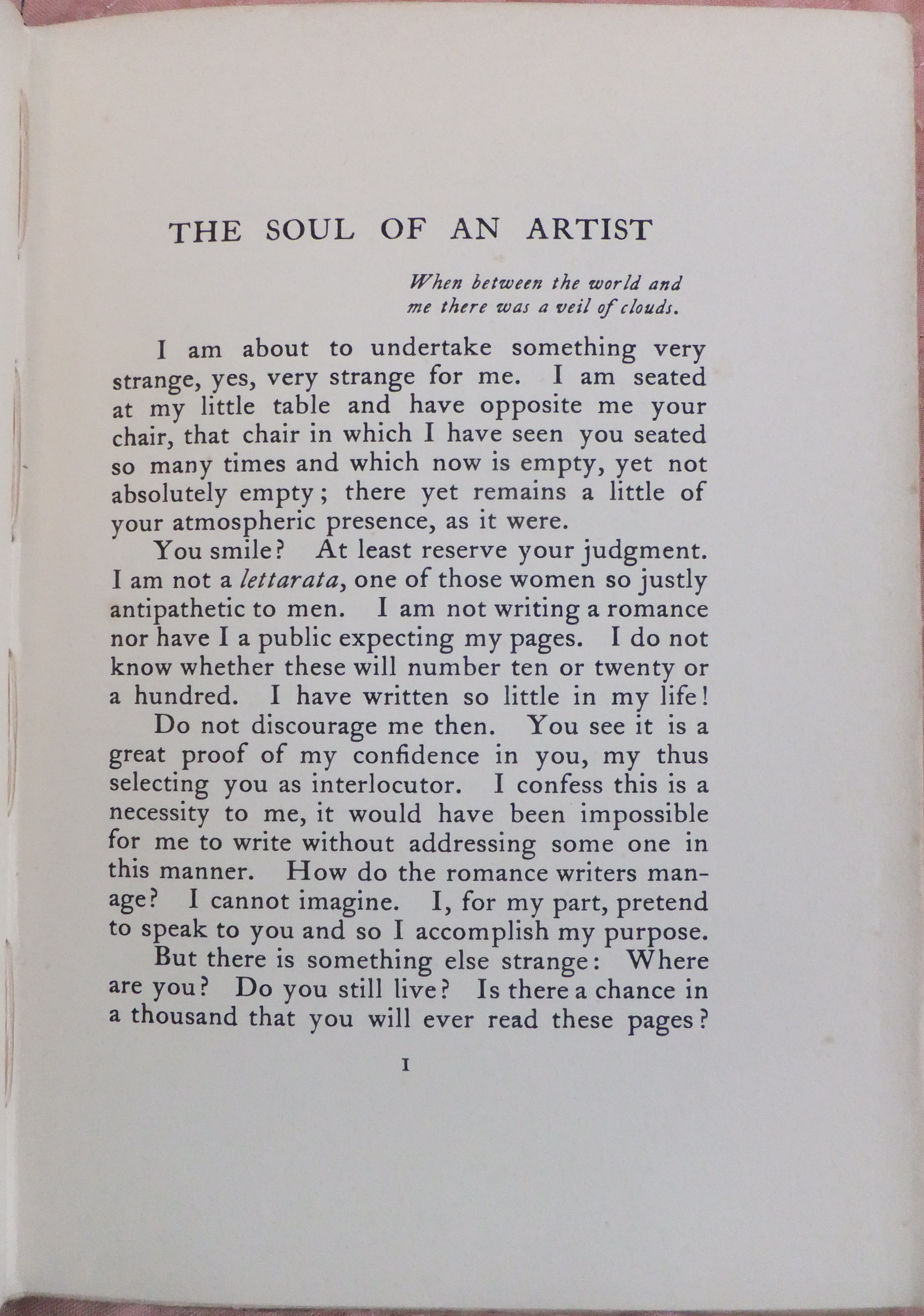
Page 1 of “The Soul of an Artist”
DSCF7070
Page 117 of “The Soul of an Artist”

References:
1. http://www.lib.uchicago.edu/efts/IWW/BIOS/A0034.html
2. “San Francisco Woman in Translator’s Role“, San Francisco Call, vol 99 no 80, 18 February 1906.

An Alphabet of History

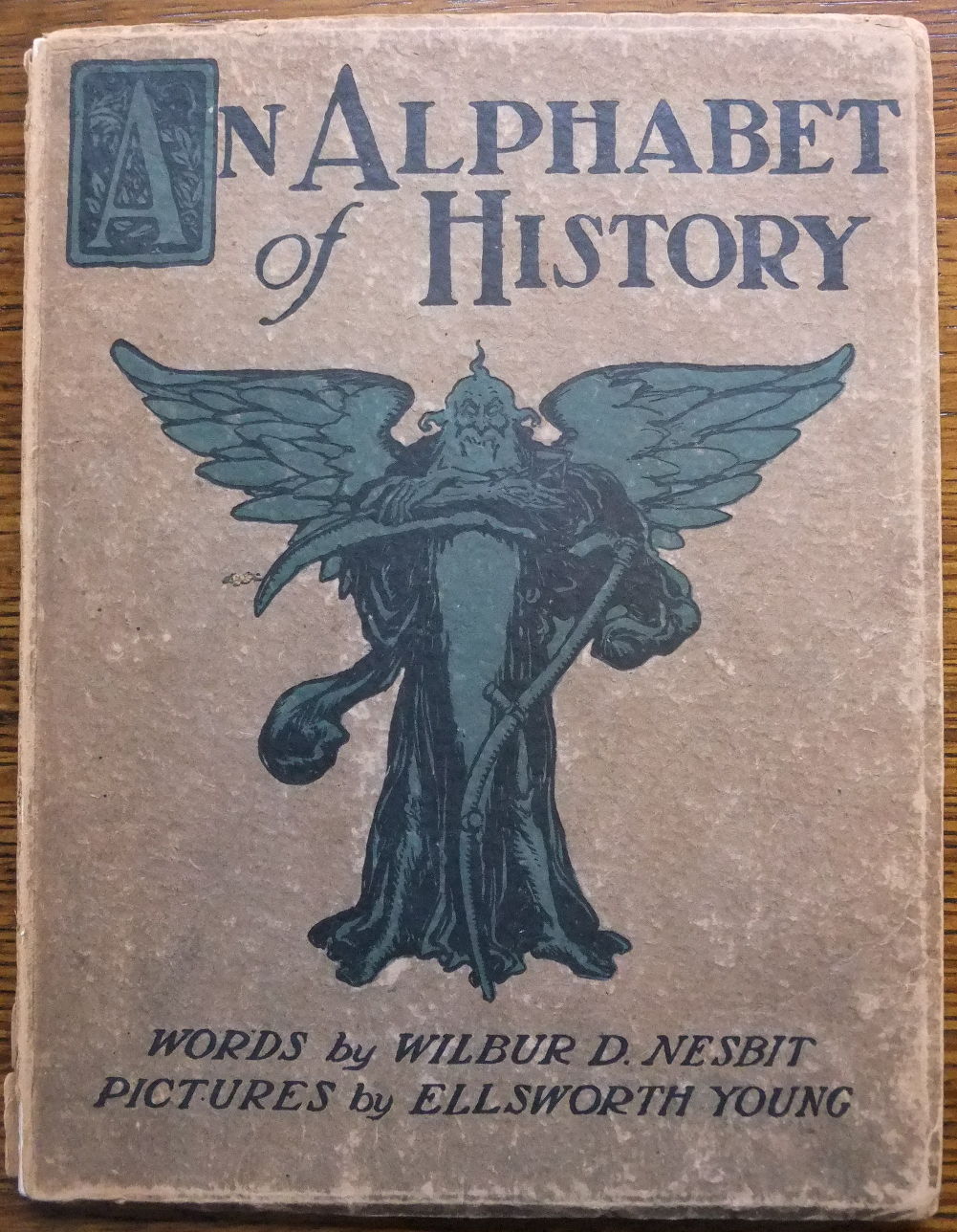
Cover of "An Alphabet of History"
Cover of “An Alphabet of History”

In 1905, Paul Elder published Wilbur Nesbit’s An Alphabet of History, a large-format volume of verse for adults. In contrast to some other humorous verse issued by Elder, Nesbit’s poetry has survived the last century in fine shape to be appreciated by the modern reader.

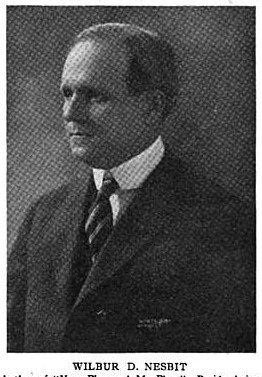
Wilbur D. Nesbit was born in Xenia, Ohio in 1871. He started as a printer before becoming a reporter for his hometown newspaper, the Cedarville Herald. Nesbit spent the rest of his career in journalism, writing for newspapers in Muncie, Indianapolis, and Baltimore before moving to Chicago. He wrote a column for the Chicago Tribune called “A Line o’ Type or Two,” and was later on the staff of the Chicago Evening Post. Along the way he began composing poetry. Nesbit was also in demand as a toastmaster, and was a long-time member of the “Forty Club,” a Chicago version of San Francisco’s Bohemian Club. Nesbit wrote a history of the Forty Club in 1912.

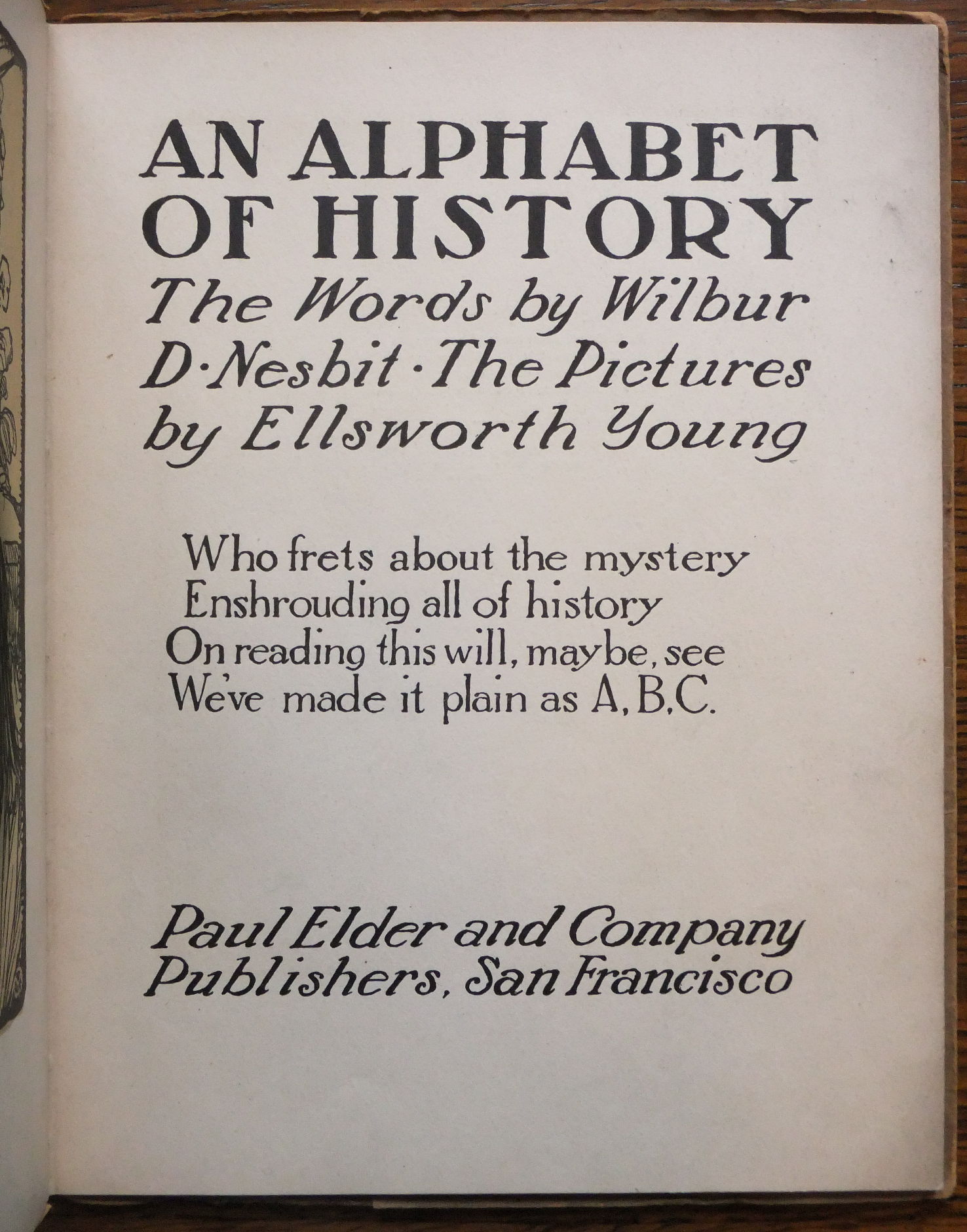
Title page of "An Alphabet of History"
Title page of “An Alphabet of History”

Nesbit’s best known work was a short patriotic poem “Your Flag and My Flag,” first published in the Baltimore American in 1902. It was described as having “a ring of national sentiment that rivals the ‘Star Spangled Banner’ itself.”1The National Magazine, Boston, May 1917, p304-5.. The poem was frequently recited in schoolrooms, and also at political conventions and Congressional sessions.

The delightful drawings are by the artist Ellsworth Young (1866-1952), who in addition to book and magazine illustrations, was a noted landscape painter and poster artist. He studied at the Art Institute of Chicago and later worked for the Works Progress Adminitration (WPA) during the Depression.

Updated 2025-12-20

Wilbur Nesbit


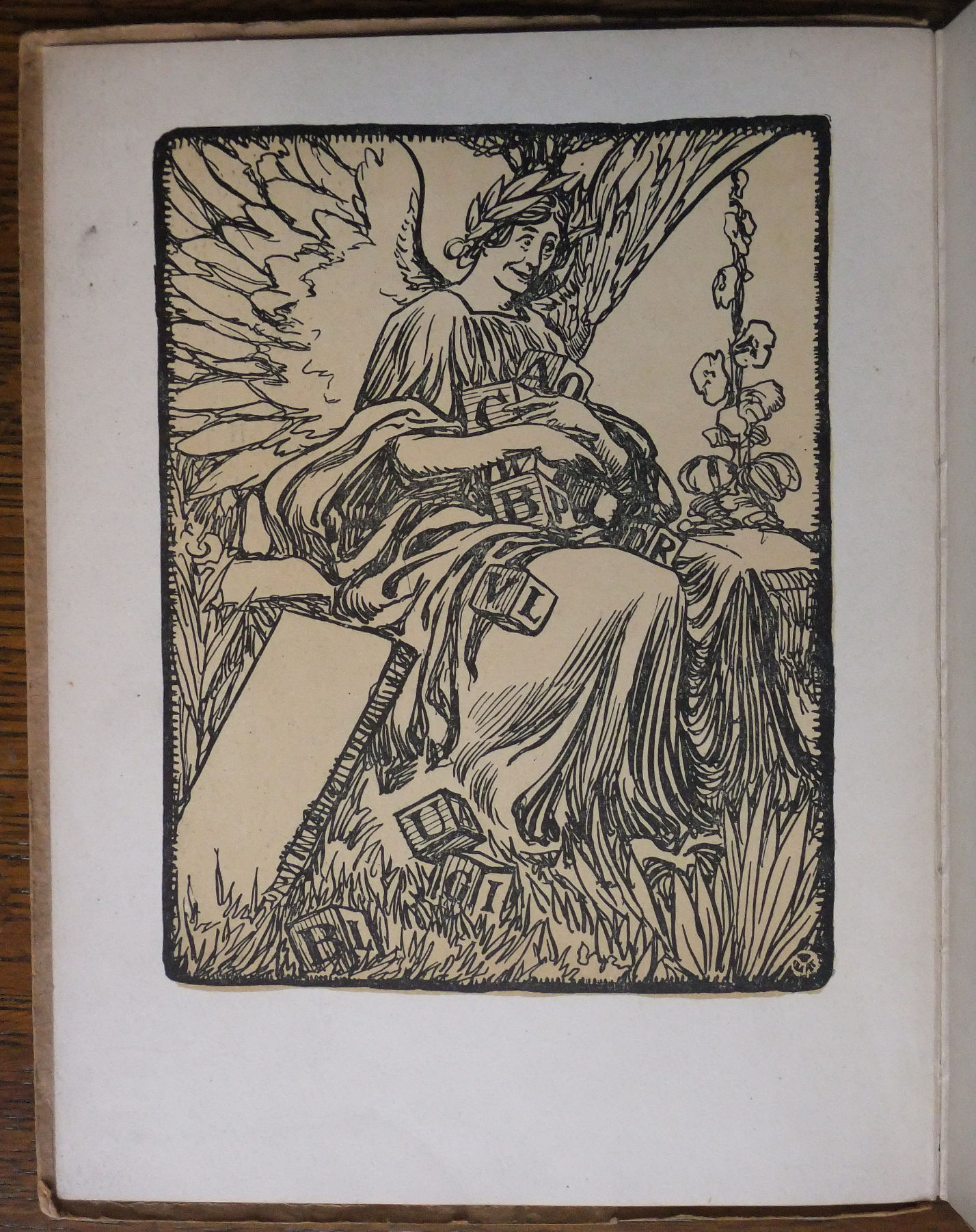
Frontispiece of "An Alphabet of History"
Frontispiece of “An Alphabet of History”
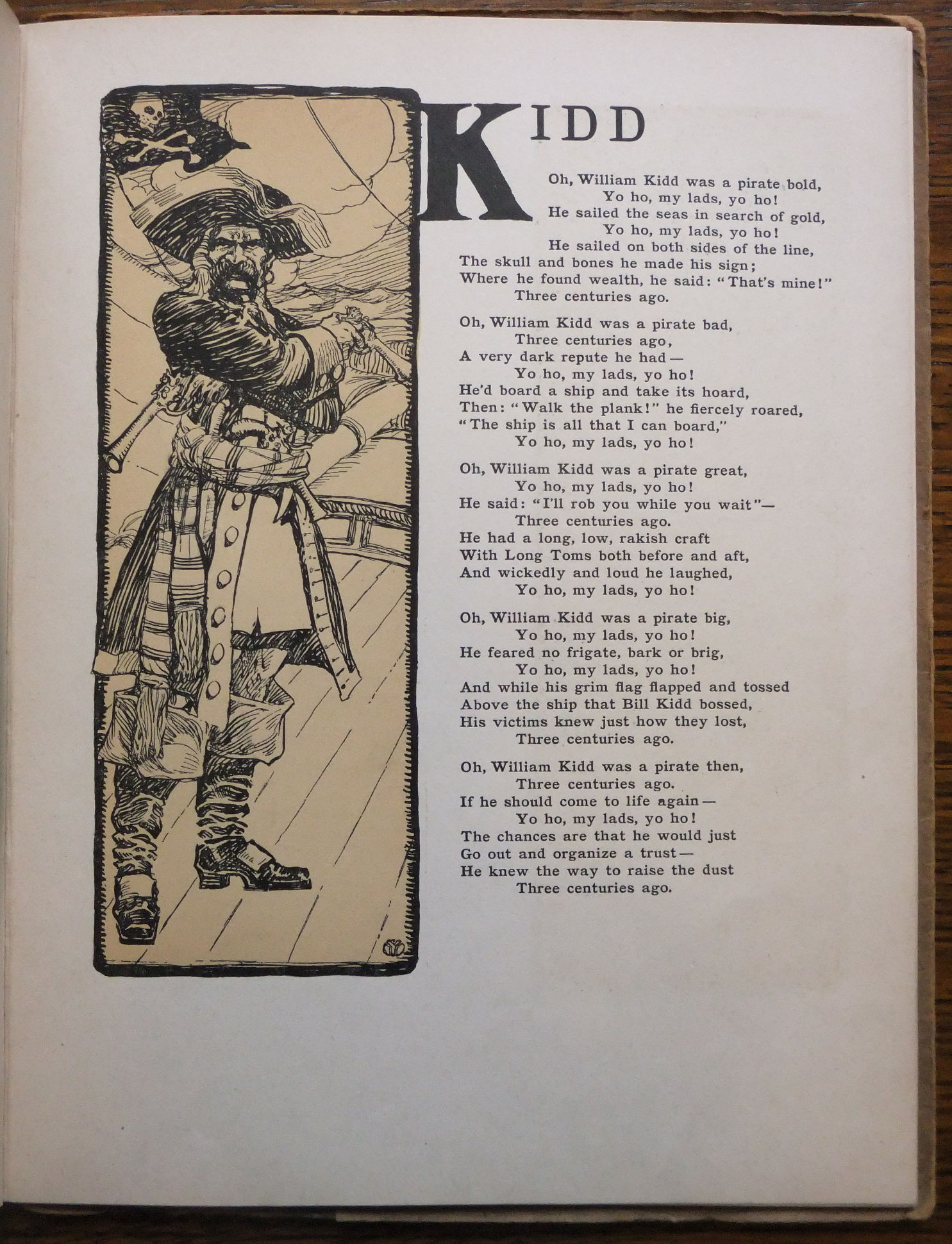
"An Alphabet of History," letter K
“An Alphabet of History,” letter K
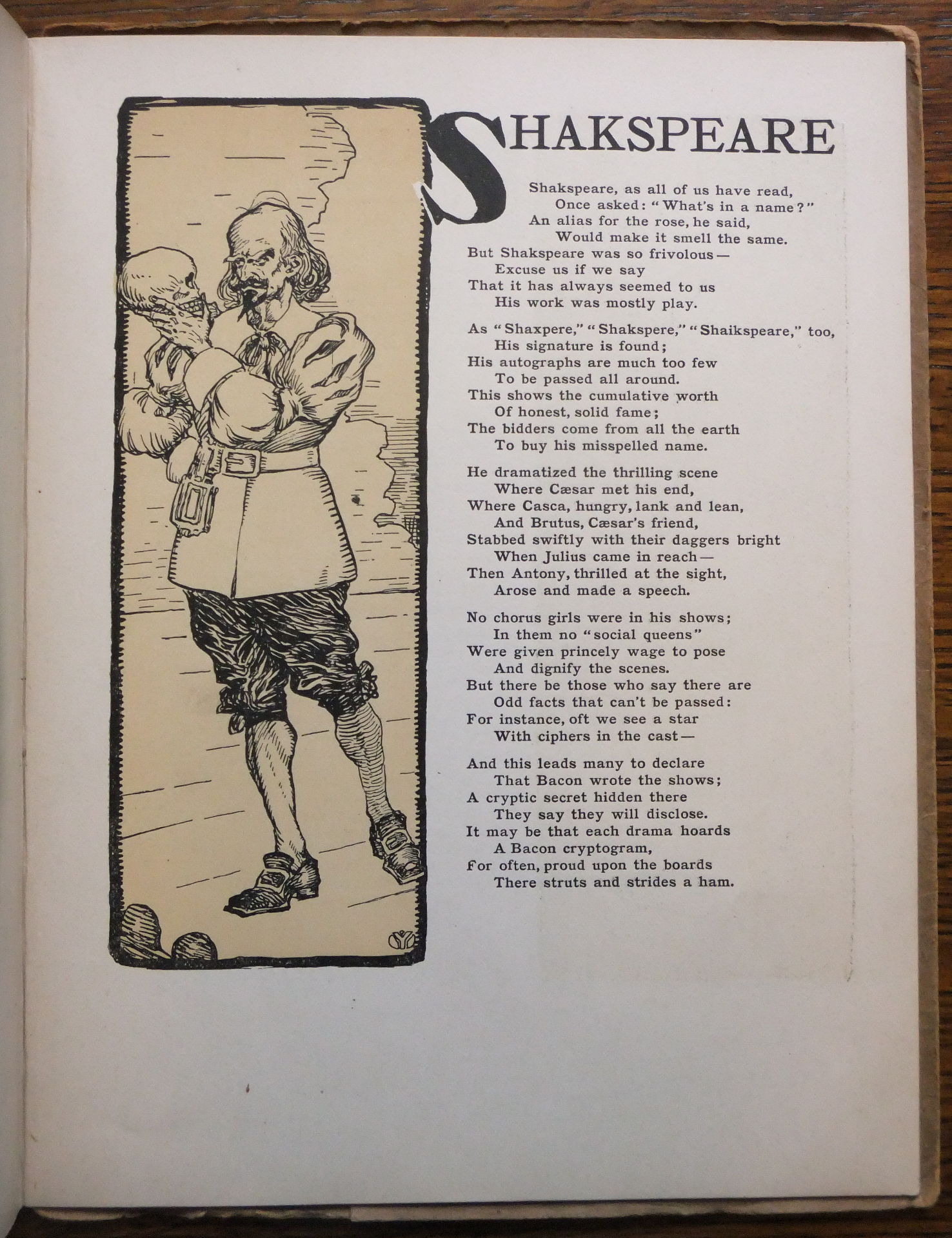
"An Alphabet of History," letter S
“An Alphabet of History,” letter S
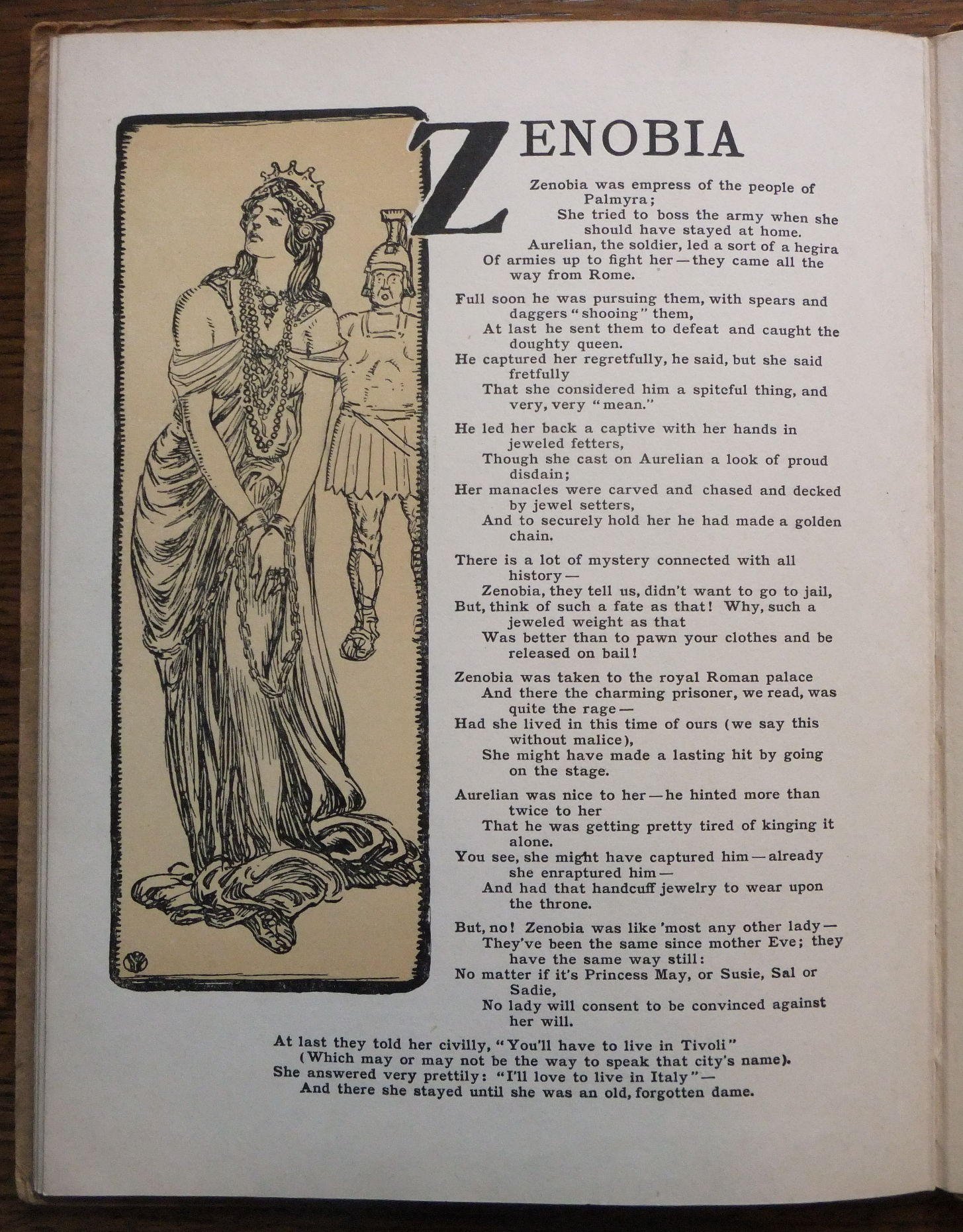
"An Alphabet of History," letter Z
“An Alphabet of History,” letter Z
  • 1
    The National Magazine, Boston, May 1917, p304-5. ↩︎