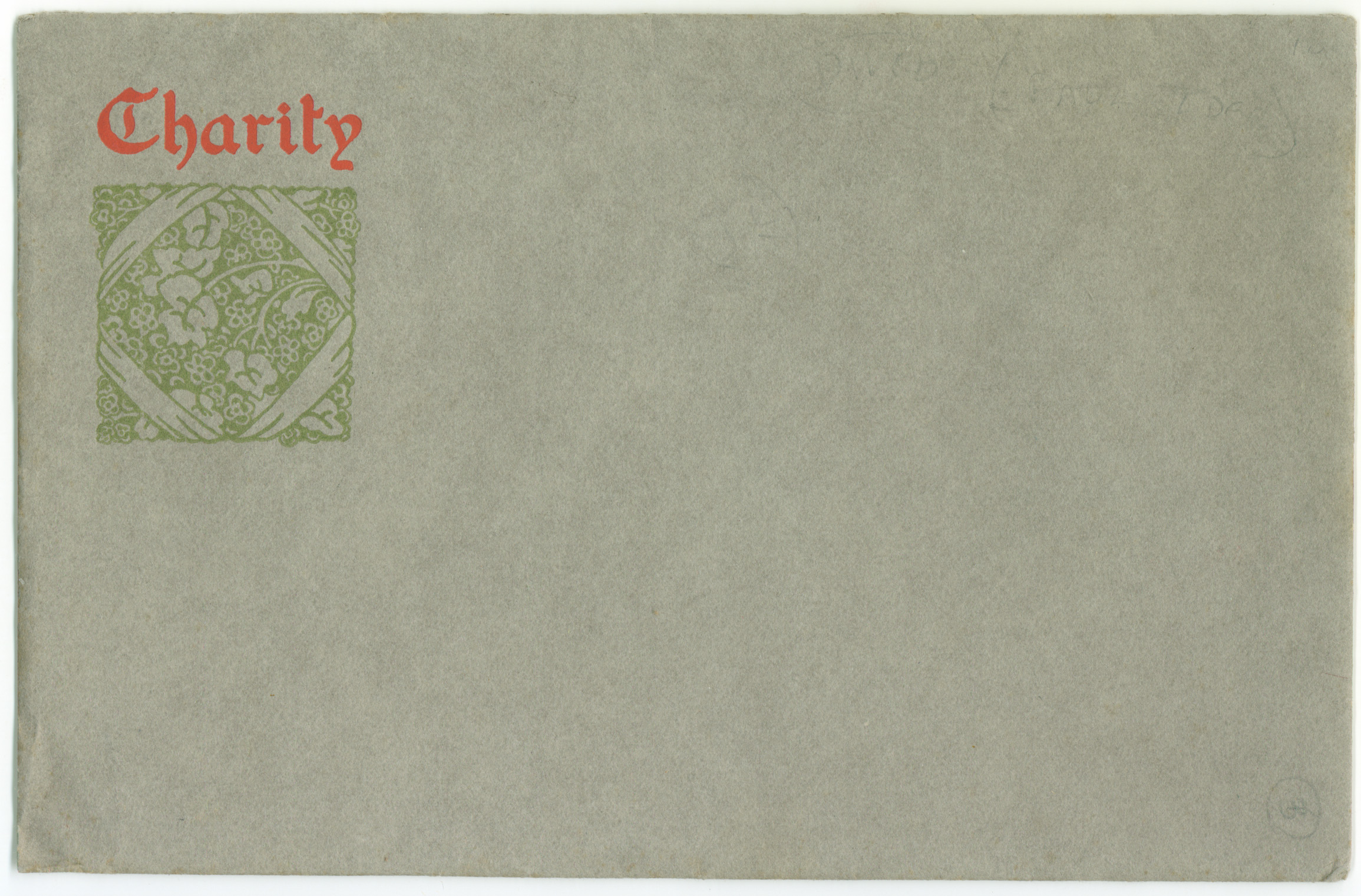
Rear (left) and front covers of the pamphlet “Charity”
Today, on Thanksgiving, as the days grow short and the year draws towards a close, we gather as families and communities and give thanks for what we have. I urge you to take time to help those less fortunate.
One of my long-time favorite charities is the Season of Sharing Fund, now in its 26th year, provides one-time, temporary assistance to those experiencing an unexpected crisis. The Fund finds that preventing the spiral into homelessness has an outsized impact that is not only kind, but effective for our neighbors and our communities. All of the Fund’s administrative expenses are covered by the Evelyn and Walter Haas, Jr. Fund and the San Francisco Chronicle. As a result, 100% of the money raised by the Season of Sharing Fund goes directly to help the families and communities it serves.
Pages 8-9 of “Charity”
Charity (1911) is one of many pamphlets of inspirational quotes published by Paul Elder & Co. The verses were chosen by Beulah Warner, of whom nothing else is known. The distinctive typeface is, rather ironically, called Washington Text, which your editor thinks is best used is as a display type, and wishes Elder had never used as a text type. The green decorations are by Charles Frank Ingerson (also used in A Book of Hospitalities in 1910).
I wish you a warm, happy and healthy Thanksgiving.
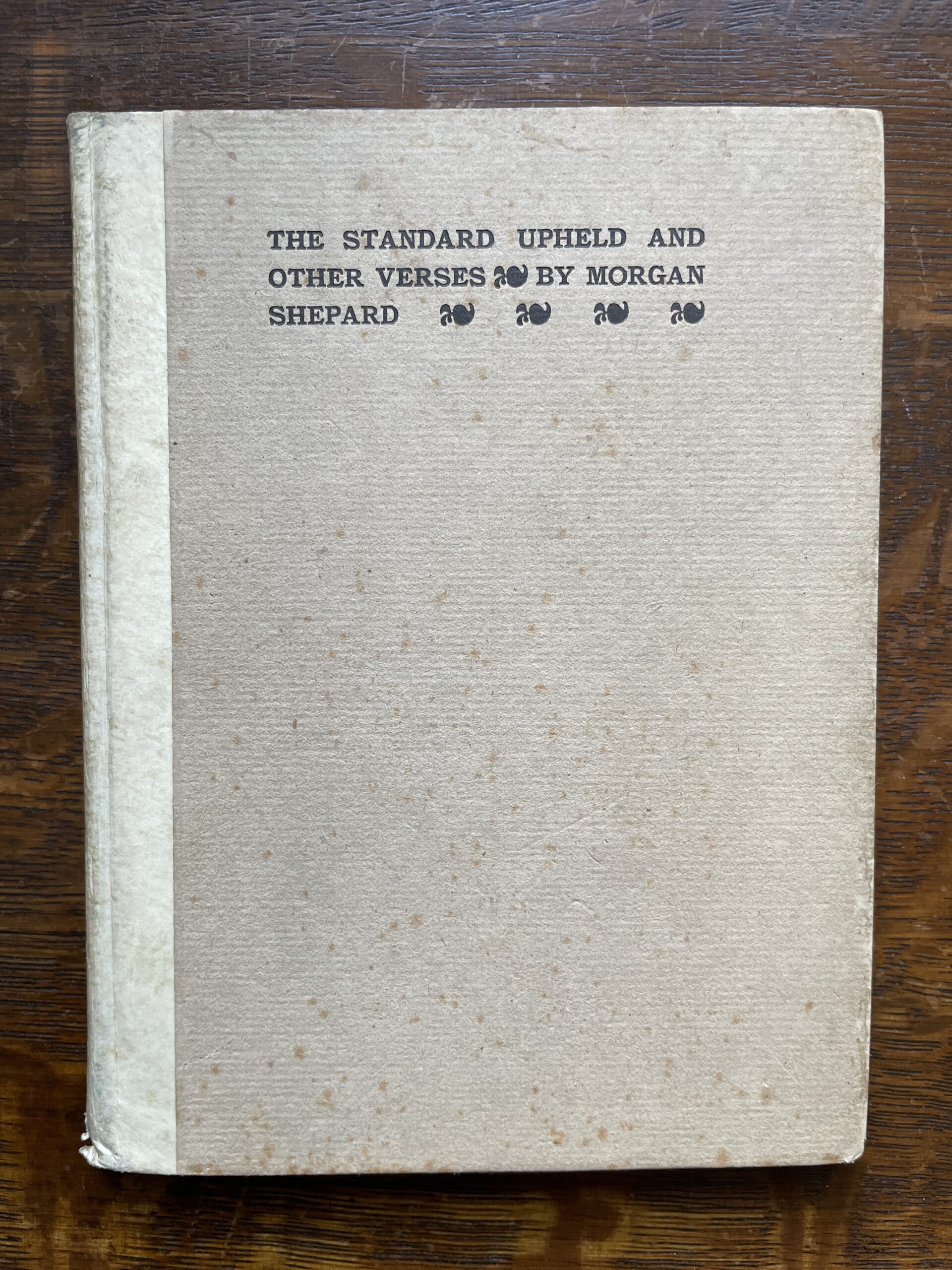
During their five-year collaboration between 1898 and 1903, Morgan Shepard was the artist, decorator and poet, while Paul Elder was the businessman and bookseller. Elder & Shepard published six of Shepard’s works during that time, mostly children’s stories. The prettiest of them is his slim volume of poetry The Standard Upheld, published in 1902 in a limited edition of 550 copies. Shepard’s title page design, perhaps depicting eucalyptus leaves, can be compared to similar botanic artwork on Volumes 1 and 2 of Impressions magazine. Shepard perhaps also designed the illuminated capital S on page 1.
The opening poem, “Shall I Cast Down the Standard Of My Life?” is clearly autobiographical. In a short memoir he wrote in his eighties, Shepard described the early death of his mother, followed by teenage years full of bad breaks, disappointments, and fisticuffs. For Morgan Shepard, the metaphor of “me against the world, holding my standard high” is an apt image indeed.
Title page of The Standard Upheld
Copy #1 of The Standard Upheld was presented by Shepard to Thomas Coke Watkins, to whom he dedicated the book. Shepard had it specially bound by Henry W. Thumler and James A. Rutherford, whose shop at 538 California was about three blocks from Elder & Shepard’s bookstore. Thumler & Rutherford were frequent advertisers in Impressions magazine.
Updated 2026-01-08
Copy #1 of The Standard Upheld, bound by Thumler & RutherfordPage 1 of The Standard Upheld, and the poem from which the book’s title is takenPages 10-11 of The Standard Upheld
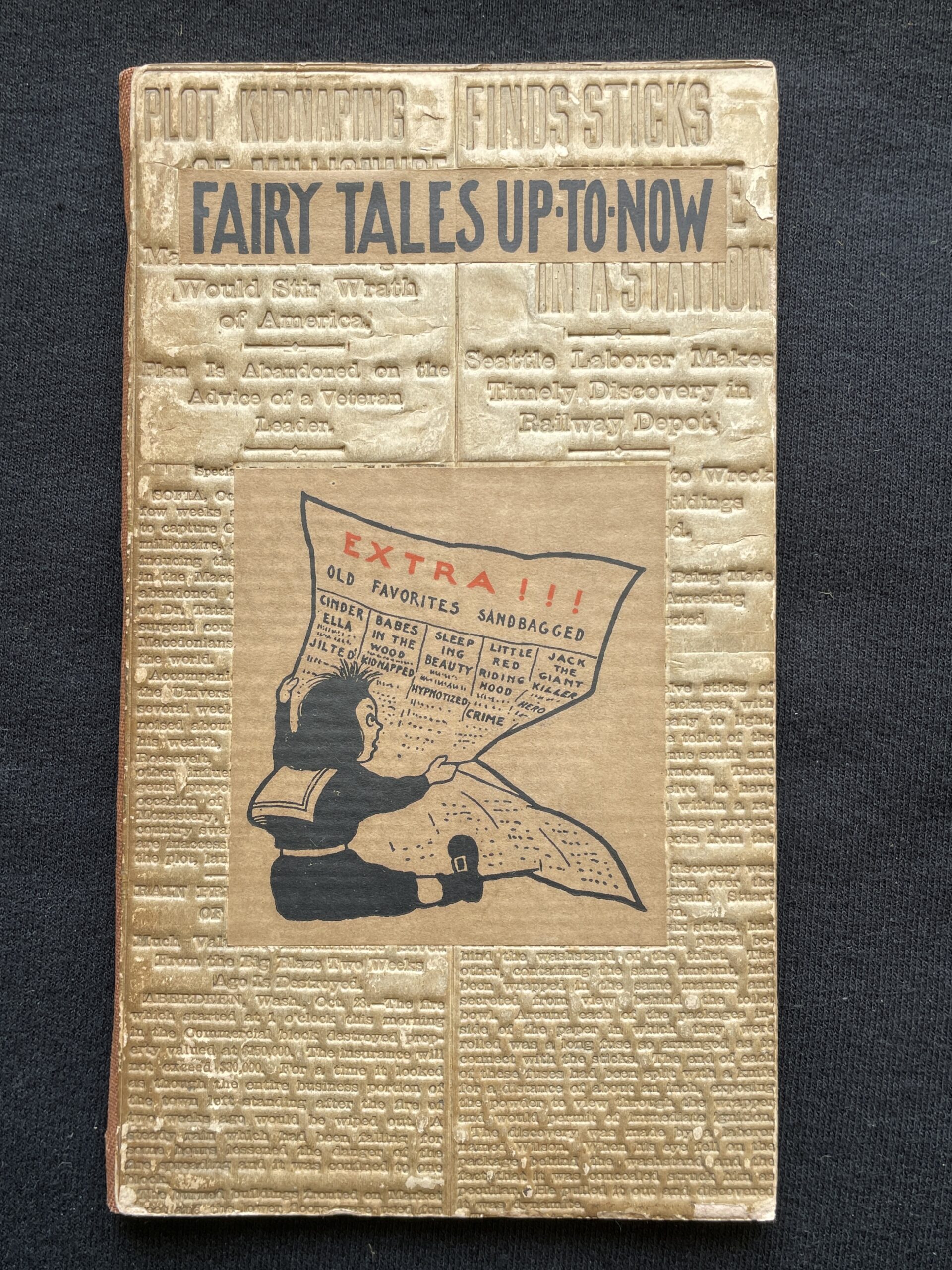
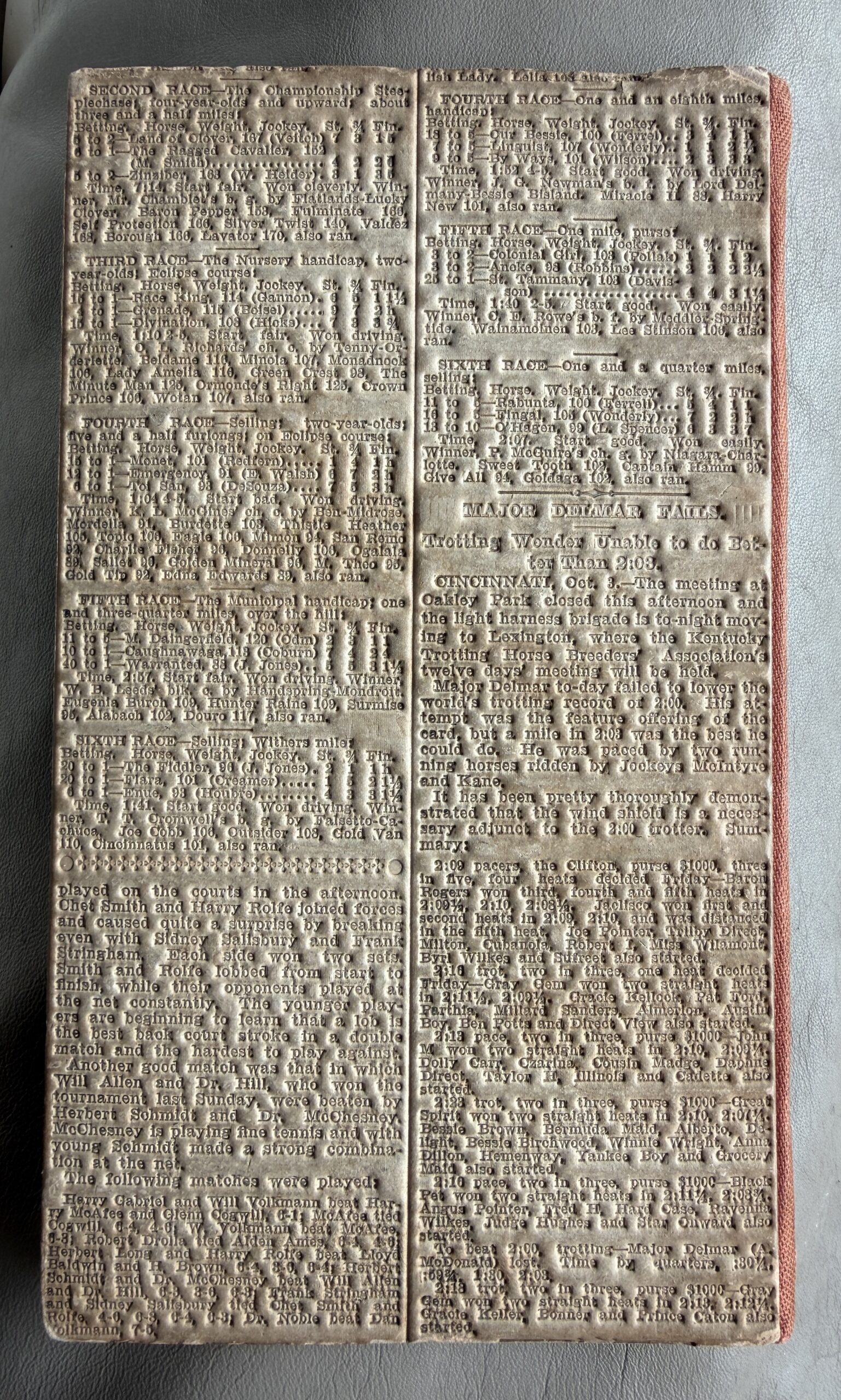
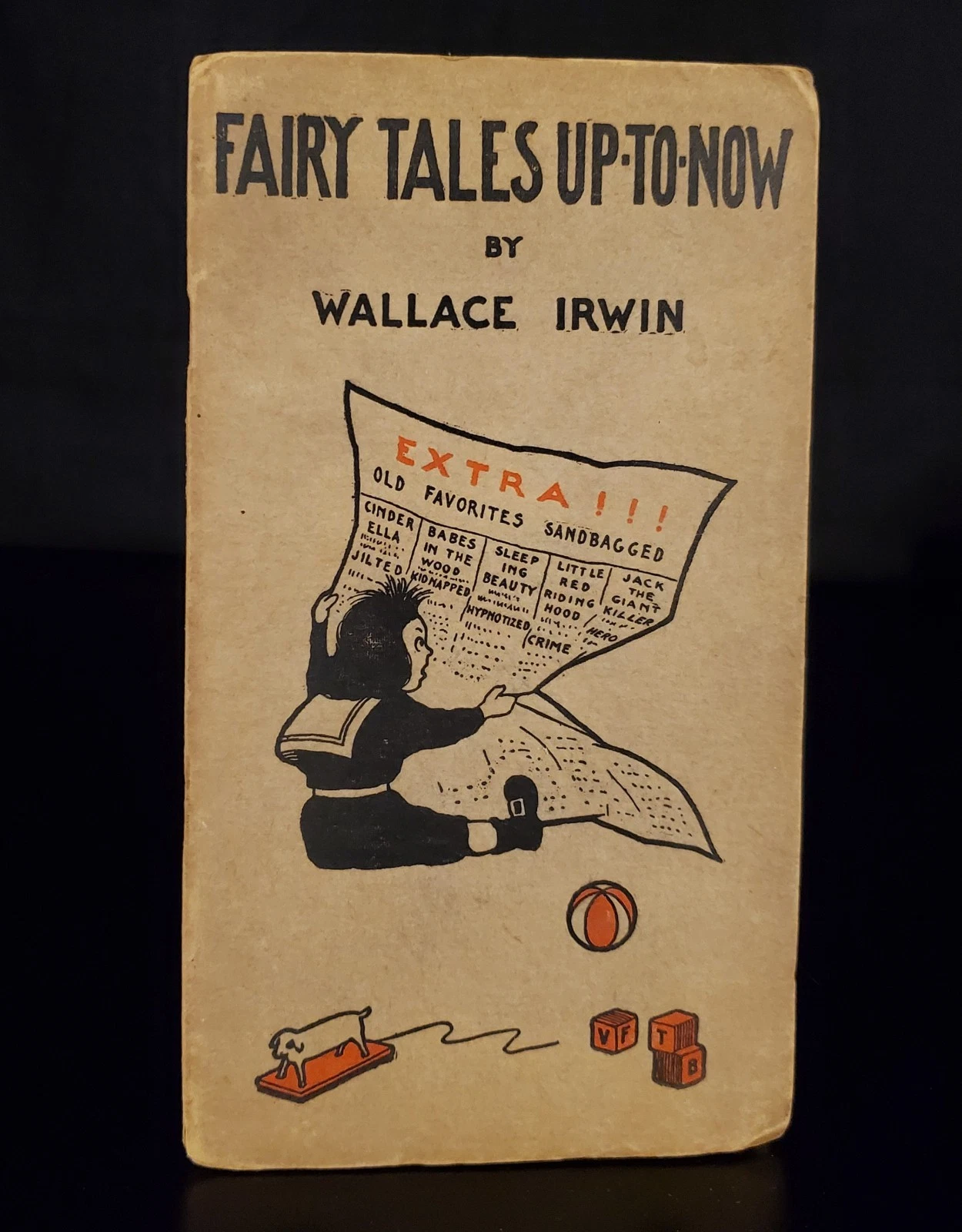
Cover of Fairy Tales Up-to-Now, a flong from the San Francisco Call of 29 October 1903, page 2.
Extra, extra, read all about it! Wallace Irwin rewrites old fairy tales!
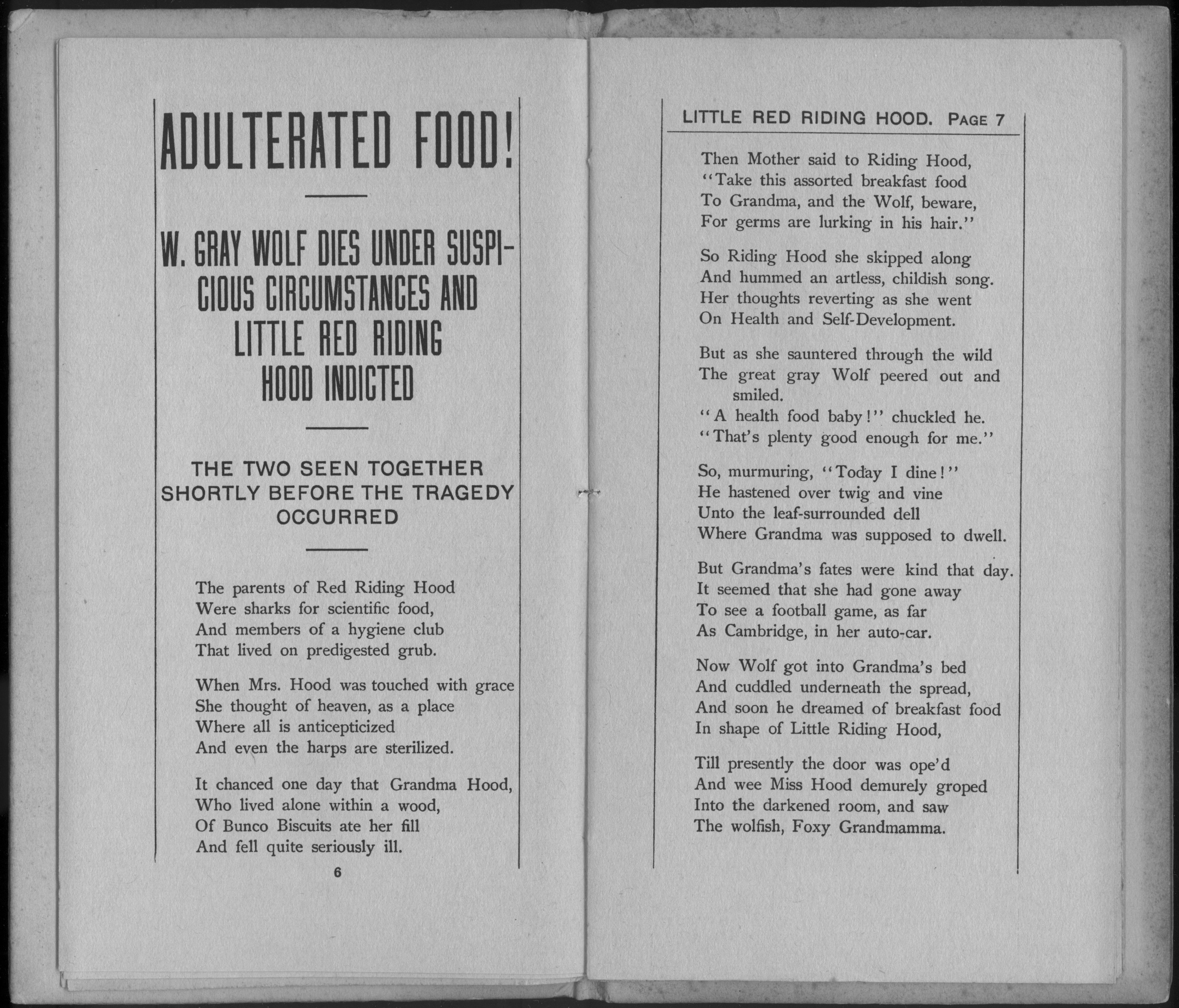
In contrast to Irwin’s Love Sonnets of a Hoodlum, whose humor is obscure to modern readers, his 1904 Fairy Tales Up-to-Now is fairly accessible. The book contains five poetical satires of five classic children’s stories titled with tabloid newspaper headlines. Cinderella, a stenographer working for 50¢ a day, goes to the ball in a rented gown, but when the Prince discovers that her diamond slippers are just paste, he rejects her because he’s broke and needs a bride who’s wealthy. Cinderella, though, becomes a millionaire by selling faux-diamond slippers. Jack, of Beanstalk fame, rides off to slay the Standard Oil Giant, but is given a job instead, rises to the rank of treasurer and becomes a Giant himself, but then returns home to endow a library, gas-works and church.
A charming feature of the book are the front and back covers, which are flongs, temporary paper molds used for printing newspapers. Stereotype metal was poured over the flong, then the stereotype was wrapped around the press’s cylinder for printing. After a few thousand copies, the stereotype metal would begin to wear out: at this point it would be melted down, then poured again over the same flong to make a new sharp copy for printing. Once the day’s press run was finished, the flongs were normally discarded, but here they were sent to Elder to be chopped up into covers. Each individual copy of Fairy Tales Up-to-Now is therefore unique.
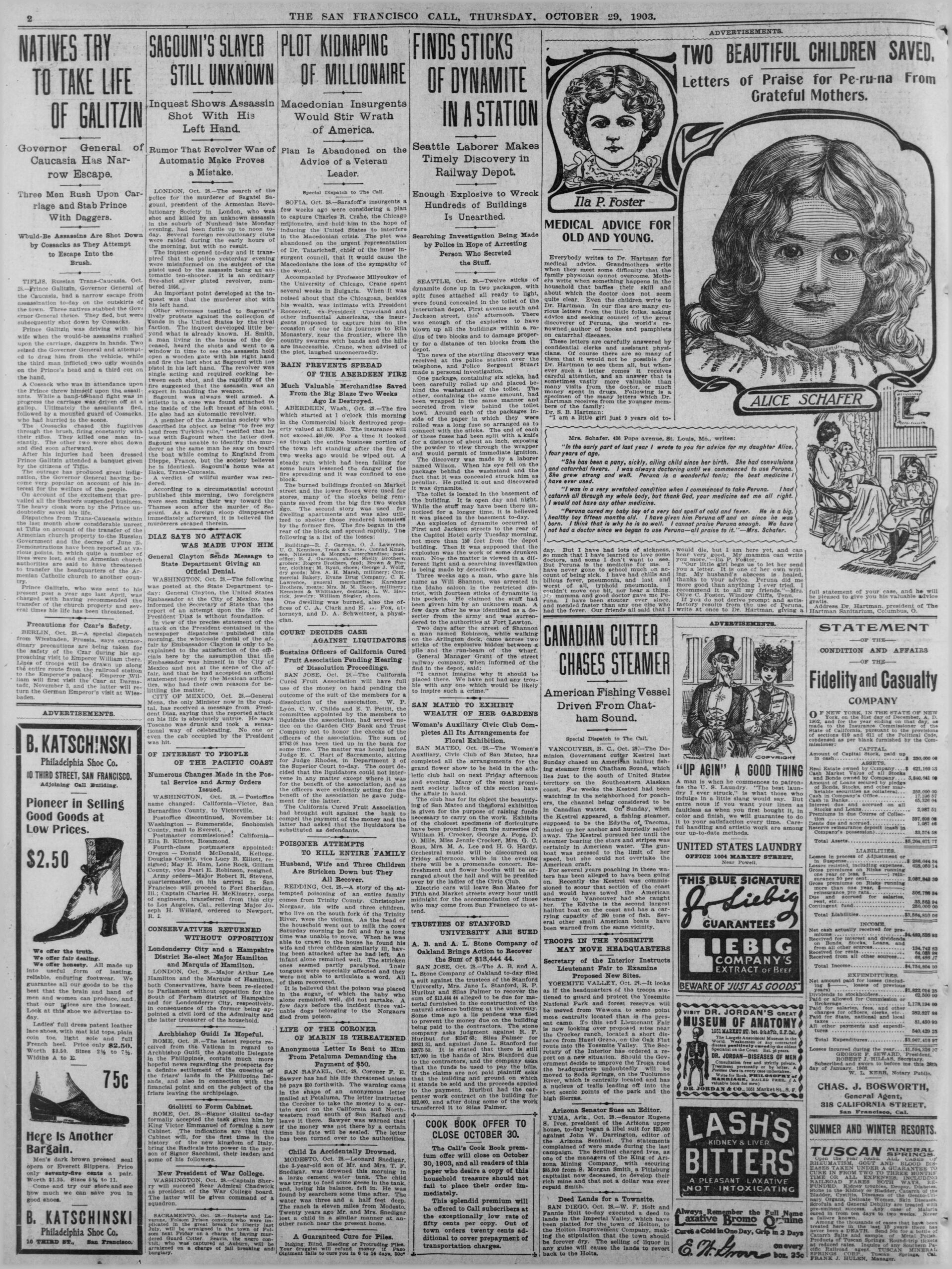
The San Francisco Call, 29 October 1903, page 2. This is the page printed from the above flong (tops of columns 3-4).
With a newspaper index service, it is possible to find the exact page a given flong was used to print. The example on this page is from the San Francisco Call of 29 October 1903, page 2. The flong would originally been the size of the entire newspaper page, but just the tops of columns 3 and 4 are used as the book cover. Presumably, other copies of Fairy Tales Up-to-Now exist somewhere bound with other sections of this page 2 flong. All copies examined so far have been from the Call, but Elder may have used flongs from other local newspapers as well.
The rear cover of Fairy Tales Up-to-Now is also a flong, but there was no attempt to match up flongs from the same page or date. Our example copy’s back cover is from 4 October 1903, molded three weeks before the flong used on the front cover.
Fairy Tales Up-to-Now was also issued in paper wraps instead of flongs, no doubt cheaper but far less whimsical.
Thanks to Molly Schwartzburg and Andre Chaves for information about flongs.
Updated 2026-01-22
The back cover of the same copy of Fairy Tales Up-to-Now, used to print the Call of 4 October 1903, page 35, columns 3 and 4.Alternate paper binding of Fairy Tales Up-to-Now. But why would you buy this one when you could have a flong?Title page of Fairy Tales Up-To-Nowpages 6-7 of Fairy Tales Up-To-Nowpages 10-11 of Fairy Tales Up-To-Now
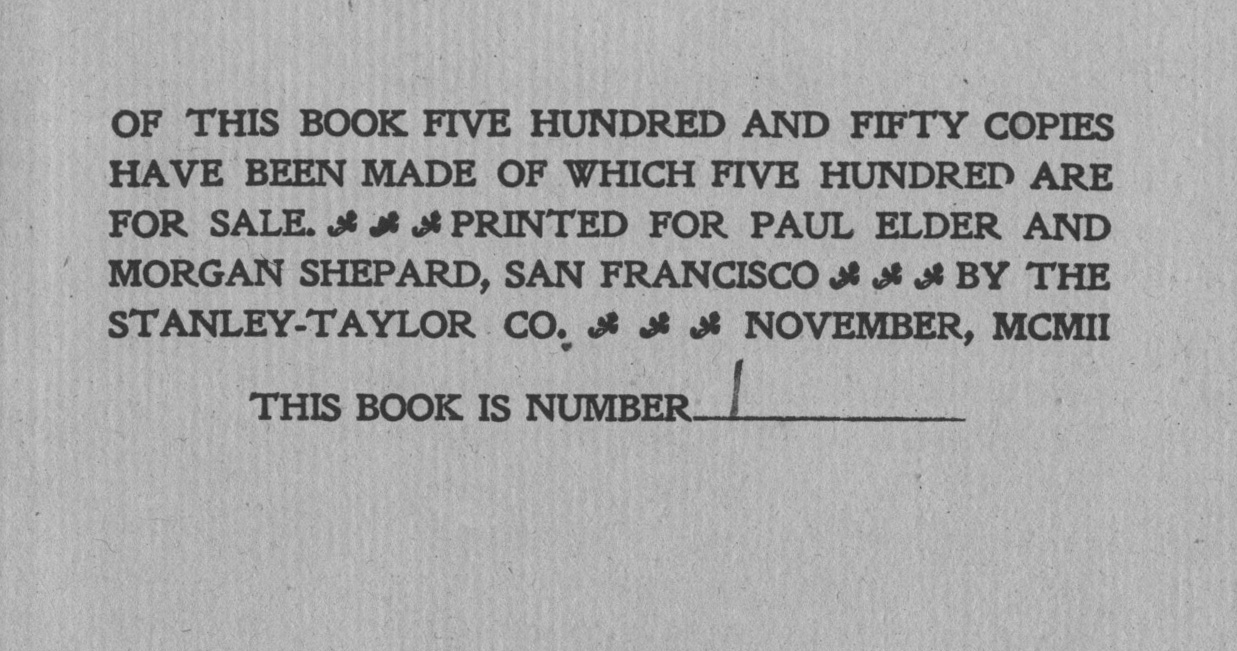
Colophon of “The Standard Upheld,” by Morgan Shepard, 1902. Copy #1 of 500.
In publishing, a colophon is a brief description of a book’s production or publication details. The Latin word colophon comes from the Greek κολοφων meaning “summit,” or “finishing.” The term originally applied to inscriptions appended to the end of ancient Near East texts written on clay tablets. The colophon would contain such facts as the scribe, the owner, the literary contents and occasionally the reason for writing. For example, the Masoretic text of the Hebrew Bible contains colophons at the end of every book, noting, among other things, how many verses the book contains.
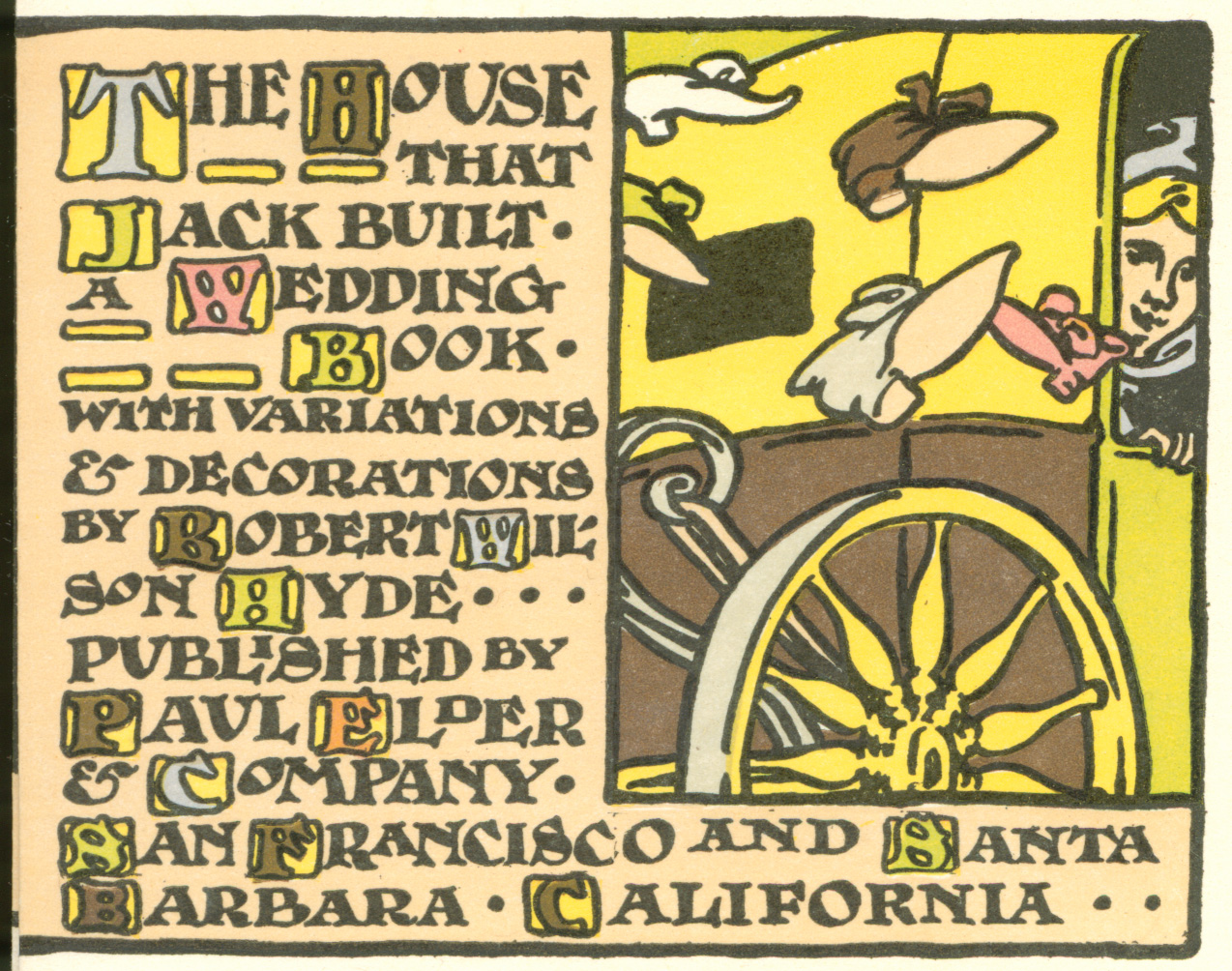
Unusual hand-drawn colophon from “The House That Jack Built,” by Robert Wilson Hyde, 1904
Most Paul Elder publications after 1902 contain a colophon. By about 1906, the usual formula was: title, author, printer, month and date of publication. Most colophons were written out in full sentences, stylistically matching the tone and content of the book. From a research standpoint, the colophons are useful in pinning down when Elder’s printers (Nash, Swart, Funke, and Orozco) joined, then later left, the Tomoye Press. Colophons will also sometimes mention artists not otherwise mentioned on the title page.
As the purpose of the colophons was to impress the adults, Elder’s children’s books do not have them. Colophons are also typically missing from books which have significant end-matter, such as indexes or appendices.
Elder’s style, which mimicked that of other fine press books of the time, was to put the copyright information on the title page verso, and the colophon on its own page following the last page of text. In modern American books, the colophon has been subsumed into the copyright details, typically placed on the title page verso. European books often place the copyright/colophon at the end of the book.
Updated 2026-02-06
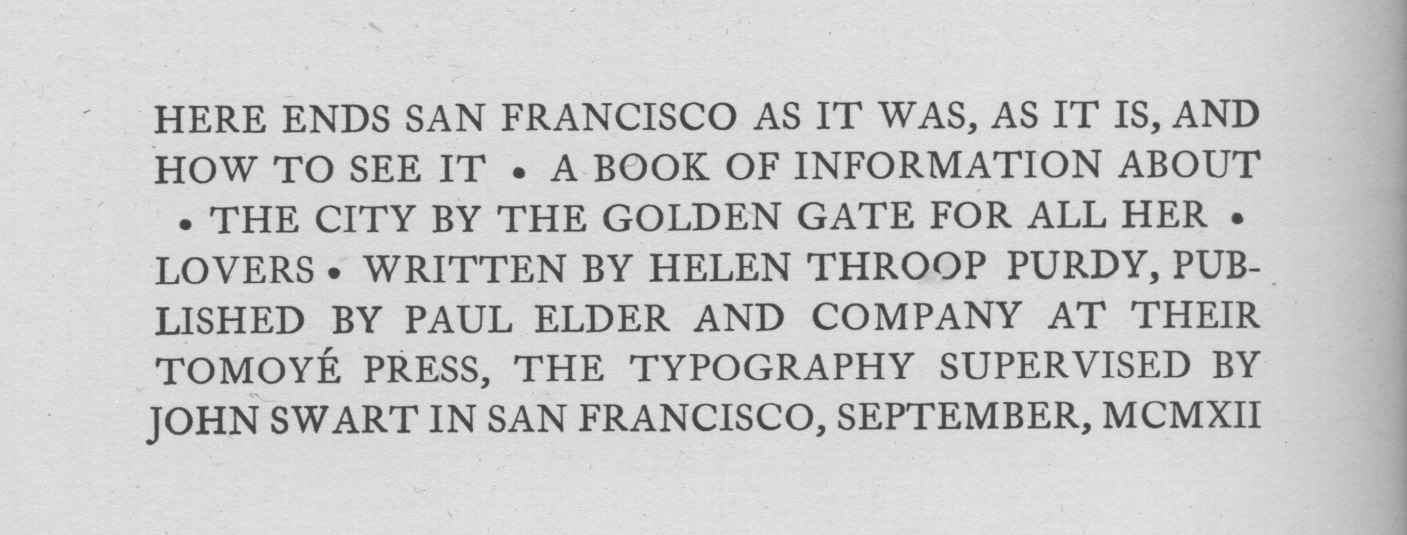
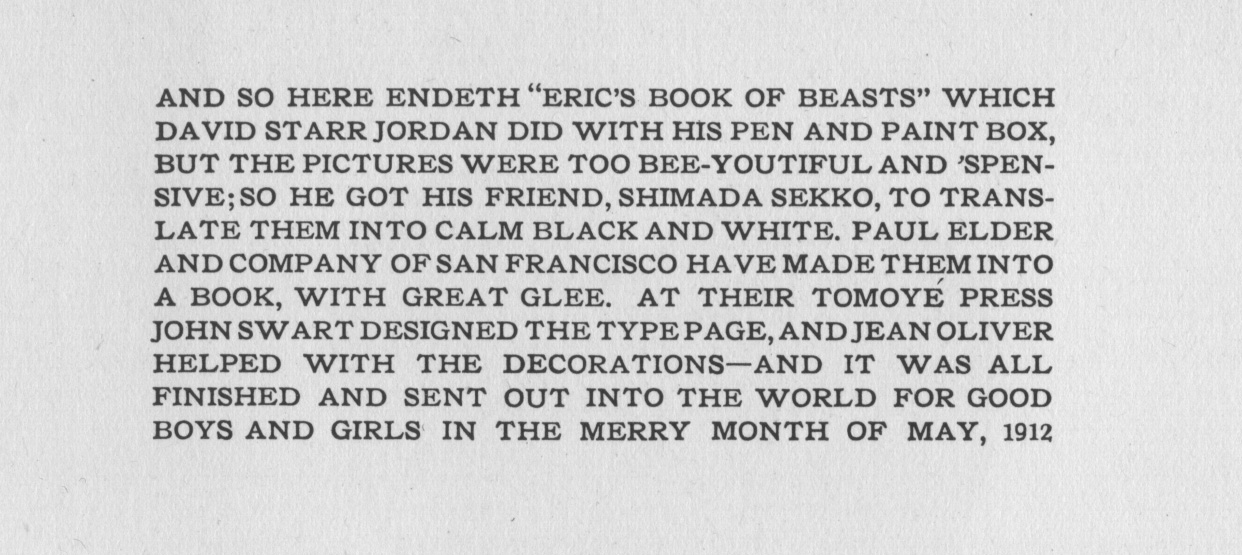
The earliest Elder colophon I have found so far, “Wayfarers in Italy,” by Katherine Hooker. The colophon is dated 1901, but the book’s title page reads 1902. Paul Elder has signed with the red “E”, Morgan Shepard with the red “S”Colophon from “Yosemite Legends,” by Bertha Smith, 1904Colophon from “A Book of Hospitalities and Record of Guests,” by Arthur Guiterman, 1910Colophon from “Charity,” verses selected by Beulah Warner, 1911Colophon from “San Francisco, As It Was, As It Is, and How To See It,” by Helen Throop Purdy, 1912Colophon from “Eric’s Book of Beasts,” by David Starr Jordan, 1912
Guest books aren’t seen much today except at weddings and funerals. It seems they were more popular in the early 1900s, as Paul Elder published four guest books between 1904 and 1910.
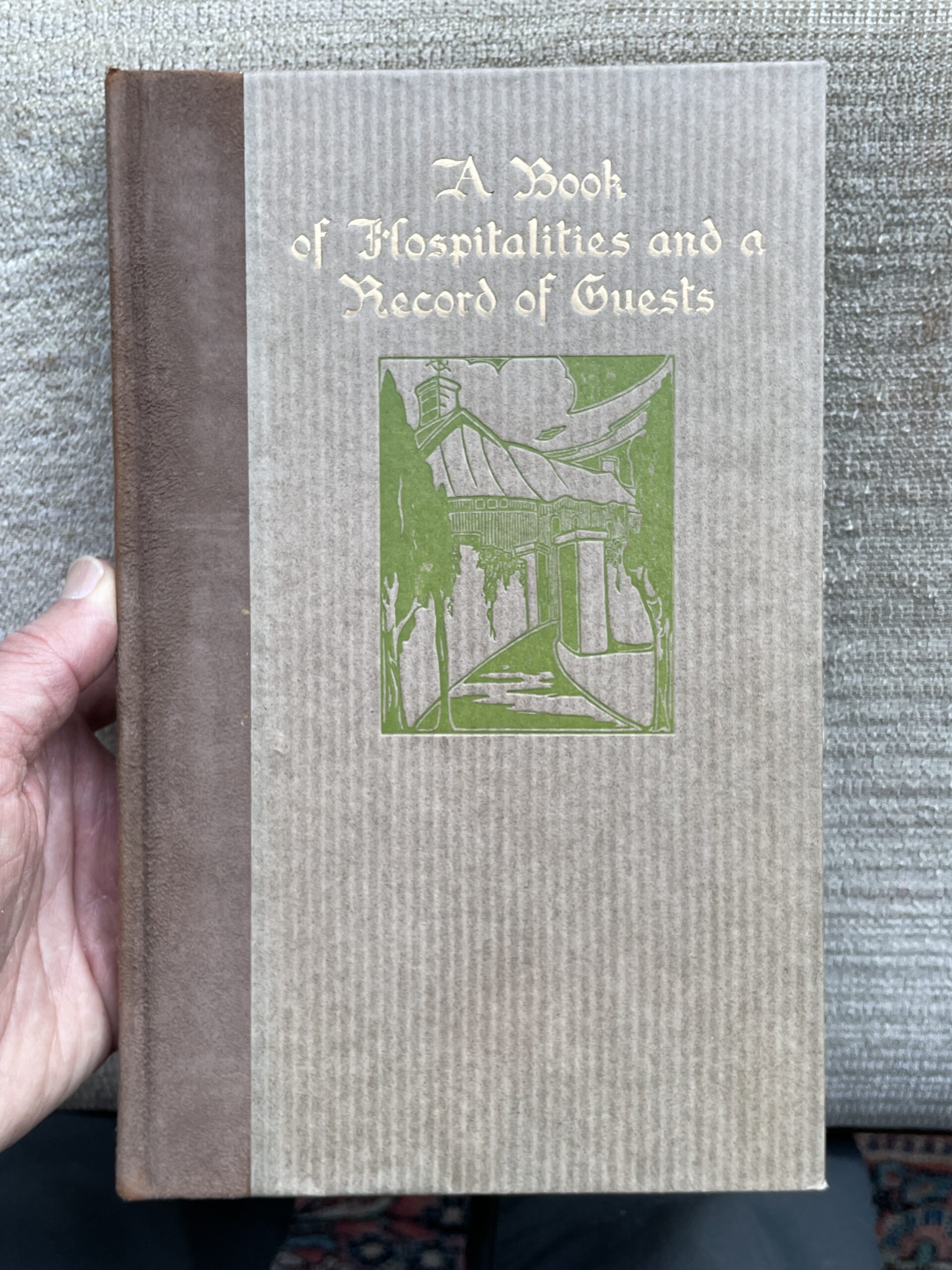
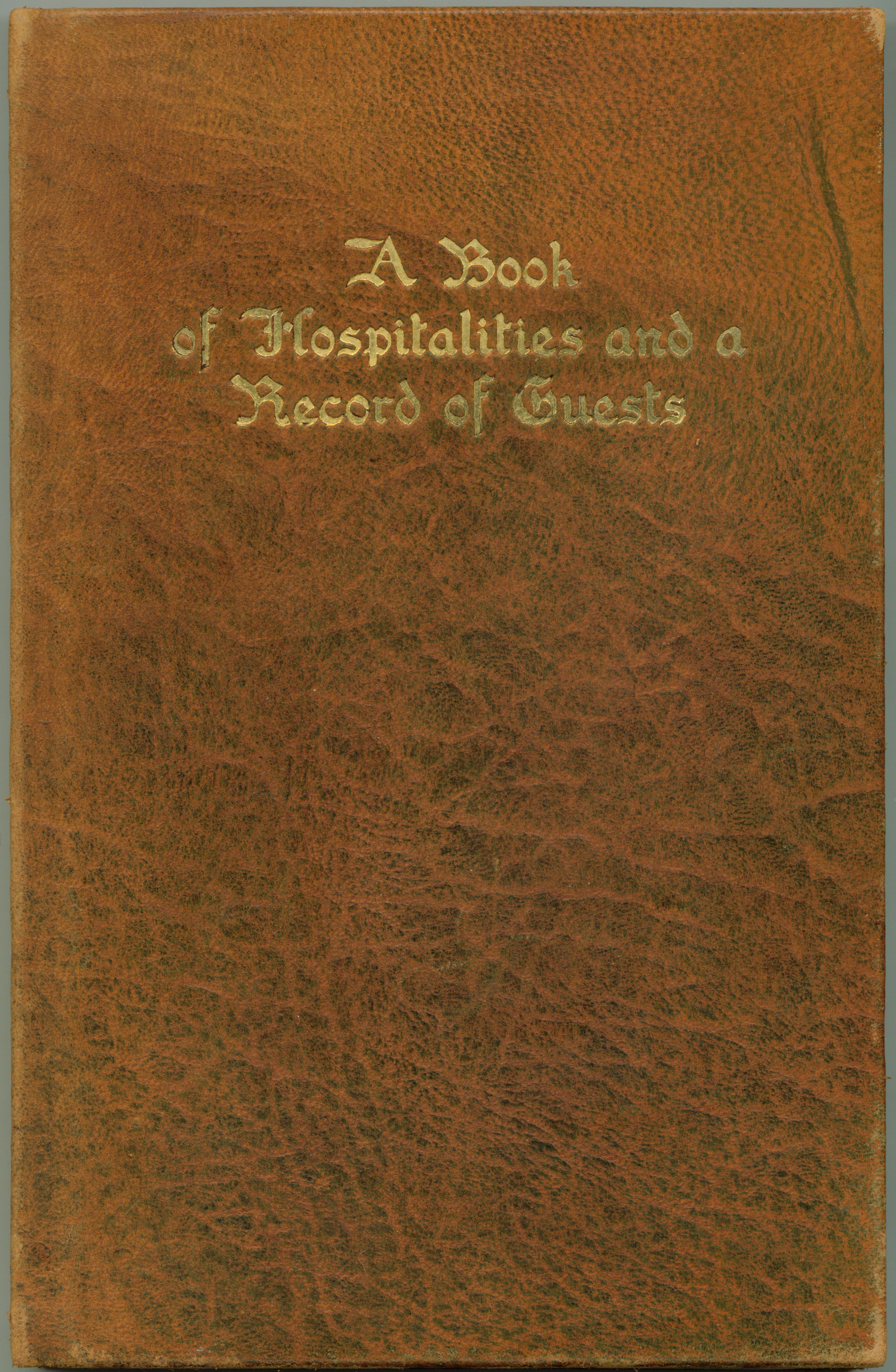
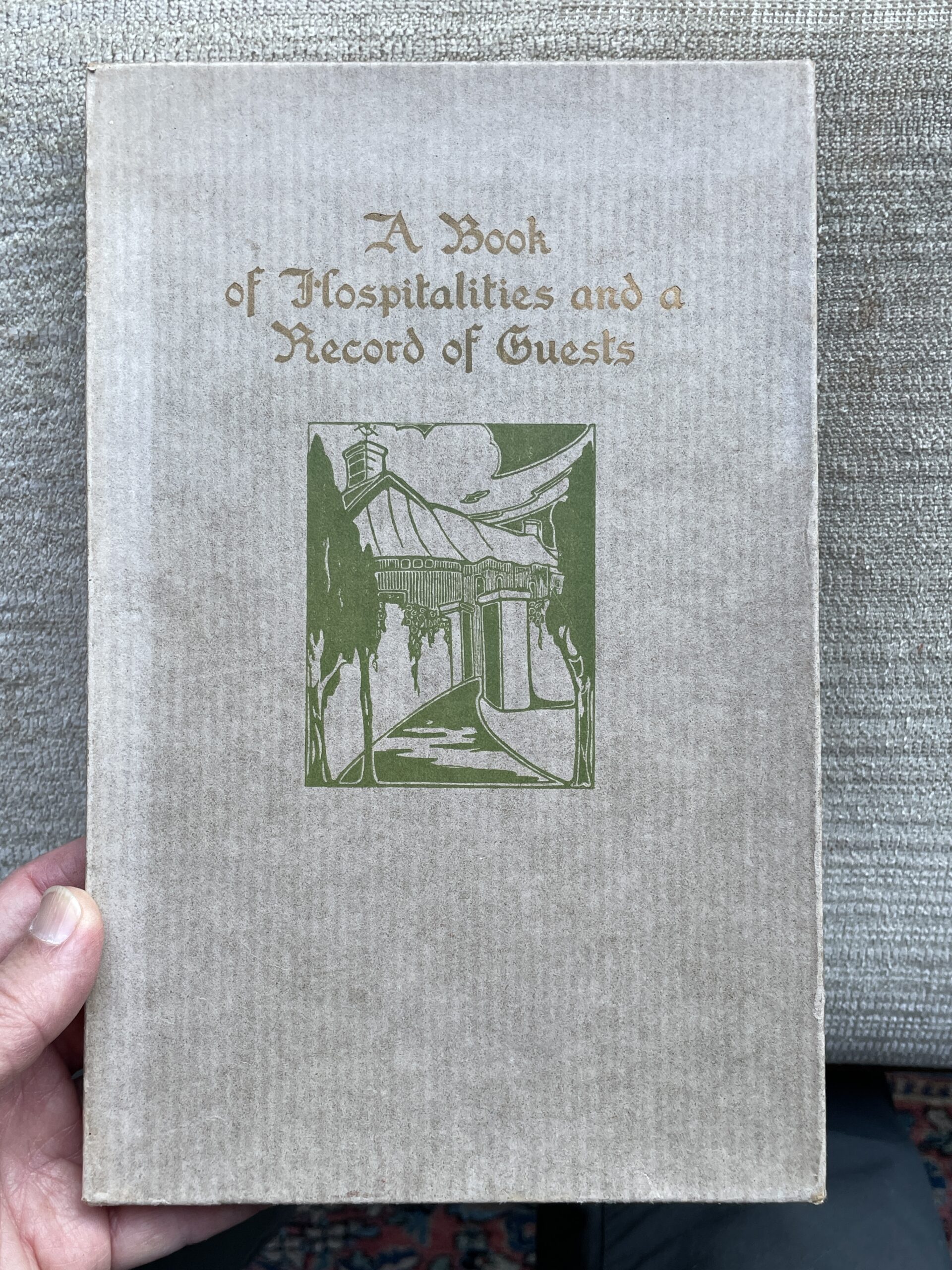
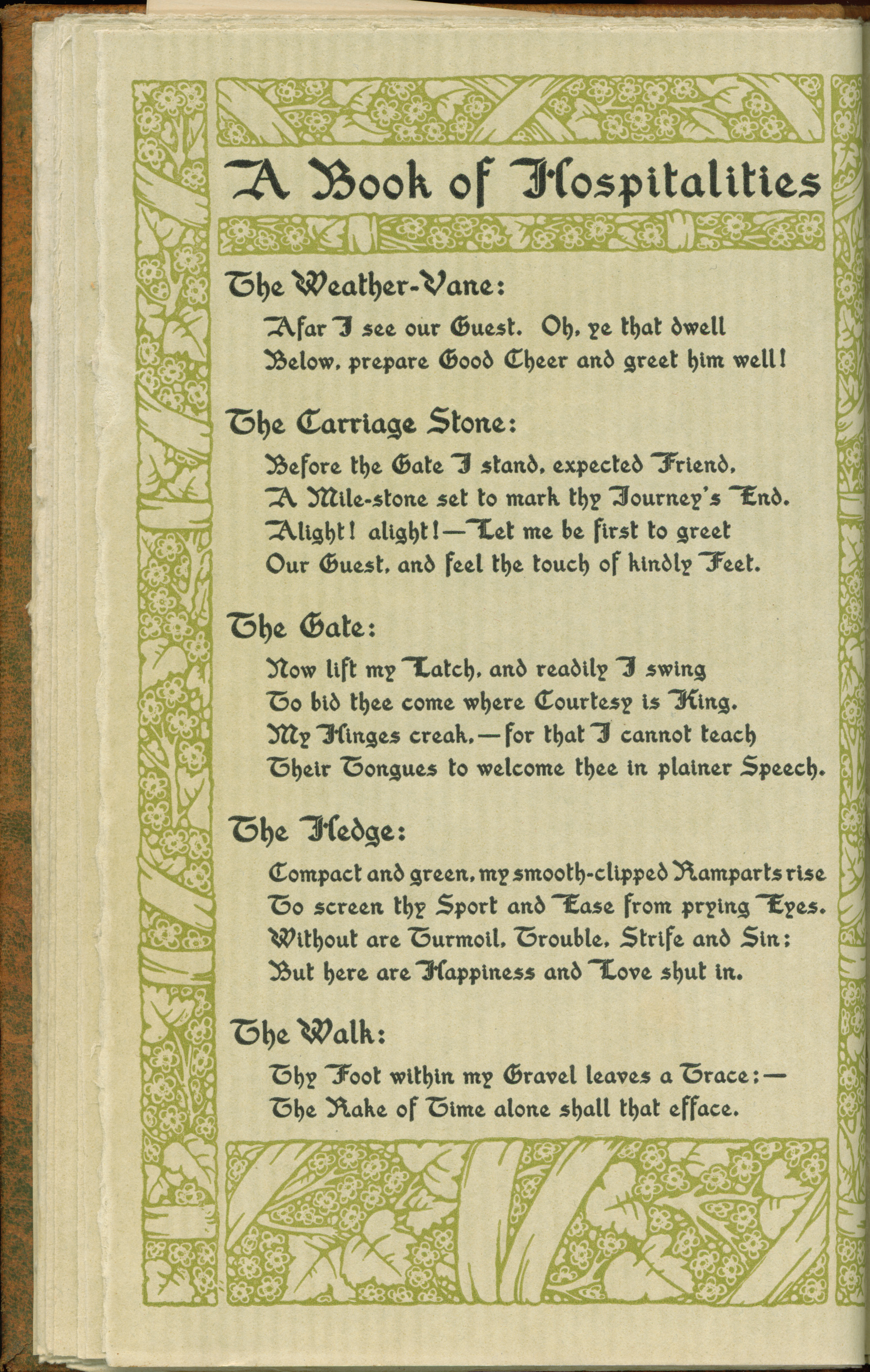
Arthur Guiterman’s Book of Hospitalities And a Record of Guests (1910) was probably intended to be placed in the guest bedroom. The first section (“A Book of Hospitalities”) contains a selection of sayings and epigrams for the house, and the second half (“A Record of Guests”) contains blank areas for the guests to write in. Guiterman was also involved in two other Elder publications: the magnificent 1908 Guest Book with artwork by Robert Wilson Hyde, and the 1907 humor book Betel Nuts, Or What They Say In Hindustan.
Arthur Guiterman (1871-1943) was born in Vienna to American parents and graduated from the College of the City of New York in 1891. He was the author of a dozen books, primarily poetry. He was also editor of Women’s Home Companion and Literary Digest. In 1910, he co-founded the Poetry Society of America (which still exists and celebrated its centennial in 2010), and served as president in 1925.
Cover of A Book of Hospitalities, leather on boards
I am particularly fond of Guiterman’s poem entitled “On the Vanity of Earthly Greatness”
The tusks which clashed in mighty brawls
Of mastodons, are billiard balls.
The sword of Charlemagne the Just
Is ferric oxide, known as rust.
The grizzly bear, whose potent hug,
Was feared by all, is now a rug.
Great Caesar’s bust is on the shelf,
And I don’t feel so well myself.
Title page of A Book of Hospitalities
A Book of Hospitalities was published in two bindings: paper on boards, and leather on boards, both with a presentation box. If you happen to own a copy of my 2004 Checklist of the Publications of Paul Elder, 2nd edition, you will see that the page borders are taken from Book of Hospitalities.
Updated 2026-01-19
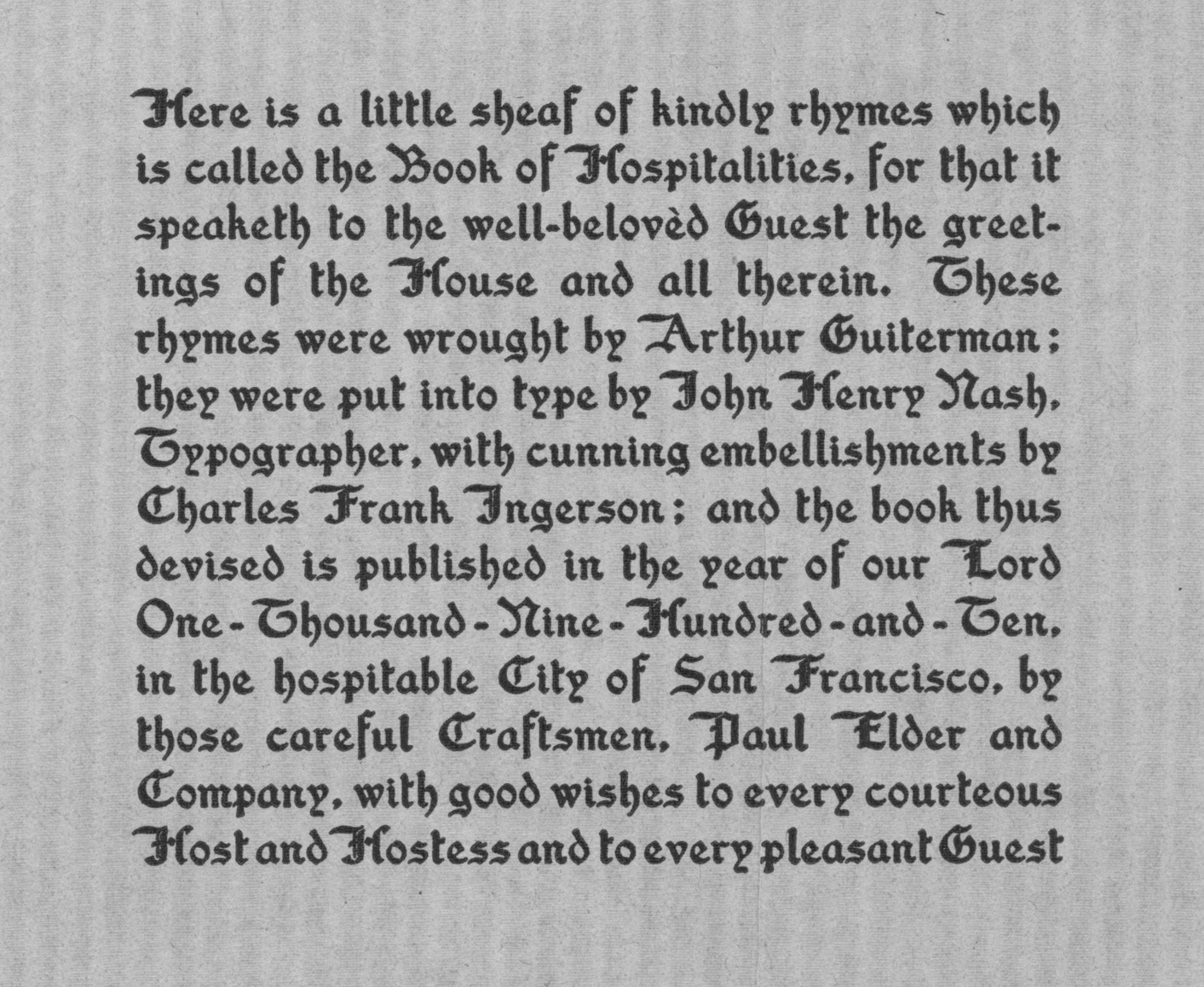
A Book of Hospitalities, presentation boxFrontispiece of A Book of HospitalitiesForeword of A Book of Hospitalities