Today I pause to remember Robert Harlan, professor emeritus at the UC Berkeley School of Information and the Bancroft Library. He died on April 8th at the age of 84. He was an expert on the 19th-century San Francisco printing industry and the Bay Area fine-printing movement of the mid-20th century. He published several books, including a long monograph on John Henry Nash, and two pamphlets on Paul Elder.
Harlan’s research had a profound influence on my own work on Paul Elder & Company. When I started learning about bibliography and decided to specialize on Elder, I was acutely aware of my lack of academic credentials. This embarrassment was the chief reason I didn’t seek out Harlan in person, to my lasting regret.
Harlan was also the Ph.D. advisor for Ruth Gordon, whose 1977 thesis on Paul Elder was the original inspiration for my work.
A full obituary of Robert Harlan can be found here and here.
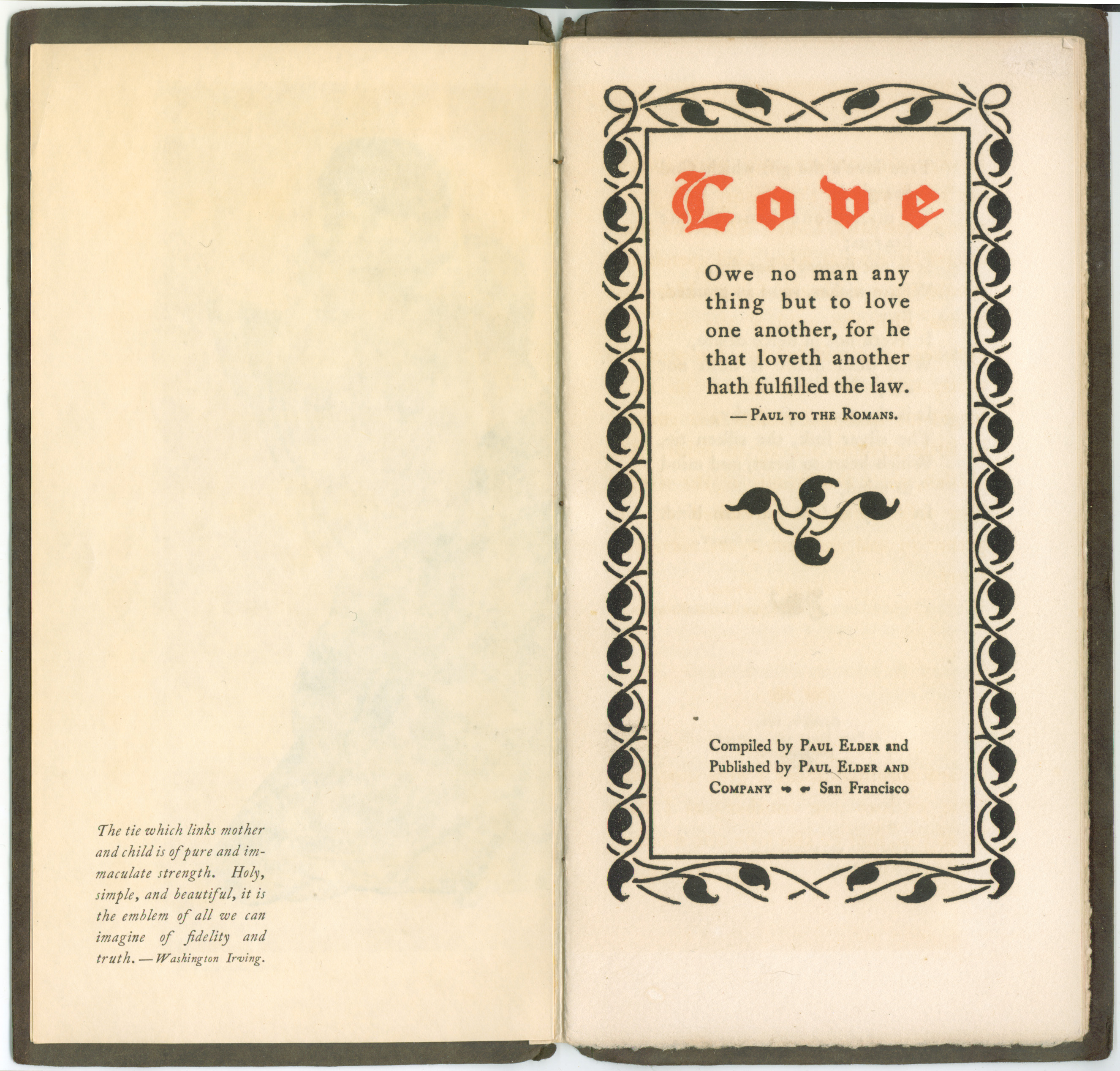
Love (1905) was the last of the Mosaic Essays series compiled by Paul Elder. The first booklet in the series, Friendship, was published in 1902 and sold very well. In 1903, Elder followed with Happiness, Nature and Success in 1903.
In 1906 he reissued the five booklets in a single volume called Mosaic Essays.
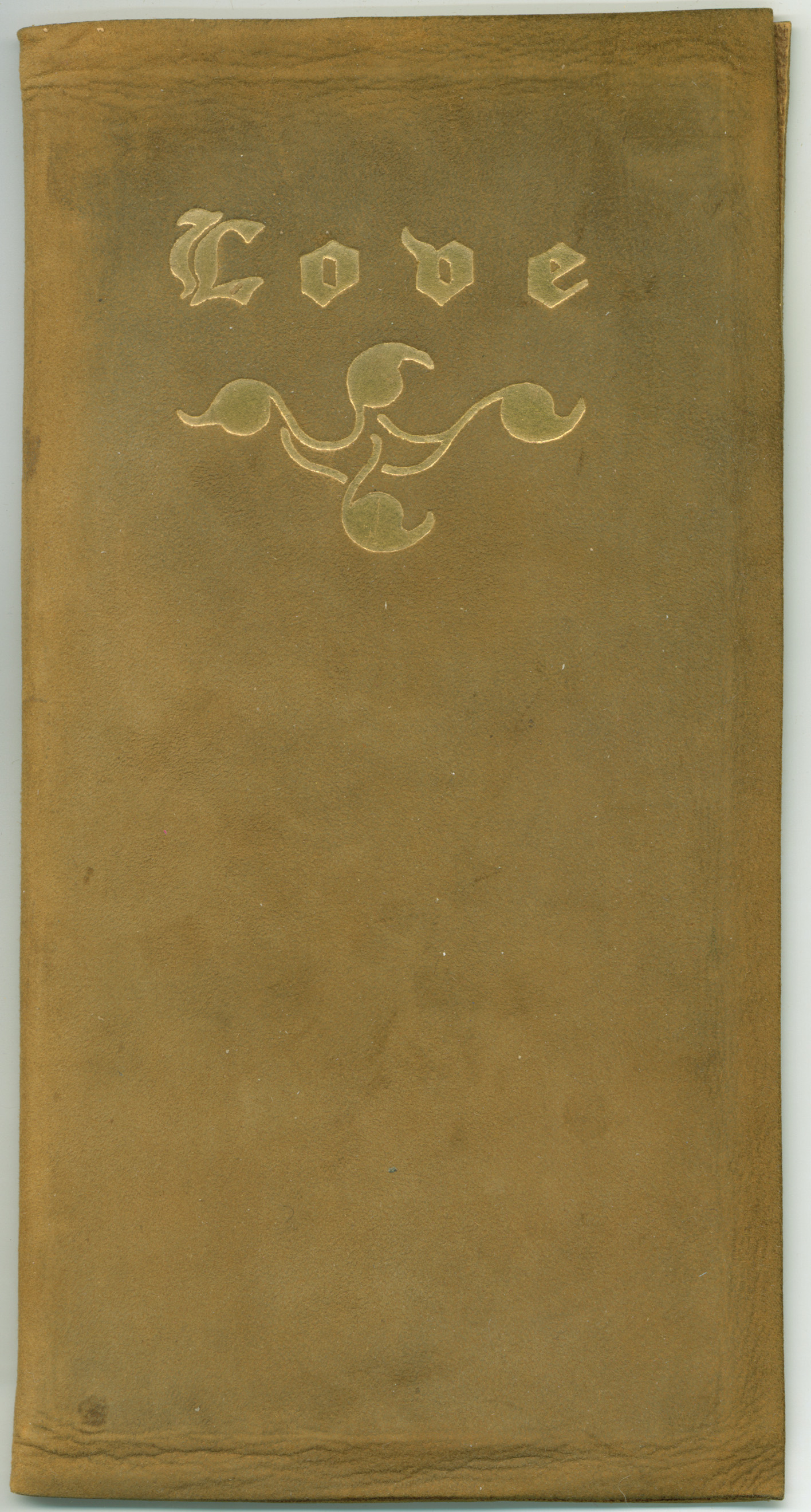
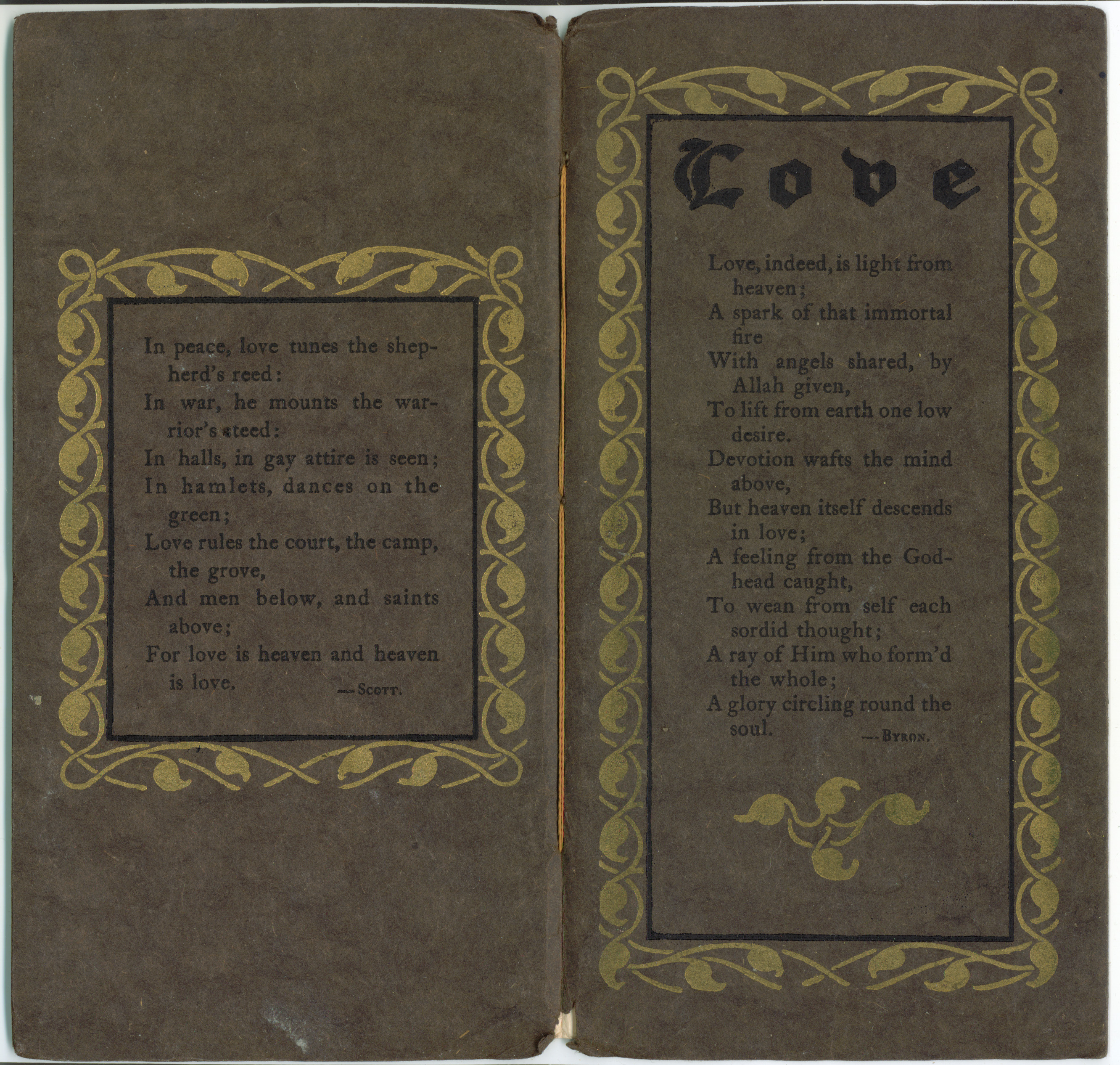
As with the other four titles in the series, Love was published in multiple forms: dark paper wraps, soft suede, and perhaps also a “full white calf by Miss Crane.”
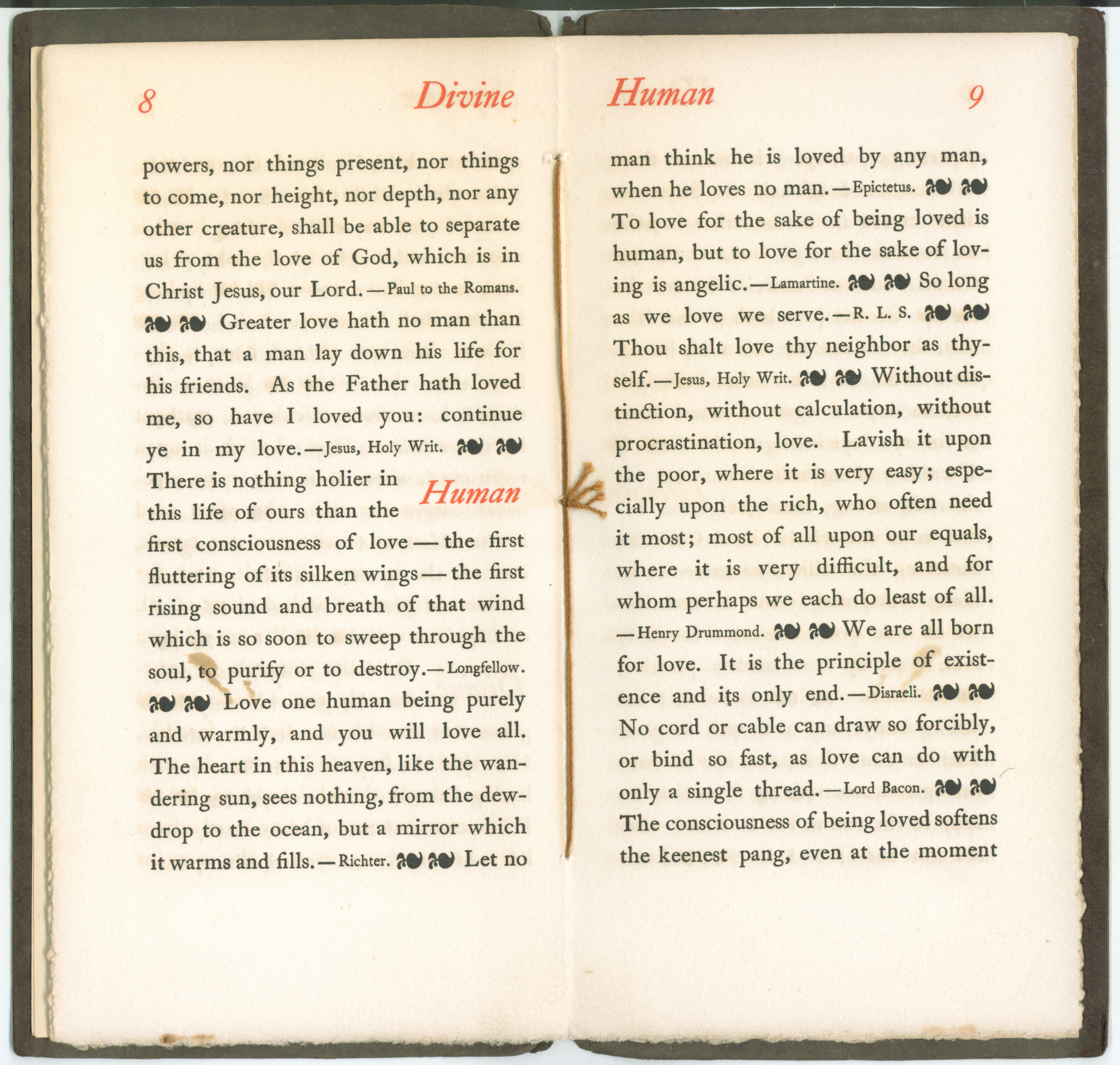
Title page of “Love”Paper wraps edition of “Love”Pages 8-9 of “Love”
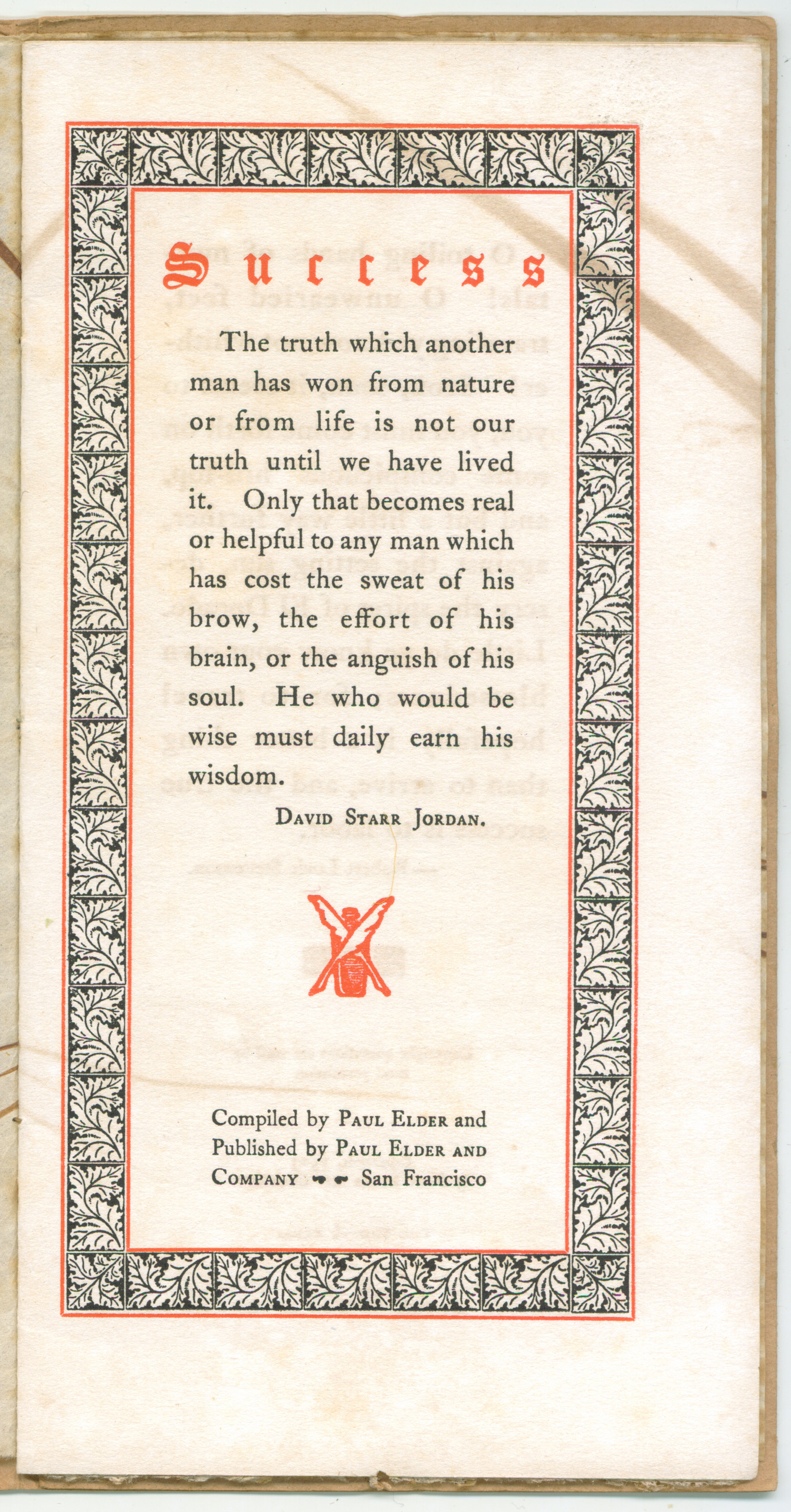
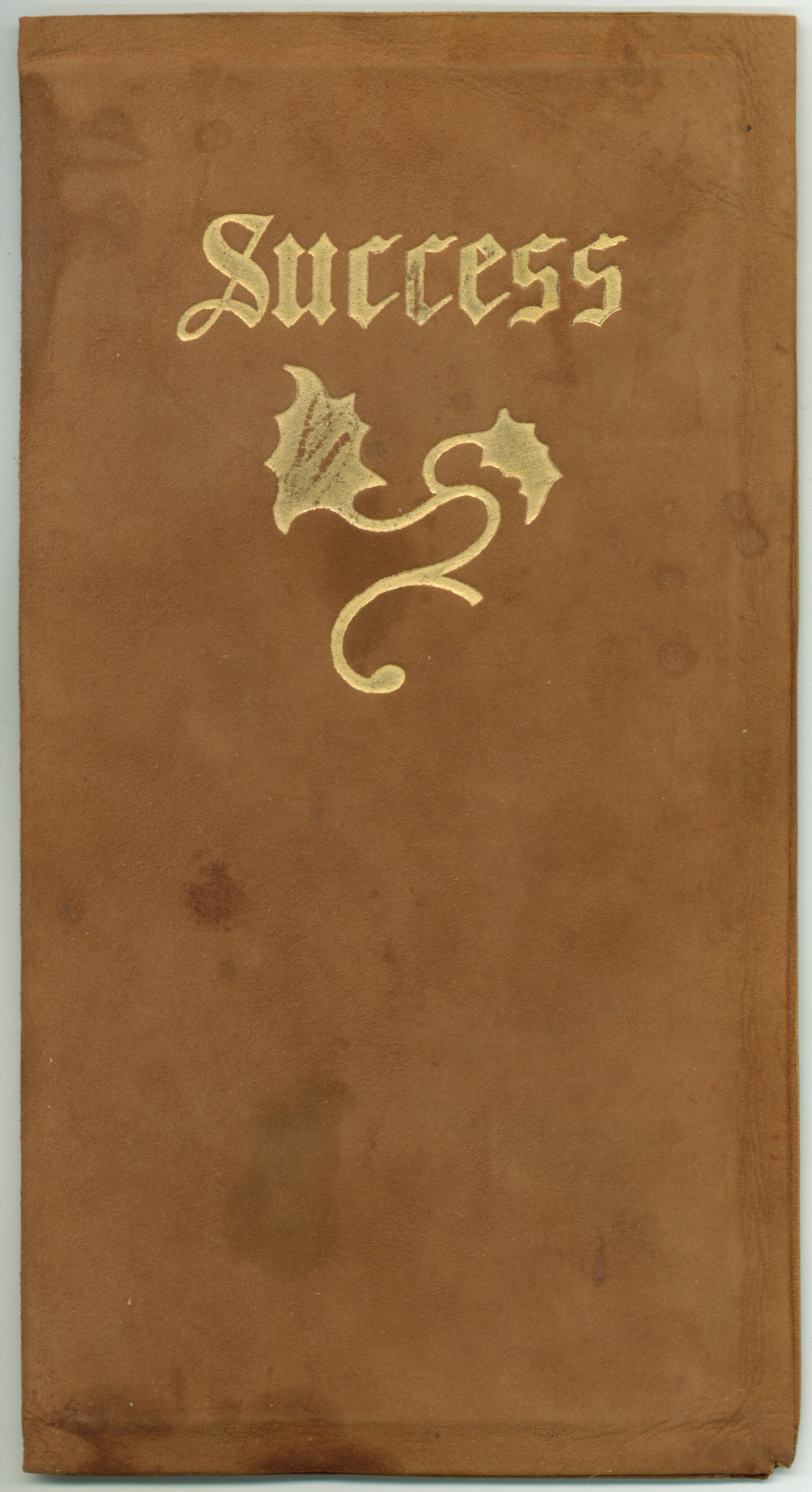
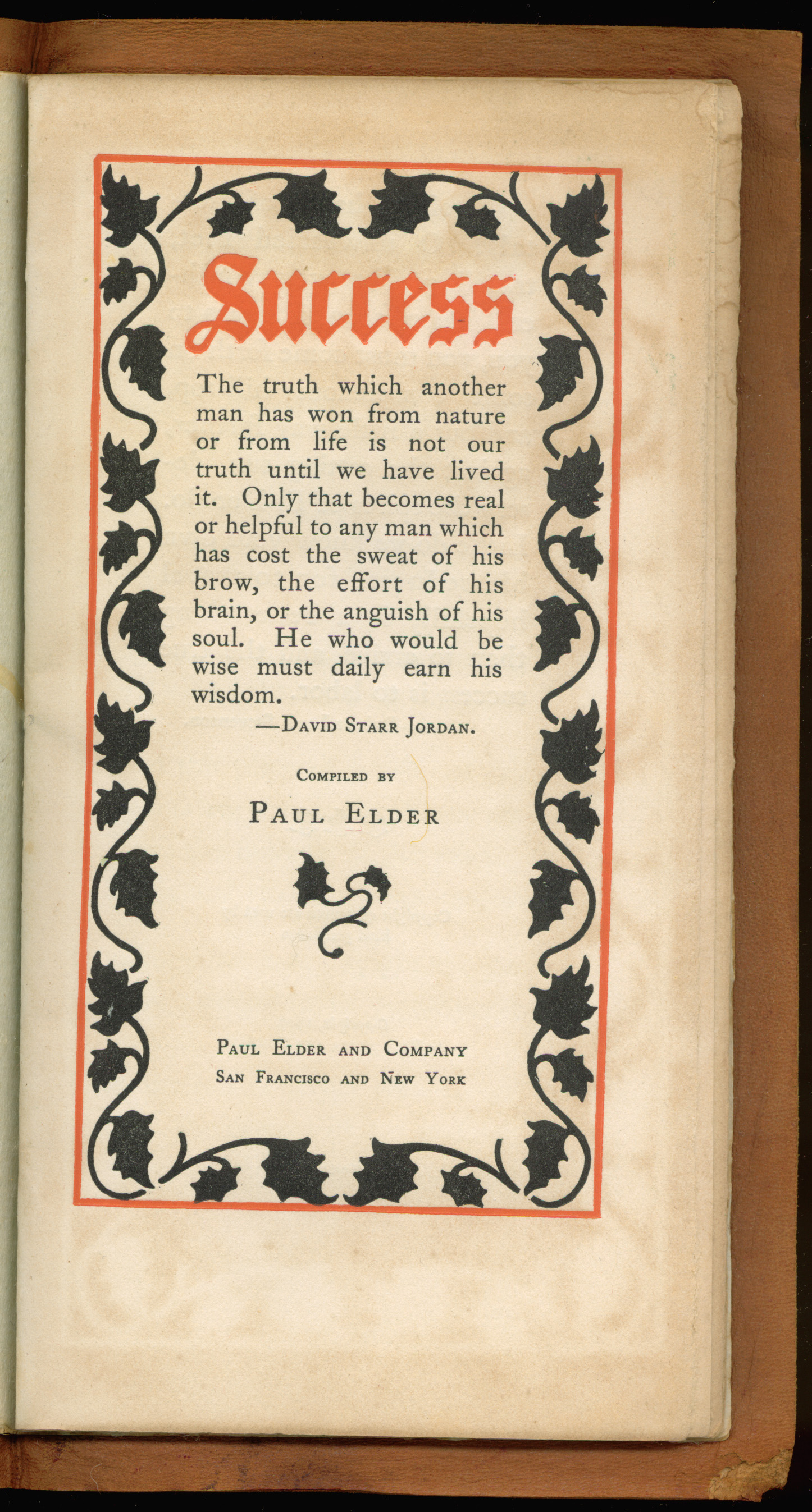
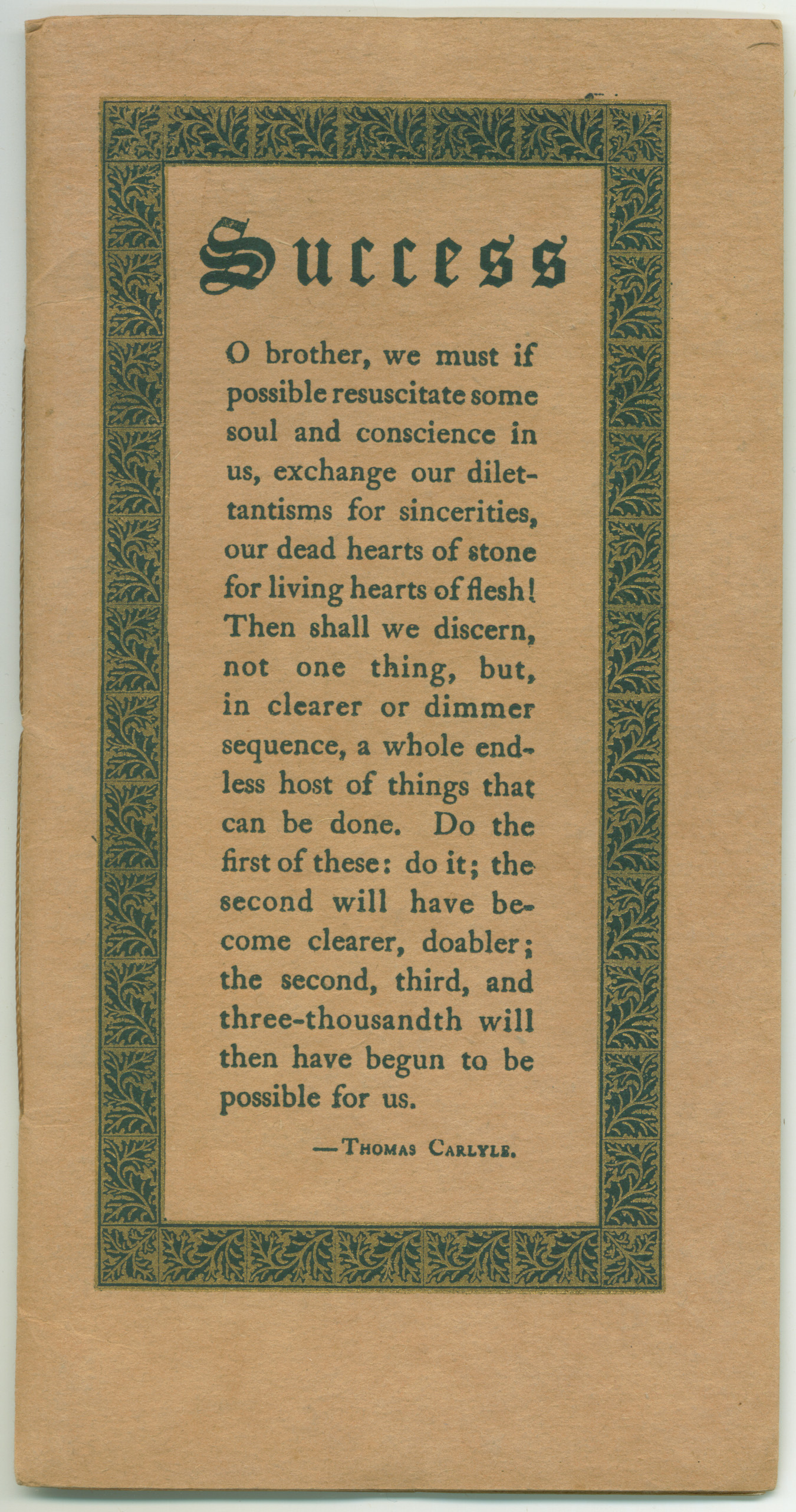
Success is a booklet of quotations in the Mosaic Essays series, compiled by Paul Elder. It was published in 1903 along with Happiness and Nature in response to the high sales of 1902’s Friendship. In 1905, Elder published the last booklet in the series, Love. In 1906 he issued the five booklets in a single volume called Mosaic Essays. As with the other booklets in the series, Success was published in three bindings:
Edition A: bound in flexible Omar sultan, with fly-leaves of Japan wood-fiber. Enclosed in uniform envelope. Price, 50 cents [“sultan” is a deep red color, and “Omar” is just a word Elder added for a flair of the exotic.]
Edition B: bound in flexible suede, with fly-leaves of imperial Japan vellum. Enclosed in box. Price, $1.25
Edition C: bound in full white calf by Miss Crane. Price, $5.00
I can find no further information about the bookbinder, “Miss Crane.”
Edition B title page of “Success” (note discoloration from wood-fiber endpapers)Variant edition B cover of “Success”, published c1907 when Elder was in New YorkVariant edition B title page of “Success”, c1907Edition A cover of “Success”Pages 8-9 of “Success”Ad from the Dec 1903 issue of The Argonaut
Edition A of Nature, in green paper with matching envelope
Nature is a booklet of quotations in the Mosaic Essays series, compiled by Paul Elder. It was published in 1903 along with Happiness and Success in response to the success of 1902’s Friendship. In 1905, Elder published the last booklet in the series, Love. In 1906, he gathered the five booklets togther in a single volume called Mosaic Essays.
As with the other booklets in the series, Nature was published in multiple bindings:
Edition A: bound in flexible Kozak sultan. Enclosed in uniform envelope. Price, 50 cents [“sultan” is a deep red color, and “Kozak” (i.e. Khazak) is likely just a word Elder added for a flair of the exotic.]
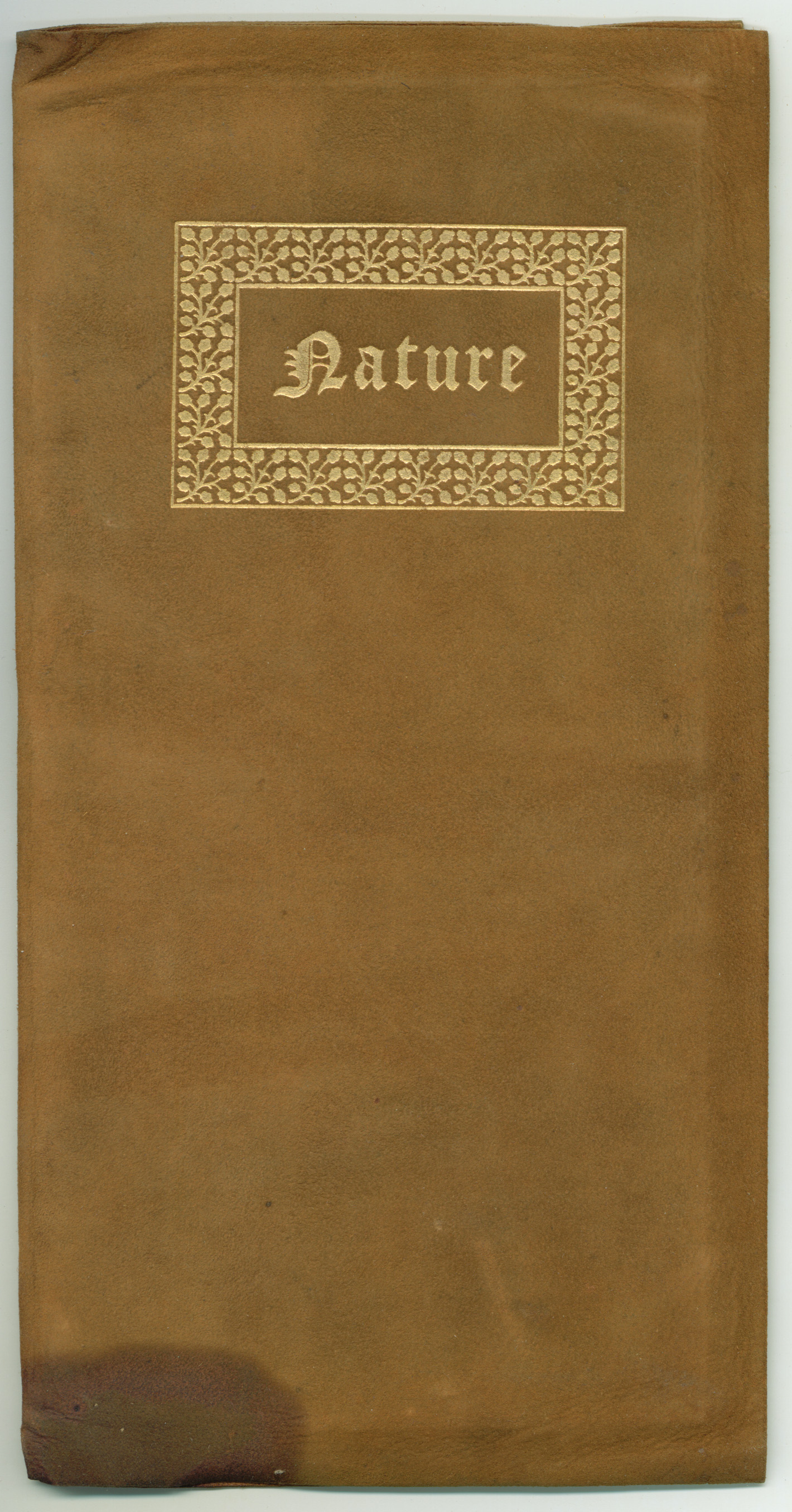
Edition B: bound in flexible suede. Enclosed in box. Price, $1.25
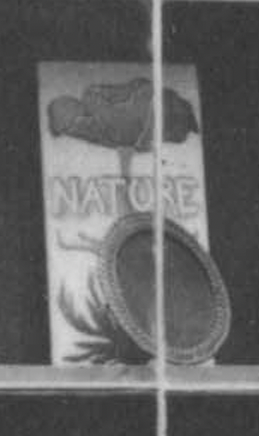
Edition C: bound in full white calf by Miss Crane. Price, $5.00
The frontispiece is “In the Heart of the Woods,” from the painting by William Keith.
Frontispiece and title page of Nature, Edition A
I have examples of both Nature and Happiness in green instead of red “sultan.” Perhaps this green color is what Elder meant by “Kozak sultan”?
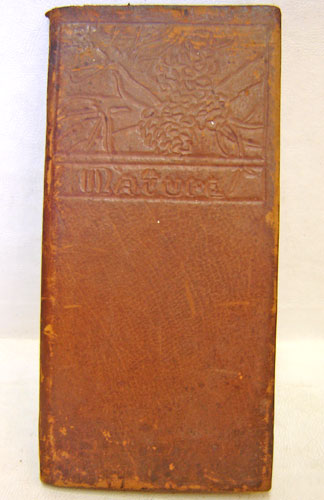
Pages 8-9 of Nature, Edition AEdition B of Nature, with suede coverEdition C of Nature, “bound in full white calf by Miss Crane,” partially obscured by a picture frame, displayed in a bookcase in the Central Art Room in Elder’s shop at 238 Post, 1904 (Collection of Jean Rodgers)Leather binding of Nature, seen online in the mid-2000s. This may not be an Elder binding.
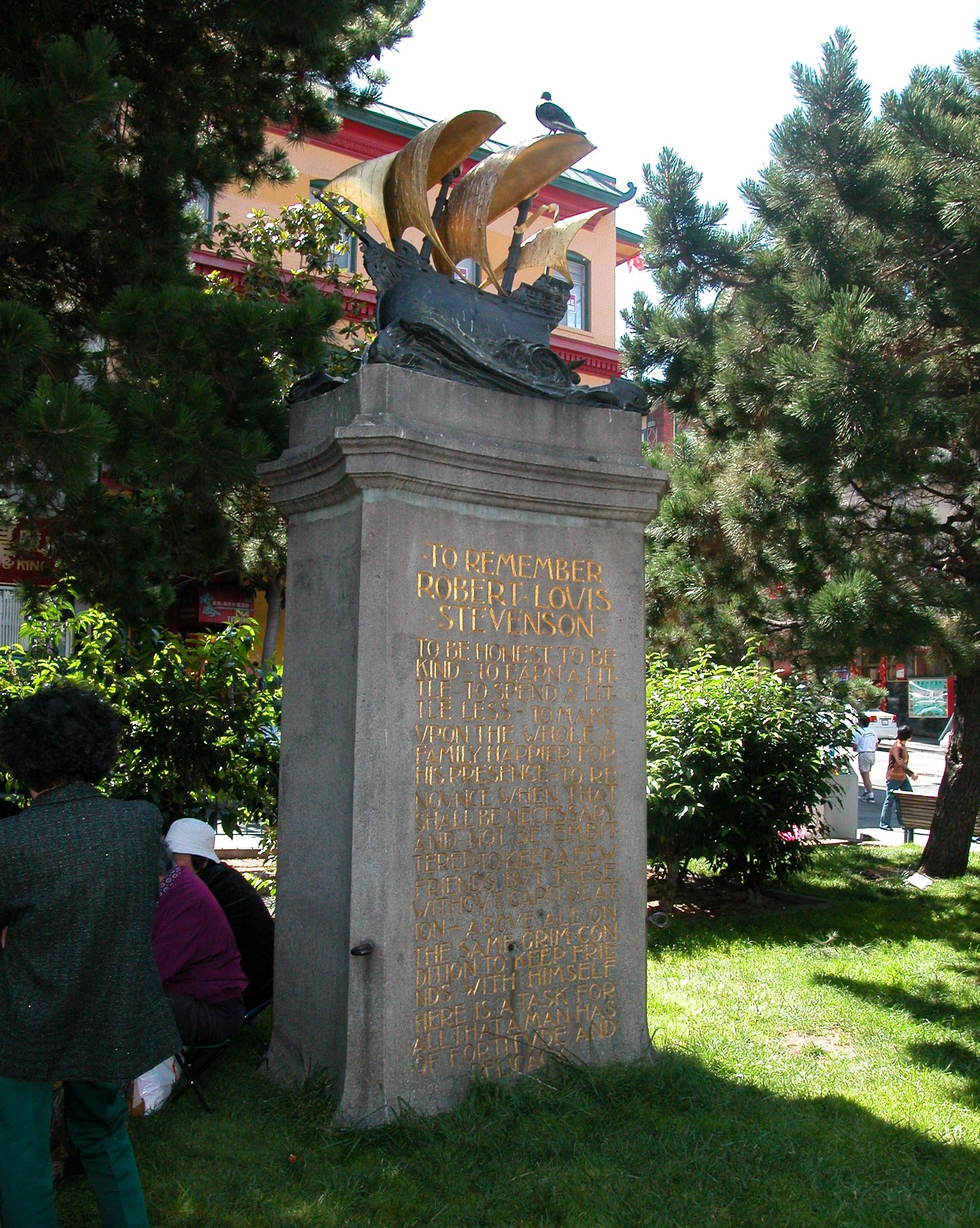
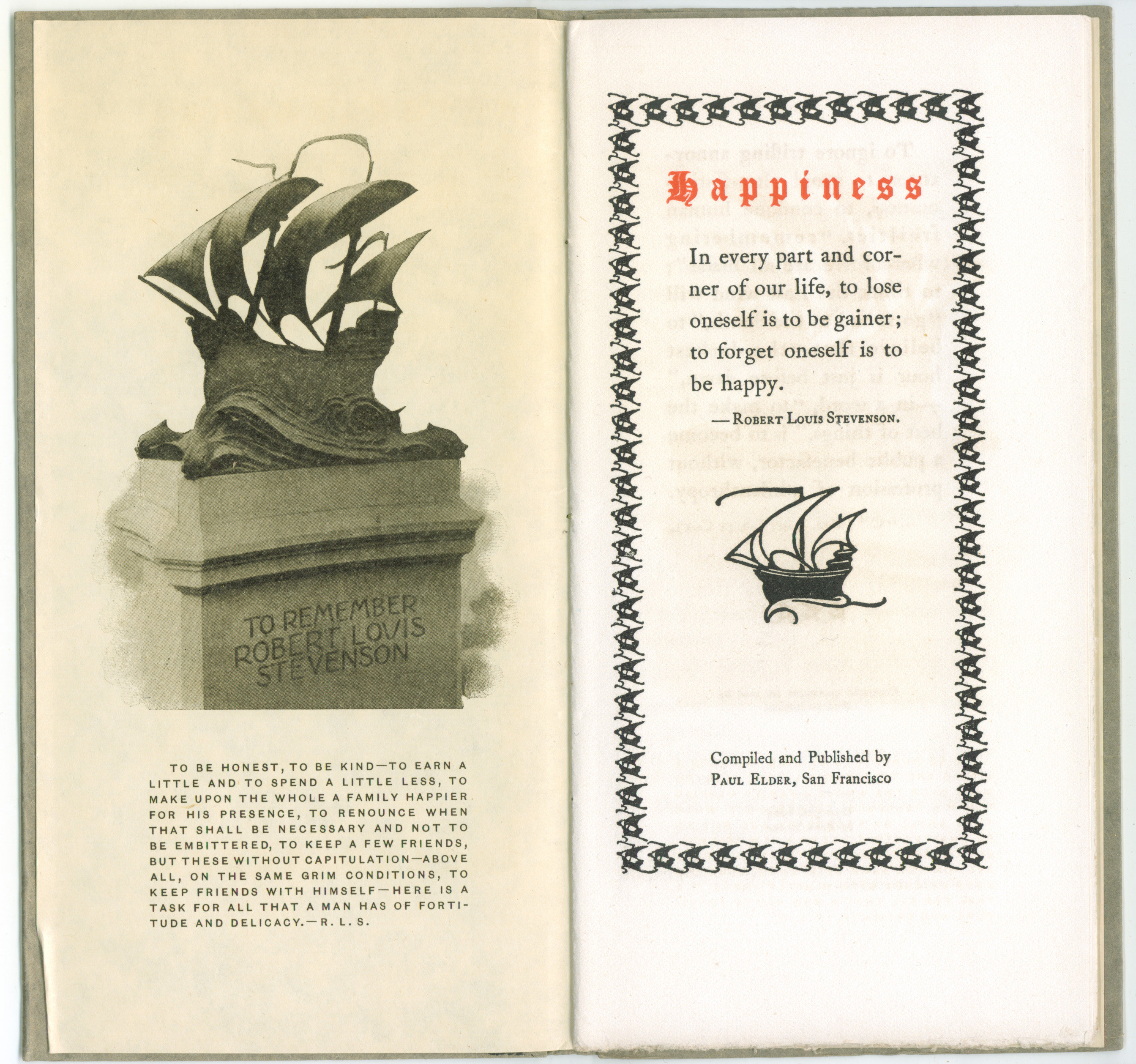
In a corner of San Francisco’s Portsmouth Square stands a granite pedestal topped by a bronze sailing ship. It is the Robert Louis Stevenson Memorial, designed by Bruce Porter and Willis Polk in 1897. During Stevenson’s brief time in San Francisco in 1880 and 1887, he often came to the Square to sit in the sun and regain his health.
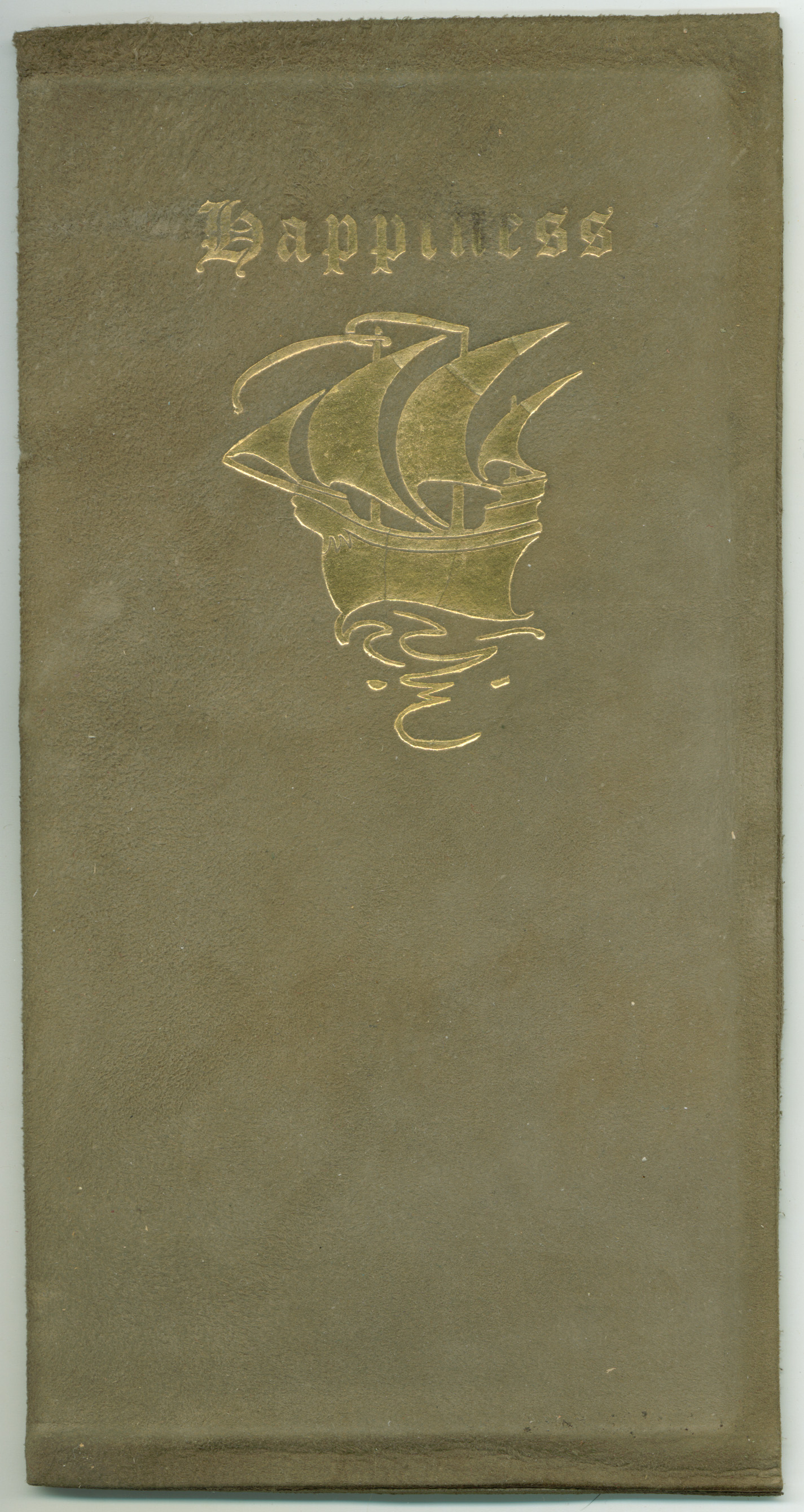
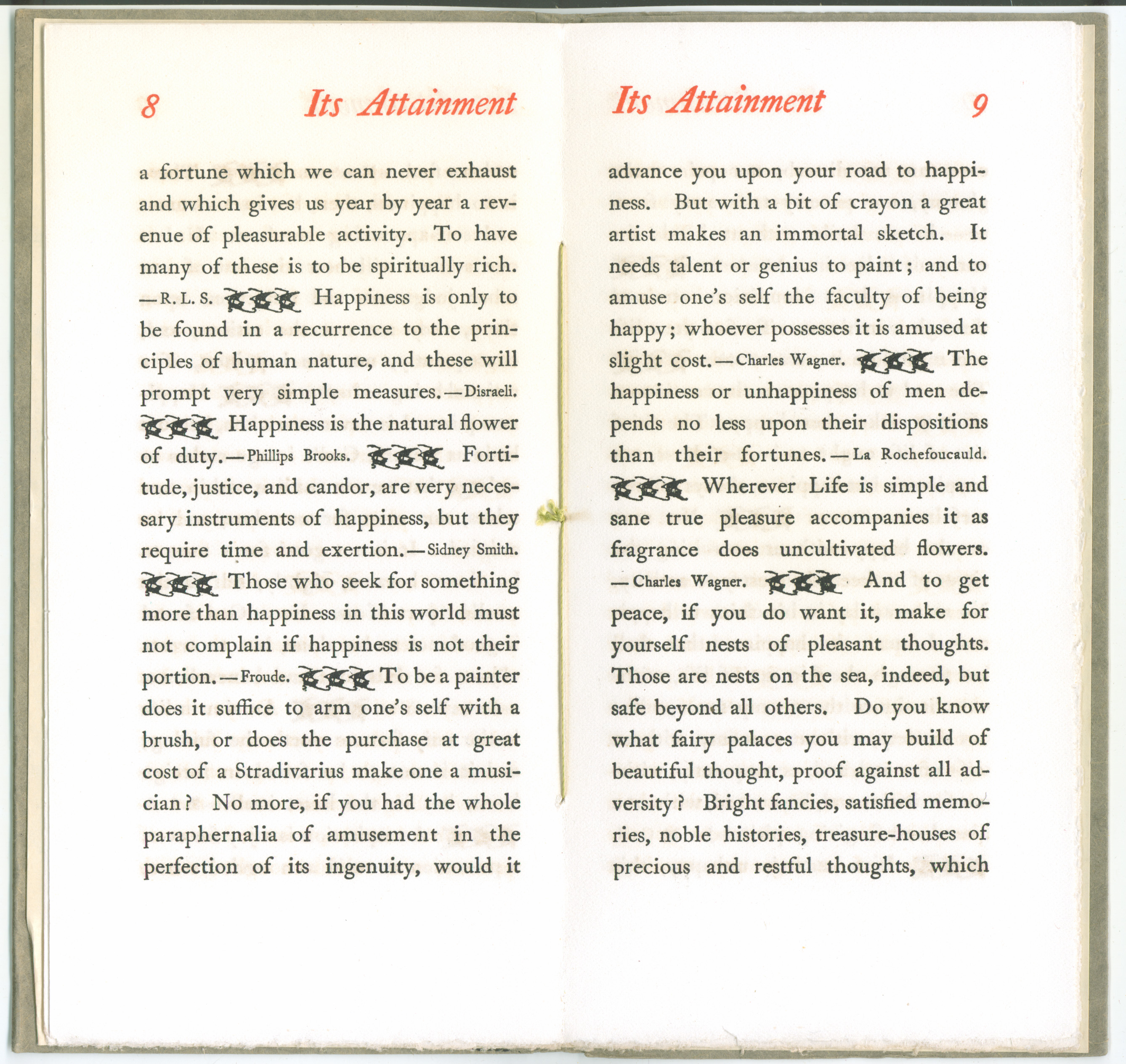
The Spanish galleon atop Stevenson’s monument was chosen by Paul Elder as the totem for the booklet Happiness. It appears on the title page, frontispiece, as well as stamped in gold on the cover of the leather edition. It is also used within the booklet as the dingbat separating the quotations (see image below).
Stevenson had always been one of Elder’s favorites. Elder was working at William Doxey’s bookstore in the Palace Hotel when Stevenson suddenly died in Samoa in 1894; Doxey subsequently devoted an entire storefront window to Stevenson’s memory. Elder published three works of Stevenson’s and made frequent use of his quotations in calendars, leaflets, mottos and, of course, within Happiness itself.
Edition B cover of “Happiness” in gold-stamped leather
The three booklets Happiness, Nature and Success were published in 1903 in response to the (perhaps unexpected) popularity of Friendship. The fifth booklet in the series, Love, would follow in 1905. And as with Friendship, Elder issued Happiness three different ways:
Edition A: bound in flexible Mecca sultan. Enclosed in uniform envelope. Price, 50 cents [“sultan” is a deep red color, and “Mecca” is just a word Elder added for a flair of the exotic.]
Edition B: bound in flexible suede, with fly-leaves of illuminated Japan vellum. Enclosed in box. Price, $1.25
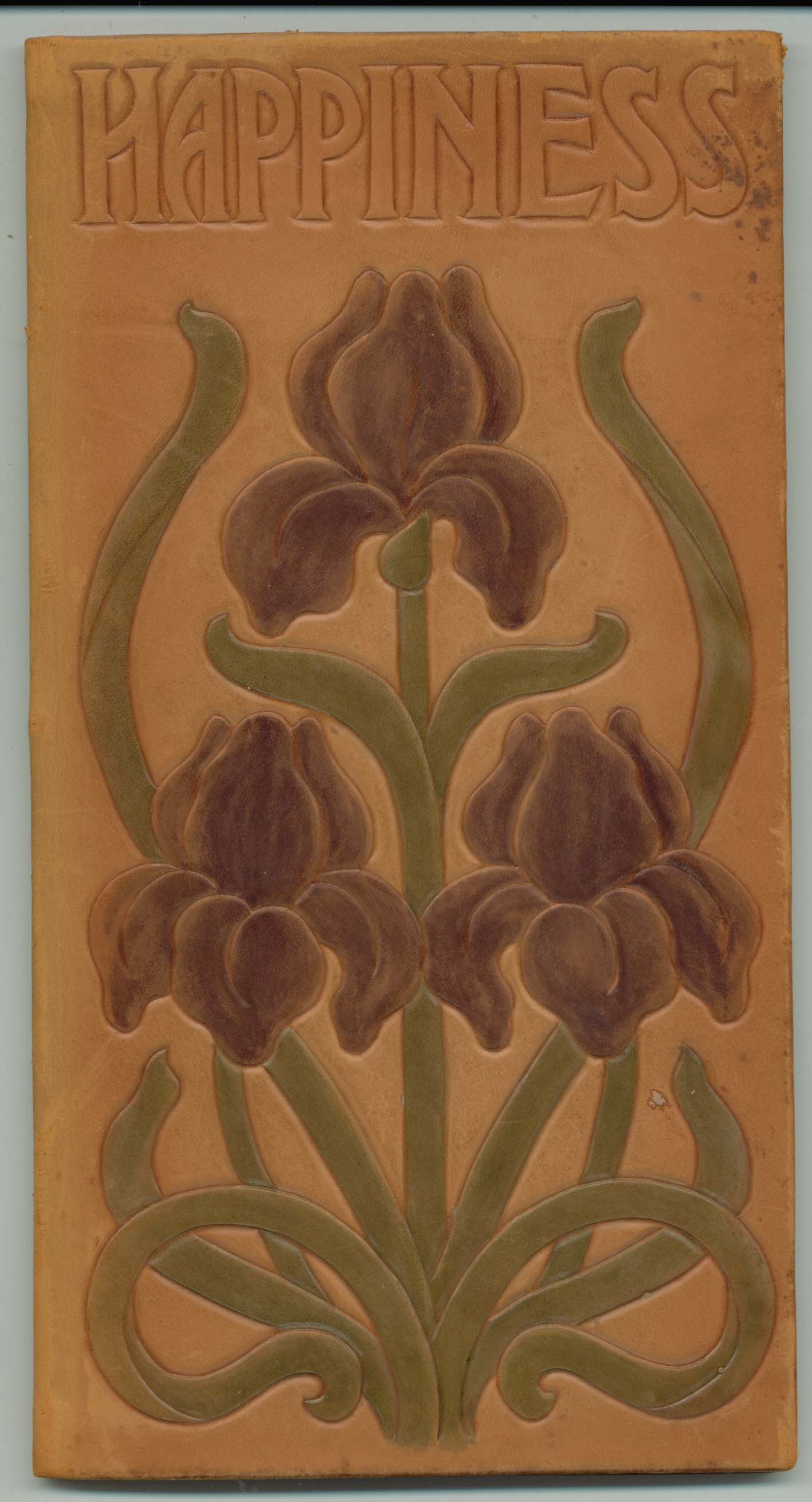
Edition C: bound in full white calf by Miss Crane. Price, $5.00
In 1906, Elder gathered the five booklets into a single volume called Mosaic Essays, also issued in multiple bindings.
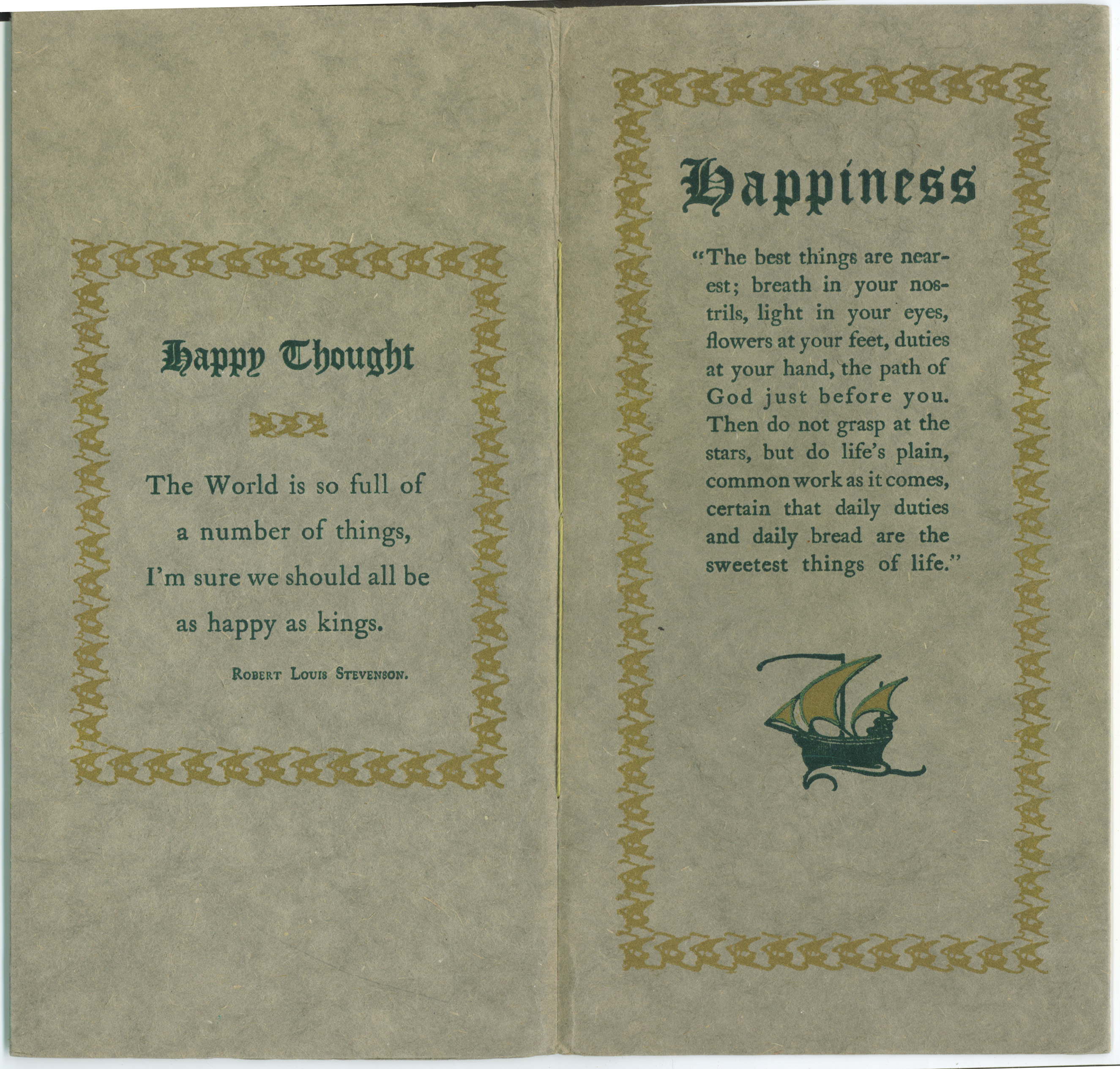
Variant Edition C of “Happiness,” in hand-painted stamped leather, instead of “white calf”Title page of Edition B of “Happiness,” with the frontispiece photo of the Stevenson monumentVariant Edition A of “Happiness”, in green paper wraps instead of “sultan”Pages 8-9 of “Happiness”